The story of Juan Carlos Unzué's daily life during two and a half years, since the former goalkeeper and trainer of Barça went public with his ALS diagnosis in June 2020. Right from day one he decided, on the one hand, to lend visibility to the disease in order to denounce the lack of help for those who suffer from it and, on the other, to organise a big event to raise as much money as possible for research. The documentary exhaustively follows all of the meetings and conversations held with managers of FC Barcelona and Manchester City to arrange a football game that succeeded in raising 4.5 million euros. Meanwhile, Unzué opens the doors to his home and reveals the evolution of his physical degeneration.
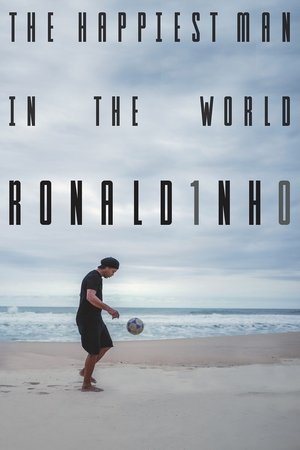
An intimate portrait of one of the most loved footballers; Ronaldinho. This documentary looks at his childhood in Brazil, his breakthrough to professional football and his journey to Europe including the ground-breaking years with Barcelona. We hear from his family, teammates and peers in a truly heart-warming story of one of the games greats.
Negreira Confidencial, el documental
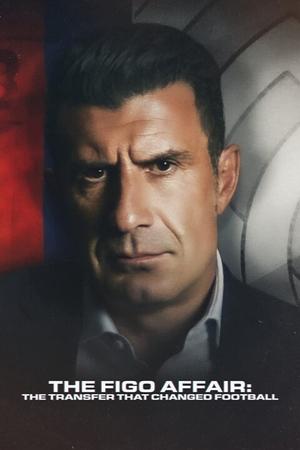
This documentary spotlights one of the most contentious deals in football history and the extraordinary player at the center of the storm: Luís Figo.
A documentary that chronicles the transformation of the FC Barcelona women's team, from anonymity to the best team in the world. It's not just a sports story, but a tale of overcoming challenges, identity, culture, and female empowerment. Through three acts, it constructs an emotional journey through its players and their quest for glory in the UWCL finals.
The blaugrana captain says goodbye to Barça on an emotional day with tributes and plaudits for a career that has changed the face of women's football.
On a film reel electrified by static charges, we meet five people who survived the impact of lightning.
All across the globe, Chinatowns are under threat of disappearing – and along with them, the rich history of a community who fought from the margins for a place to belong. Big Fight in Little Chinatown documents the collective fight to save Chinatowns across North America.
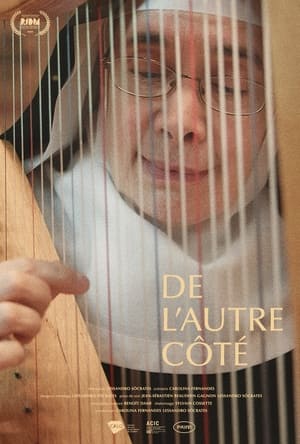
The oldest Quebecois Benedictine convent open its gates to a documentary filmmaker for the first time. Observed up close, life behind its walls is busier than one would expect. About twenty cloistered nuns, most of them over 70, share their daily life with diligence and humor. A contemplative portrait of a community of sisterhood and solidarity emerges, punctuated by prayer, work and games evenings.
Zoe McIntosh introduces us to Peter One, King of Caravans, and his realm, the Bignell Street Motel Caravan Park in Whanganui. Bignell Street has a reputation for being a place of last resort for the down and out, where people with nowhere else to go can always find a caravan roof for their heads. A social butterfly and a self-admitted garage sale addict, motel manager Peter says he acts as a de facto social worker to the weird and wonderful itinerant inhabitants of his trailer park, although some claim he’s just as strange and desperate as they are. - NZIFF 2013
Ich glaub, ich mach nicht mal Filme, ich glaub, ich filme nur irgendwas, um irgendwem zu beweisen, dass ich eine Person bin
A series of static shots repeated throughout the seasons slices and builds an anonymous forest with a river winding through it. Using remarkably precise sound, this film immerses us in a place with fauna that flourishes and flora that expresses itself through interactions with the elements. Eventually, a discrete human presence is felt within this natural setting, and the filmed landscapes gradually change before our eyes, alluding to a higher power that could upset the balance. With this carefully constructed, surprising and minimalist film, Robert Morin blurs boundaries and reminds us that reality is always fabricated in cinema.
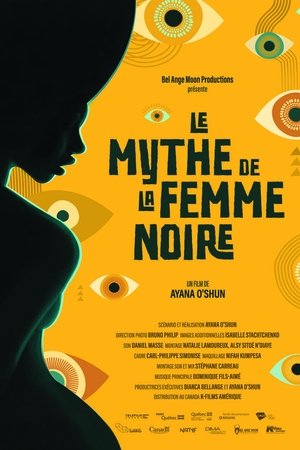
The Myth of the Black Woman is a feature-length documentary that examines the imagery of black women in the media, from the 18th century black slave to Michelle Obama. It is an investigation into how stereotypes originate from slavery and still affect the lives of black women in Quebec. These stereotypes include Jezebel (the seductress, the femme fatale); Mammie (the obese woman, the asexual mother figure) and Sapphire (the angry, ambitious and arrogant black woman). This story will be told by black women on whom stereotypes have a high impact, through interviews with fascinating experts, and through archival footage from centuries past to the present.
Correspondance
Under the cover of night, skaters claim back the streets.
An intimate look inside the immigrant community in Portland, Maine, as told by Nyamuon Nguany Machar who arrived as refugee in 1995 and David Zwalita Mota who came as an asylum seeker in 2019.
The short documentary/experimental film is depicting intimate perspective, a surreal reflection of death and life through the rarely captured moment of the funeral of a deceased relative in the flare of poetic lenses. The film is a farewell to the vanishing world of the traditional Ruthenian community in the hills of eastern Slovakia. Metaphorically, a farewell to the personal worlds which are fading with the death of each of our ancestors. Visually highly subjective, dream-like black and white imagery brings the audience into the world of memory and inter-looping past and present.
As he grieves his father’s recent death, Kevin Rainha searches for answers within the traces left by José and the family members who surround him. An intimate portrait, Tio Kevin explores the support between a niece and uncle, a director and their subject. The film follows their return to the family cottage for the first time since José’s death, a place which holds the foundations of many family memories.
Based on diaries that detail 30 years of service abroad of a Canadian Immigration Officer, The Dependents is an intimate audiovisual exploration of transient lives. It navigates through travel, my father’s employment, and my mother’s role as a spouse. Home and belonging are reconstructed between the past and present as a direct result of displacement and globalization, marking the political complexities between East and West, North and South, and Men and Women.
Twenty years after Allard brought back the relationship with his mother to a minimum, the police calls him. They found her in a completely dishevelled house where she can no longer take care of herself. He decides not to abandon her in this state and takes responsibility for her care. Eventually, she ends up in a closed psychiatric ward. In this documentary, she blames her son for everything and wants him to behave like a good son.