Hong Kong cop Chan Ka-Kui returns, working with Interpol to track down and arrest an illegal weapons dealer. Chan later realizes that things are not as simple as they appear and soon finds himself to be a pawn of an organization posing as Russian intelligence.
The true and infamous story of Australia's notorious criminal Mark 'Chopper' Read and his years of crime, interest in violence, drugs and prostitutes.
Tōjin Okichi is a 1930 film by Kenji Mizoguchi based on the novel by Gisaburo Juichiya. Only 4 minutes have survived. The fragment has been published on DVD coupled with The Downfall of Osen (1935) by Digital MEME in 2007.
After getting threatened by Kelly's friends and family, Constable Fitzpatrick places the blame on Ned Kelly and exaggerates what happened. With the biggest ever award available, Kelly and his gang set into the wild, to remain hidden from everyone who seeks them. Even if it means having his family arrested, the members of the Kelly Gang stay hidden and plan a way to get their names cleared.
A classic of the silent age, this film tells the story of the doomed but ultimately canonized 15th-century teenage warrior. On trial for claiming she'd spoken to God, Jeanne d'Arc is subjected to inhumane treatment and scare tactics at the hands of church court officials. Initially bullied into changing her story, Jeanne eventually opts for what she sees as the truth. Her punishment, a famously brutal execution, earns her perpetual martyrdom.
Against the backdrop of New York City of the early 1850s, a young woman -- naively seeking to win the love she reads about in the romance novels she devours -- finds one prospect in an earnest denizen of the Bowery, and another in an elegant young aristocrat. Focusing on the bygone era's fashions, the novelty of the bicycle-built-for-two, and an inventor's quest for the horseless carriage, the film gently stirs the audiences' nostalgia for simpler times.
A semi-documentary experimental 1930 German silent film created by amateurs with a small budget. With authentic scenes of the metropolis city of Berlin, it's the first film from the later famous screenwriters/directors Billy Wilder and Fred Zinnemann.
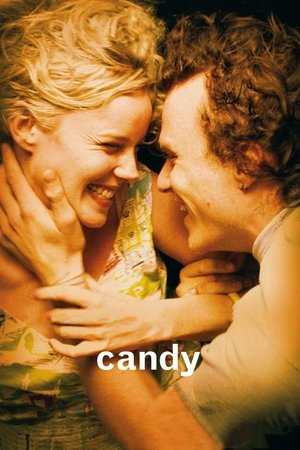
A poet falls in love with an art student, who gravitates to his bohemian lifestyle — and his love of heroin. Hooked as much on one another as they are on the drug, their relationship alternates between states of oblivion, self-destruction, and despair.
The film consists of a series of tightly interlinked vignettes, the most sustained of which details the story of a man and a woman who are passionately in love. Their attempts to consummate their passion are constantly thwarted, by their families, by the Church and bourgeois society in general.
Two brothers compete for the love of a woman while the impending war threatens to separate them from both sides of the border. Based on the novel "La Débâcle" by Émile Zola.
John Stonehouse (William Russell) checks into a hotel, intending to commit suicide. But instead he winds up helping a girl, Gilberte Bonheur (Fritzi Brunette), out of a jam. He finds her bending over a man who she has apparently killed, and since he's about to kill himself anyway, he offers to assume the blame. Throw a valuable emerald into the works, and the fact that the dead man suddenly comes back to life, and Stonehouse -- not to mention the audience -- becomes thoroughly befuddled by it all. Everything clears up, however, when Gilberte gives him a theater ticket -- it turns out that everything he went through was the plot to a stage play, enacted in real life by the actors. The critics roasted the play, saying it wasn't true to life, and this was their proof that the situations really could happen. Gilberte retires from acting when Stonehouse proposes.
Francis, a young man, recalls in his memory the horrible experiences he and his fiancée Jane recently went through. Francis and his friend Alan visit The Cabinet of Dr. Caligari, an exhibit where the mysterious doctor shows the somnambulist Cesare, and awakens him for some moments from his death-like sleep.
In a futuristic city sharply divided between the rich and the poor, the son of the city's mastermind meets a prophet who predicts the coming of a savior to mediate their differences.
This film begins with the invocation of 'almighty god' at a river where several people are gathered. The child god Krishna rises out of the water astride the demon snake Kaliya. Then we see Yashoda as she rocks the sleeping Krishna's crib and imagines the god as Gopala. The next scene shows Kamsa fantasizing about Krishna threateningly duplicated many times around him. Kamsa then imagines himself dead as his severed head rises up and descends again. People of all castes pay obeisance to the deity with the title-card: 'may this humble offering be accepted by the Lord'.
Orphan Pip discovers through lawyer Mr. Jaggers that a mysterious benefactor wishes to ensure that he becomes a gentleman. Reunited with his childhood patron, Miss Havisham, and his first love, the beautiful but emotionally cold Estella, he discovers that the elderly spinster has gone mad from having been left at the altar as a young woman, and has made her charge into a warped, unfeeling heartbreaker.
A young man living far from his beloved one wastes his existence absorbed in modern distractions until he loses contact with her.
American boy Cody lives in Australia with his guardian, Gaza. Cody is very imaginative, inventive and inquisitive. He comes accross some strange events happening in Devil's Knob national park associated with an aboriginal myth about "frog dreamings". Cody tries to investigate...
During one night, 3 teenagers; James, Royston and Saskia seek to escape their troubled home lives, only to find that they may have brought the trouble with them.
They were Australia’s bad days. Men killed other men and laughed. All that was left for the children of the dead was to remember. If they had the strength.
Shows new methods in treating those afflicted with mental health issues. Contrasts past treatment regimes where people were locked away out of sight with the new, 1960s, psychiatric ideas of "group therapy" and talking therapy. Also shows practical behaviours aimed at returning patients to productive lives in society and outpatient services.