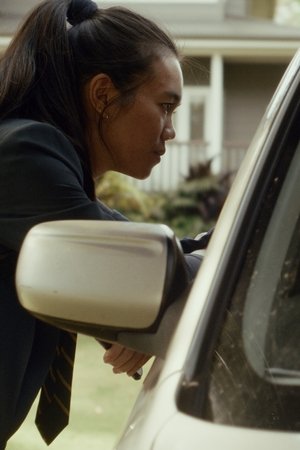
An old man needs a plastic toilet stool by the bed at night, but the health center can't deliver it, so the old man has to pick it up by himself.
Mégalopolis
A Short Film About John Bolton is a darkly hip and hilarious film explores the question that torments artists of every medium: "Where do your ideas come from?" Renowned artist John Bolton's paintings of voluptuous she-vampire nudes have earned this quiet eccentric a reputation for having a "damaged imagination." BBC radio personality Jonathan Ross buys his pieces, which leads interviewer extraordinaire Marcus Brigstocke to find out what the appeal is in Bolton's beautiful (but terrifying) artwork. Why does Bolton demand that his gallery "monsterpieces" speak for themselves? What does he do with that ornamental knife that he carries everywhere? Will Marcus ever learn how to operate the camera?
Prohibition has just gone into effect, and Judge Rummy's wife eagerly throws away all of the Judge's liquor. She also plans to have a temperance lecturer use him as an example of the evils of drink. While waiting for the lecturer, Judge Rummy notices that Silk Hat Harry's Soda Fountain is remarkably popular, so he stops in to see what it's all about. He finds out that Harry has developed a substitute for alcoholic drinks, and that Harry's substitute can have quite an effect on those who drink it.
Amor Inesperado
The Newlyweds move into their new flat and prepare to entertain their uncle.
Awkward suburban teenager Nic Wooding wants to be the greatest badminton player in the world, much to the dismay of his demanding father, a former tennis champion. With the local badminton competition on the horizon, Nic rebels against his dad's wishes to learn that following your dream may lead you to a bird of a different feather.
Alain Resnais & Robert Hessen use the famous Picasso mural "Guernica" in combination with newspaper headlines in an anti-war cry against the Spanish Civil War. Narration by Jacques Pruvost highlights the Guernica atrocity of April 1937, followed by a poem by Paul Eluard read by María Casares to a discordant score by Guy Bernard.
Orson Welles talks fantasy and magic in this short Vienna travelogue.
A graffiti artist in his early 20s, begins a 3½ year prison sentence for vandalism. He must attempt to cope with the struggles of his new life on the inside: sharing a cell with an aggressive murderer, being moved to high security, living 23 hours a day alone. An unlikely allay soon teaches him how to survive. Questions then begin to arise. Who can he trust? Will he ever find solace?
A study of Antoni Gaudí's architecture (especially the Church of the Holy Trinity in Barcelona), his sources of inspiration and his influence on Picasso. (BFI)
Introducing Horsin Dickler, who introduces the fundamental concepts surrounding the idea of explicit television.
A room full of memories.
The Coyote makes various attempts to get the Road Runner with an explosive-tipped arrow, by shooting himself out of a sling shot and by covering the road with quick drying cement.
Hypnosis doesn't help the Coyote catch the Road Runner, nor do a clutch of string-controlled rifles or dozens of mousetraps, but they all manage to backfire on him, naturally.
A Burmese tiger trap, a pop-up steel wall, a motorcycle, and a box of Acme-brand leg-building vitamins can't help the Coyote (Eatibus anythingus) catch the Road Runner (Hot Rodicus supersonicus).
Among the strategies that fail in Wile E. Coyote's attempts to catch the Roadrunner: glue on the road, a giant rubber band, an outboard motor in a wash tub, and dressing in drag as a female Roadrunner.
This short film portrays the story of singer Paul Anka, who rose from obscurity to become the idol of millions of adolescent fans around the world. Taking a candid look at both sides of the footlights, this film examines the marketing machine behind a generation of pop singers. Interviews with Anka and his manager reveal their perspective on the industry.
Commercial and technical developments on British Rail: new freight loads, air conditioned carriages, an ultrasonic test-train for checking the permanent way, a lecture train, and a new station for motorists - all part of the railway scene in the 1970's.
A high speed Inter-City train is the star of this impressionist film in which picture and music are brought together to enhance the mood and rhythm of the subject and hail the arrival of 125mph regular passenger services. With specially composed music by David Gow and no commentary, Overture: One-Two-Five was the last complete production to be shot on 35mm film by British Transport Films. It was produced to mark the introduction of the new Inter-City 125 High Speed Train services between Paddington and Bristol. One of the last big budget productions, it was treated to a coat of Technicolor and a theatrical cinema release. It also marked the beginning of the slow decline of BTF which culminated in its closure. With the abandoning of support features and shorts at cinemas in the late 1970s and early 1980s, most of the unit’s films after 1978 were made primarily for internal use.