In the winter of 1944, the Allied Armies stand ready to invade Germany at the coming of a New Year. To prevent it, Hitler orders an all-out offensive to re-take French territory and capture the major port city of Antwerp.
Nebi Surreli lives in poverty along with his mother. Doing small jobs to earn a living, he also helps his town's communist unit.
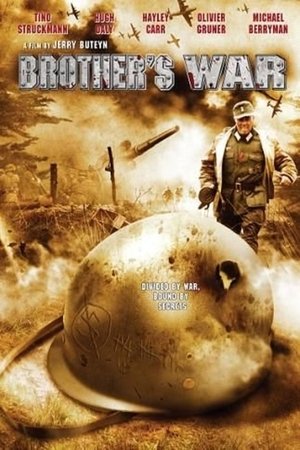
Captain Muller struggles to survive fighting overwhelming Russian forces. Wounded, he is sent to Normandy as Americans Lee and Trey prepare for D-Day. Soon, scores are settled and battle brings our GIs and Germans on the same path.
Professor Lo Yeung-guo (Hou Yao) and his students escape death from the Japanese army, and call on villagers in the countryside to form a guerrillas group. His son Lo Yung (Lau Hark-suen), however, indulges in debauchery. Entrapped by the Japanese, chicken-hearted Yung leaks information about the guerrilla that leads to deaths and injuries in the group. Yeung-guo reprimands his son for being an invisible traitor, inflicting even more harm than an outright traitor. Placing righteousness before family, he decides to execute his own son. As a writer-director-actor in the film, Hou Yao proclaimed his unwavering stance on resistance on the screen, and delivered a scathing attack on the cowardly ‘invisible traitors‘ at that time. Not long after, Hou was sadly arrested and executed by the Japanese army in Singapore.
The story of the conception of a new British weapon for smashing the German dams in the Ruhr industrial complex and the execution of the raid by 617 Squadron 'The Dam Busters'.
During World War II, a small group of survivors is stranded in a lifeboat together after the ship they were traveling on is destroyed by a German U-boat.
Shortly before the end of the war in 1945, the Allies can already be heard in Nesselbühl in Swabia when three freight cars are uncoupled at the station. The screams of the starving concentration camp prisoners inside can be heard throughout the village, but nobody dares to help them. Only the innkeeper's daughter Anna takes heart...
The film is based on a real story that happened in 1943 in the Sobibor concentration camp in German-occupied Poland. The main character of the movie is the Soviet-Jewish soldier Alexander Pechersky, who at that time was serving in the Red Army as a lieutenant. In October 1943, he was captured by the Nazis and deported to the Sobibor concentration camp, where Jews were being exterminated in gas chambers. But, in just 3 weeks, Alexander was able to plan an international uprising of prisoners from Poland and Western Europe. This uprising resulted in being the only successful one throughout the war, which led to the largest escape of prisoners from a Nazi concentration camp.
Based on the novel of Arsen Diklić which describes the horror’s of concentration camp Jasenovac.
A story about the effect of the atomic bombing of Hiroshima on a boy's life and the lives of the Japanese people.
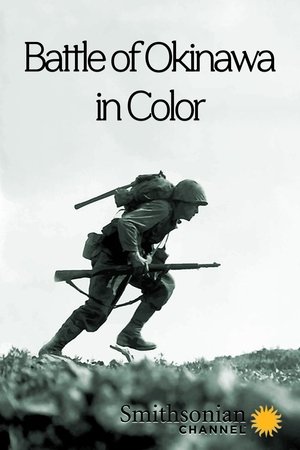
Together with Shimada Akira (Hagiwara Masato), the last appointed governor of Okinawa during the war, Arai Taizo (Murakami Jun), the chief of police of Okinawa Prefecture, goes beyond his duties and strives to protect the lives of the citizens of the prefecture. As the ravages of war intensify, the two, who each carried a heavy cross during the Battle of Okinawa, desperately devote themselves to saving the lives of the Okinawan people, with the belief that "life is precious." A human drama, set in Okinawa at the end of World War II, depicting the preciousness of human life. Directed by Igarashi Sho of One Step on a Mine, It's All Over.
When Col. William McNamara is stripped of his freedom in a German POW camp, he's determined to keep on fighting even from behind enemy lines. Enlisting the help of a young lieutenant in a brilliant plot against his captors, McNamara risks everything on a mission to free his men and change the outcome of the war.
In the dying days of World War II, Dick Dynamite and his ragtag team of Nazi-killing commandos must stop a group of depraved German scientists from turning the population of New York into flesh-eating zombies.
Set in 1942, DECIMATION tells the story of ten Russian soldiers accused of cowardice and their subsequent punishment.
The story of the WWII project to crack the code behind the Enigma machine, used by the Germans to encrypt messages sent to their submarines.
It is 1943, and the German army—ravaged and demoralised—is hastily retreating from the Russian front. In the midst of the madness, conflict brews between the aristocratic yet ultimately pusillanimous Captain Stransky and the courageous Corporal Steiner. Stransky is the only man who believes that the Third Reich is still vastly superior to the Russian army. However, within his pompous persona lies a quivering coward who longs for the Iron Cross so that he can return to Berlin a hero. Steiner, on the other hand is cynical, defiantly non-conformist and more concerned with the safety of his own men rather than the horde of military decorations offered to him by his superiors.
Starting in late May 1944, during the German retreat on the Eastern Front, Captain Stransky (Helmut Griem) orders Sergeant Steiner (Richard Burton) to blow up a railway tunnel to prevent Russian forces from using it. Steiner's platoon fails in its mission by coming up against a Russian tank. Steiner then takes a furlough to Paris just as the Allies launch their invasion of Normandy.
With the help of government-issued pamphlets, an elderly British couple build a shelter and prepare for an impending nuclear attack, unaware that times and the nature of war have changed from their romantic memories of World War II.
A team of allied saboteurs are assigned an impossible mission: infiltrate an impregnable Nazi-held island and destroy the two enormous long-range field guns that prevent the rescue of 2,000 trapped British soldiers.
Autumn 1941. German tank troops are making another attempt to break through to the Uritsk and Pulkovo Heights. During heavy fighting, Soviet troops managed to stop the offensive of fascist tanks one and a half kilometers south of the Pulkovo Observatory. The 900 days of the blockade and the incredible courage of the Soviet people were approaching ...