A reporter for a fictional television station, originally from Ukraine, travels around Slovakia and asks people at memorable places questions about the nature of fascism and the soul of the Slovak nation. The documentary essay seeks to capture the shape of a society on the fringes of the political spectrum through the words spoken and the images of crowd scenes.
This documentary follows two long-lost Ukrainian friends, Arsalan and Nastya, as they reconnect in Germany after russia's full-scale invasion against Ukraine. Arsalan, an actor now in Frankfurt after time in a refugee camp, and Nastya, journalist and producer who stayed in Kyiv, reflect on the divergent paths their lives have taken due to the war. Through their conversations and therapy sessions, the film explores themes of displacement, identity, and the emotional impact of war on youth.
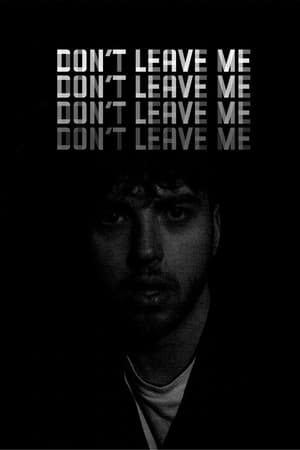
An office worker gets terrorized by an unknown force through an error on his computer.
Alice and Emmett reflect on their fraying relationship. A hazy tapestry of summer memories recollected through voice recordings.
A girl enters the Sock World to retrieve her lost sock.
Daniel seeks catharsis by recalling with Sofía his past relationship.
Projekt Černá Voda
An actor discovers his identity and look has been stolen and replicated by AI.
Human action is often influenced by the desire for knowledge. This desire is in itself a positive impulse and could be said to be the basis of all progress. Let's move this statement to the ground of scientific research at CERN, and see if it applies here - and then test the common experience that human stupidity permeates every social stratum and, in the case of the elites, is a potential threat.
Like every year, a group of friends arrives at a remote and secluded place to "celebrate their friendship". This is the 36th time now, but this year is going to be different. Stana has lost his battle with cancer and for the first time ever there are only five friends. Spring is blooming, they kill a lamb with their own hands and drink to Stana's memory. However, one of them, Dalibor, has a secret he does not want to share.
A run-of-the-mill family is terrorized by strangers dressed in military garb who invade their private realm.
Waking up in the middle of the night, a woman walks through a dark house looking for a way out.
A delivery boy is in for a big surprise when a giant pinball rampages throughout his city. Will he have what it takes to stop the pinball from destroying his home?
After her father's funeral, Maarit plans to return to Thailand. On the day of the departure, she finds her mother Sylvi and her father’s taxidermy badger in a bar and Sylvi makes a revelation that may change Maarit’s departure plans.
A young child loses his prized deck of playing cards amidst a life-changing day for him and his family.
Everyone thinks they have crazy relatives. But in this family, dad lives in the closet.
City people set off into a warm late summer night. Glances meet in a library. At a workout, two men discuss where to buy love. A couple kisses intimately. She bites him. No sooner has he bought a match than a better offer calls. Doubts arise. A couple explains themselves in therapy. At breakfast, his match chews her egg so loud that he freezes in disgust. The electrifying looks in the library lose their power. Full of hope they wander into the unknown. Only the dance makes them temporarily forget who they are and what will happen.
London, 2101. The automotive world is turned upside down by new cars with unrivalled skills. A new era of gaming emerges, a competition between prisoners and drivers. Prisoners have the chance to get out of prison, while the professionals rake in the cash. It a dangerous competition in which everyone risks their lives. Aaron, a young prisoner, is asked to take part in this year’s games. Having found himself in prison for a minor crime, he sees this as an opportunity to reunite with his family. After winning all the preparatory races, he now finds himself in the final against the favorite.
Karel Vachek’s graduate film offers us a documentary essay which is both a light-hearted and aggressive little piece and also a parody of investigative film journalism. The Strážnice folk festival, backed by the cultural Party apparatus of the time, for years had little to commend itself to authentic folklore. In the film the event assumes the form of a bizarre stage spectacle with almost surrealistic elements that Vachek reinforces with unconventional approaches (commentary appearing as titles on screen, singing, declamations into the camera, feature etudes, the fusion of news coverage and fiction). The result is a stirring film collage depicting various characters, from crowd-pleasers, Easter egg decorators, kitsch artists and peddlers, to museologists and local residents, all of whom come up against the eccentric "identical” twin reporters Karel and Jan Saudek and a bored actress who appears as an extra. Using their special blend of irony and wit, they present us with the sad truth.
The director, a young man in his thirties going through a life crisis, approaches his estranged parents to help him paint his apartment. Conversations accompanied by a paint roller and paint thinner open up old wrongs while revealing the complexity of interpersonal relationships. The absence of communication, or the lack of will to communicate, as a symptom of contemporary family ties, stands in contrast to caring for a family of pigeons that has made its nest on the director's balcony. The film, in its civility and authenticity, follows the lessons of a book dedicated to amateur filmmakers and thus enters into a subversive dialogue with the paradigms of film pedagogy.