Newton's Apple is an American educational television program produced and developed by KTCA, and distributed to PBS stations in the United States that ran from 1983 to 1999. The show's title is based on the rumor of Isaac Newton sitting under a tree and an apple falling near him—or, more popularly, on his head—prompting him to ponder what makes things fall, leading to the development of his theory of gravitation. The show was produced by Twin Cities Public Television. For most of the run, the show's theme song was Ruckzuck by Kraftwerk, later remixed by Absolute Music. Later episodes of the show featured an original song. An occasional short feature appeared called "Science of the Rich and Famous" in which celebrities appeared to explain a science principle.
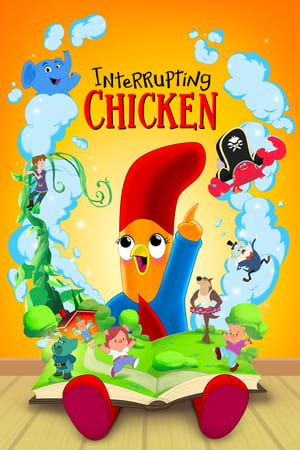
Meet Peg, a curious and spunky preschooler, and her feline companion, Cat, who will rely on math "to tackle social and relationship issues and everyday problems like cleaning up a messy bedroom," Rotenberg says. Some of their dilemmas may be zany — like how to get 100 chickens back into their coop or how to feed a horde of hungry pirates with just one banana — but it's all solvable via mathematics and a zippy song.
Bheem, a fun-loving toddler with incredible strength, is heading to school. Join his classroom adventures as he makes new friends and plenty of mischief!
Hedvig lives in a trailer in the woods and has a nose for learning new words. Helping her is Helge, an owl who lives on her roof.
Jimmy Carr hosts proceedings as the 8 Out of 10 Cats crew take over the words and numbers quiz.
Barney & Friends is an American children's television series aimed at children from ages 2 to 5. The series, which first aired on April 6, 1992, features the title character Barney, a purple anthropomorphic Tyrannosaurus rex who conveys educational messages through songs and small dance routines with a friendly, optimistic attitude.
Richard Feynman, theoretical physicist, enjoys thinking aloud about the adventures science can offer. Here he uses physics to explain how the everyday world works, such as why rubber bands are stretchy, why tennis balls can't bounce forever, and what you're really seeing when you look in the mirror.
Ukulele
A documentary series offering in-depth anarchist analysis on a range of topics, themes and spaces of resistance. Intended to be watched in groups.
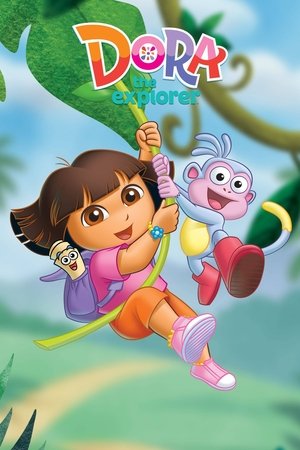
A young girl named Dora goes on adventures with her red boot-wearing monkey named Boots.
Presenter Rob Bell takes us on a voyage around Britain and Ireland to reveal the hidden secrets that make offshore lighthouses such extraordinary feats of engineering.
Agrofun
The top 1% of students from five prestigious universities in Korea (Seoul National University, KAIST, Pohang University of Science and Technology, Yonsei University, Korea University) participate, and only utilize brain power (mental calculations, calculations, reasoning, games, memorization, etc.) without politics, betrayal, alliances, or deception.
At a holiday camp, a magic boat takes Nico, Julie, and Pam on amazing adventures. Through their journeys, the explorers learn plenty about nature and the universe. Seasons 1 and 2 are live action, the remainder are animated.
Okna vesmíru dokořán
A risky expedition along thoroughfares that harbor mortal danger for those who use them or live on them. They run through deserts, ice, and snow, deep in the jungle, along water, and over mountains: the world's most dangerous roads, truly "hot roads." Many have died along these roads.
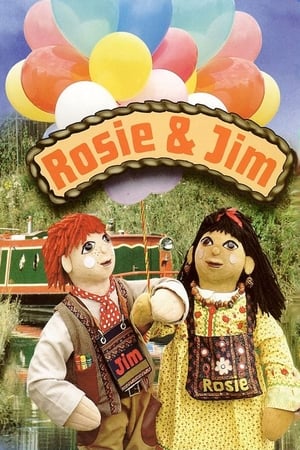
Rosie and Jim was a British children's television programme produced by Ragdoll Productions which aired on CITV from 3 September 1990 to 11 December 2000.
On a special inner city street, the inhabitants—human and muppet—teach preschoolers basic educational and social concepts using comedy, cartoons, games, and songs.
With the help of his friend “The Man in the Yellow Hat,” a curious little monkey named George sets out on adventures to learn about the world around him.
How 2 was a British educational television show which ran on CITV between 1990 and 2006. It served as a modernised "sequel" to a 60’s / 70's series with the same format called 'How'. Each episode started with the presenters sitting around the studio table asking their own question starting with “How” and then taking turns answering these. Subjects of science and history were often covered along with logic and word play puzzles.