Tel père, telle fille
Jung Woo is a top celebrity who doesn’t believe in fate and Ji Won is a script-writer student who thinks life is all about one’s destiny. Jung Woo falls in love with Ji Won, who he never thought he would do after the electric shock with her. After the incident, he can hear what Ji Won thinks inside and the more he gets to know her, the more attached he is to her. When he is convinced that he’s in love with her, his ability goes away. Can those two different people be first love for each other?
Jimmy Kimmel Live! is an American late-night talk show, created and hosted by Jimmy Kimmel and broadcast on ABC.
The competition sees celebrities perform choreographed dance routines which are judged by a panel of renowned ballroom experts and voted on by viewers. Enjoy sizzling salsas, sambas and spray-tans as they vie for the coveted Mirrorball Trophy.
Ever wonder what it's really like to be in a movie? Go behind the scenes of House of Wax with Chad, Elisha, Paris and Jared.
Takes a look at the daily ins and outs of actors and icons that we never really get to see.
Celeb vagyok, ments ki innen!
The Lucy–Desi Comedy Hour is a collection of thirteen one-hour specials airing occasionally from 1957 to 1960, and originally served as part of Westinghouse Desilu Playhouse. Its original network title was The Ford Lucille Ball-Desi Arnaz Show for the first season, and The Westinghouse Desilu Playhouse Presents The Lucille Ball-Desi Arnaz Show for the following seasons. It was the successor to the classic comedy, I Love Lucy, and featured the same major cast members. The production schedule avoided the grind of a regular weekly series. Desilu produced the show, which was mostly filmed at their Los Angeles studios with occasional on-location shoots at Lake Arrowhead, Las Vegas and Sun Valley, Idaho. CBS reran the show under the "Lucy-Desi" title during the summers of 1962-1967, after which it went into syndication.
Jonathan Ross's take on current topics of conversation, guest interviews and live music from both a guest music group and the house band.
2DTV is a British satirical animated television show that was broadcast on ITV in the United Kingdom from March 2001 to December 2004. Lasting a total of five series and thirty-three episodes, 2DTV became the successor of popular 80's TV series Spitting Image, and the predecessor of 2008 ITV satirical animation Headcases.
On a colourful and festive stage, host Guillaume Lemay-Thivierge welcomes a wide range of beloved Quebec celebrities for a friendly competition aimed at determining who can deliver the best performance. Each guest’s identity is kept secret as they all perform in outlandish costumes. As the season advances, our judges and viewers will be given clues to try to unmask the celebrities hiding underneath the costumes, so they can ultimately identify the best singer of them all.
An all-star cast play the ultimate game of deceit and betrayal.
¡HOLA! Stars
Le pire du pire
Three personalities compete to win the title of best guest of the evening. Antoine Vézina is the judge responsible for awarding players points that will designate a winner. The competitors make fun of the codes behind conventional talk shows during interviews, and take part in various challenges.
The story of the tumultuous defamation trial between superstar Johnny Depp and his former wife Amber Heard.
Eight celebrities with a passion for darts step up to the oche to see if they have what it takes to become the first Showbiz Darts Champion.
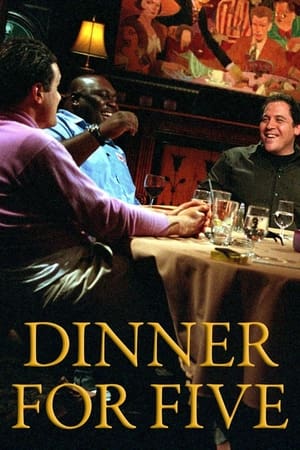
Dinner for Five is a television program in which actor/filmmaker Jon Favreau and a revolving guest list of celebrities eat, drink and talk about life on and off the set and swap stories about projects past and present. The program seats screen legends next to a variety of personalities from film, television, music and comedy, resulting in an unpredictable free-for-all. The program aired on the Independent Film Channel with Favreau the co-Executive Producer with Peter Billingsley. The show format is a spontaneous, open forum for people in the entertainment community. The idea, originally conceived by Favreau, originated from a time when he went out to dinner with colleagues on a film location and exchanged filming anecdotes. Favreau said, "I thought it would be interesting to show people that side of the business". He did not want to present them in a "sensationalized way [that] they're presented in the press, but as normal people". The format featured Favreau and four guests from the entertainment industry in a restaurant with no other diners. They ordered actual food from real menus and were served by authentic waiters. There were no cue cards or previous research on the participants that would have allowed him to orchestrate the conversation and the guests were allowed to talk about whatever they wanted. The show used five cameras with the operators using long lenses so that they could be at least ten feet away from the table and not intrude on the conversation or make the guests self-conscious. The conversations lasted until the film ran out. A 25-minutes episode would be edited from the two-hour dinner.
Épitaphe
Stacey Dooley, Jonnie Peacock, Ann Widdecombe and Michael Mosley work alongside staff at King's College Hospital to find out just what it takes to keep the nation alive.