"The king, the squirrel and the grass snake" is a two‑part French historical drama set in 17th‑century Paris, following the intense rivalry between Nicolas Fouquet, the brilliant and flamboyant Superintendent of Finances, and Jean‑Baptiste Colbert, the calculating administrator determined to bring him down. As Fouquet rises in power, wealth, and prestige—building the magnificent château of Vaux‑le‑Vicomte and securing Mazarin’s favor—his influence begins to alarm the young Louis XIV. Colbert seizes the opportunity to undermine his rival, weaving a political trap that will reshape the future of the kingdom. Through court intrigues, shifting alliances, and the growing authority of the Sun King, the film portrays the fall of a man who shone too brightly and the birth of absolute monarchy in France.
A young and impoverished Barney Barnato emigrated from England to South Africa in 1870. There he first works at a circus and falls in love with and later marries Fanny. The ambitious Barnato uses his business acumen to establish himself within the rough business world of diamond mining and trading in Kimberly. Often crossing paths with the equally ambitious Cecil Rhodes.
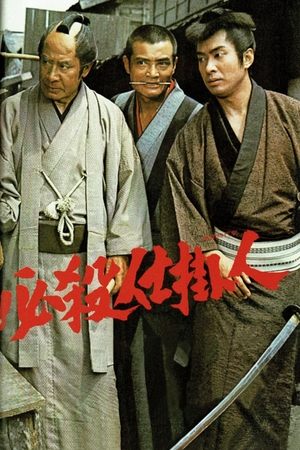
A shikakenin was an under-the-cover trade that undertook killing in Edo. Hanemon of Otowa, an agency that introduced laborers and maids, was also one of these. Katsugoro Iseya was a timber dealer who had come in as a client. His target was the constructions magistrate Hanno, and the Tatsumiya who sipped on the benefits. Hanemon who had a stong code towards killing, where he would only kill those who do no good to be in the world, accepts this request. Baian Fujieda, a needle doctor would carry out the killing. However, the professional killer Baian fails to bring down Tatsumiya. Hanemon then looks to another shikakenin, the ronin Sanai Nishimura for the role. Although Sanai's ability with the sword is good, he lives poorly in a tenement, and accepts this commission on the condition that it is kept a secret from his wife and child. Here, they close in on Hanno and Tatsumiya again...
Ana de Mendoza y de Silva, Princess of Éboli, is accused of treason and imprisoned in 16th Century Spain.
Isobe Isobe is a samurai school student who dreams of becoming a great samurai but tries his best to slack off every day. If only we could live like this. A Reiwa period comedy dedicated to all Japanese people who try too hard.
Pretenders was a 13 episode British television series produced by Harlech Television in the UK in February 1972 on ITV. Pretenders was filmed in Somerset, England and Wales. The 13-part historical adventure series with a factual background starring Frederick Jaeger as a German mercenary who assists Elam, a boy who believes he is the illegitimate son of The Duke Of Monmouth, who in turn is the illegitimate son of Charles ll, and therefore claims to be rightful heir to the throne. The series followed their various adventures, leading up to the climactic battle of Sedgemoor, the last battle on English soil.
The fascinating story of John Harrison who, in the 18th century, believed he could make a clock that would work on board a ship—and so solve the problem of finding longitude at sea.
It is 1845. Toyama Kinshiro is a town magistrate who roams Edo in guise of Kinsan the playboy. In his efforts to keep Edo crime-free, he allies himself with Onna Nezumi, a female Robin Hood. Watch Kinsan unveil his cherry blossom tattoo and bring criminals to justice.
In Edo, a determined young swordsman, Chiba Shūsaku, joins a dojo to pursue his dream. He forges strong friendships with fellow students, including one who works for a magistrate. As Shūsaku trains under a respected master, he faces challenges both within the dojo and in the city, growing as a swordsman and navigating the vibrant Edo society.
Norsemen is an epic and humorous drama series set in the Viking Age. The residents of an 8th-century Viking village experience political rivalry, social change and innovations that upend their culture and way of life.
Based on Kazuo Koike's extensive manga (over 110 volumes), this Edo-period drama follows an unlikely pair of law enforcement officers. One is a serious, skilled investigator, while the other is a witty, unconventional problem-solver, creating a dynamic partnership. The series also features the charmingly unorthodox detective Suruyoshi in a notable period drama debut. A memorable and catchy soundtrack complements the engaging stories brought to life by a large and talented cast.
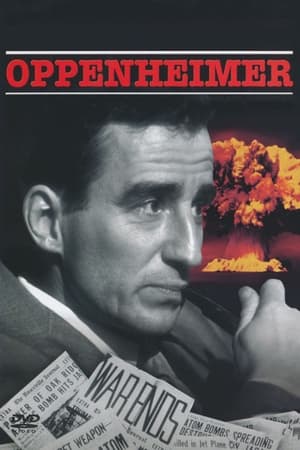
Spanning 1938 to 1953, theoretical physicist Robert Oppenheimer leads the effort to develop the atom bomb during the Second World War. When revealed, his work initially makes him a hero in the United States, but an ever-changing world soon sees him recast as a security risk.
A dramatisation of the life of famed playwright William Shakespeare from 1590 to 1607.
Years after Spanish conquistador Pedro de Heredia betrayed her people and broke her heart, indigenous woman Catalina reenters his life to get revenge.
The Idiot (Идиот) is a 2003 Russian costume drama television serial written by Vladimir Bortko, adapted from Fyodor Dostoevsky's 1869 novel of the same title. In corrupt 19th-century St Petersburg, Christ-like Prince Myshkin becomes entangled in the lives of the self-destructive Nastasya Filippovna and the romantic Aglaya Epanchina.
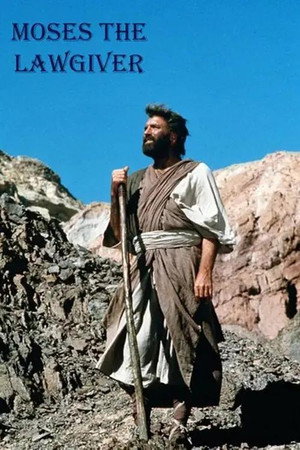
The Story of the Exodus or freedom of Hebrews from Egypt is told in a perspective which highlights Moses' efforts to persuade first the stubborn Pharaoh Merneptah, who was his adopted cousin, to release his work force of slaves. Then, once free and in the wilderness en route to the Promised Land, Moses must prove to be a pious and patient leader or lawgiver to a people who still think they want more out of him or God. For 40 years, Moses must carry on this load and challenge for God and Israel.
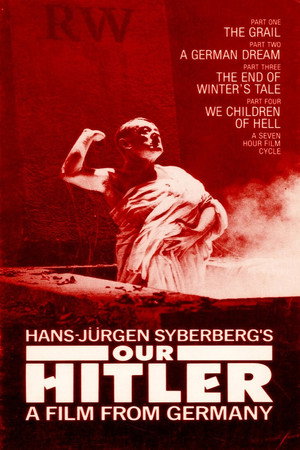
A structure-free, four-part examination of the rise and fall of the Third Reich. Each part explores a different topic, from Hitler's cult of personality in propaganda to how said propaganda was associated with pre-Nazi German cultural, spiritual, and national heritage to the Holocaust and the ideology behind it, particularly from Himmler's point of view.
Duceppe' was a historical television series that aired on Télé-Québec in 2002. It told the story of Jean Duceppe, a Canadian actor, and chronicled the life and struggles of Duceppe for theater and Quebec independence. It also followed his wife Helene Rowley and his son Gilles Duceppe, who would later become prominent as the leader of the Bloc Québécois. The series starred Paul Doucet as Jean Duceppe and Suzanne Clément as Hélène Rowley.
In this modern world, air travel represents the height of luxury and Pan Am is the biggest name in the business. The planes are glamorous, the pilots are rock stars and the stewardesses are the most desirable women in the world. They're trained to handle everything from in-air emergencies to unwanted advances—all without rumpling their pristine uniforms or mussing their hair.
In 1912, 1,316 passengers, from poor emigrants looking for new life in America to some of the world's wealthiest people, boarded the RMS Titanic for her maiden voyage across the Atlantic. Events unfold through the points of view of those aboard, from first class to steerage, as the early jubilant mood turns dark and the passengers are shaken from their private worlds of secrets, love and resentment. The individual stories come together in a playing field levelled by disaster as everyone struggles to survive, leaving the lives of those involved forever changed.