After World War I, political divisions deepen in a village in Upper Bavaria. Julius Kraus, a reclusive cobbler, finds himself caught between the fronts when his Jewish identity is revealed. The two 90-minute feature films are based on the novel "Unruhe um einen Friedfertigen" (Unrest Around a Peaceful Man) by Oskar Maria Graf, a masterpiece of German-language exile literature.
Lu Yiping, one of many children of a retired general with nine wives, is banished from her family home due to Wang Xueqin. Driven by resentment, she plots revenge by targeting her stepsister's love interest, He Shuhuan. But as Yiping navigates life with her mother, she unexpectedly finds forgiveness and love through the people she meets, transforming her journey of vengeance into one of self-discovery and healing.
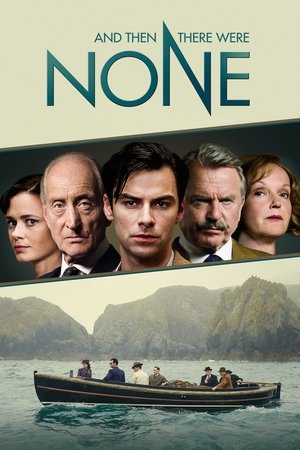
Ten strangers, drawn away from their normal lives to an isolated rock off the Devon coast. But as the mismatched group waits for the arrival of the hosts -- the improbably named Mr. and Mrs. U.N. Owen -- the weather sours and they find themselves cut off from civilization. Very soon, the guests, each struggling with their conscience, will start to die -- one by one, according to the rules of the nursery rhyme 'Ten Little Soldier Boys' -- a rhyme that hangs in every room of the house and ends with the most terrifying words of all: '... and then there were none.
The Waltons live their life in a rural Virginia community during the Great Depression and World War II.
14 de abril, la República
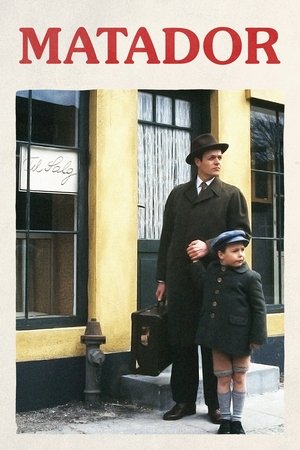
Matador is a Danish TV series produced and shown between 1978 and 1982. It is set in the fictional Danish town of Korsbæk between 1929 and 1947. It follows the lives of a range of characters from across the social spectrum, focusing specifically on the rivalry between the families of two businessmen: The banker Hans Christian Varnæs, an established local worthy, and social climber Mads Skjern, who arrives in town as the series opens. The name Matador was taken from the localised edition of the boardgame Monopoly, also the series' tentative English title. In addition, in contemporary Danish a "matador" is often used to describe a business tycoon, in the series referring to the character of Mads Skjern and his craftiness as a self-made entrepreneur. Directed by famed Danish film maker Erik Balling, Matador was the idea of author Lise Nørgaard who wrote the bulk of the episodes alongside Karen Smith, Jens Louis Petersen and Paul Hammerich. The series is one of the most well-known and popular examples of Danish television and represents the peak of longtime development of Danish TV drama by the public service channel Danmarks Radio. The series has become part of the modern self-understanding of Danes, partly because of its successful mix of melodrama and a distinct warm Danish humour in the depiction of characters, which were portrayed by a wide range of the most popular Danish actors at the time; but also not least because of its accurate portrayal of a turbulent Denmark from around the start of the Great Depression and through Nazi Germany's occupation of Denmark in World War II.
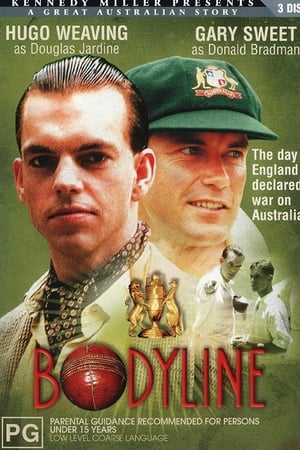
Dramatization of the 1932/33 Test cricket series between England and Australia. Played in Australia, the series gained notoriety in Australian and worldwide cricketing history for the fact that the English team (headed by captain Douglas Jardine) applied a bowling technique called "leg theory", or more commonly, Bodyline. This technique involved bowlers bowling the ball directly at the batsman's body, and resulted in many of the Australian team receiving numerous bruises and injuries, with batsman Bert Oldfield sustaining a cracked skull. The series generated much anger and resentment towards the English team within Australia and seriously damaged Anglo-Australian cricketing relations at the time.
Manchester millionaire's son Nick Faunt leaves home at the height of the Depression to become an artist. When he meets Irish serving girl Anna Fitzgerald, a strange love story begins.
Agnostic Charles Ryder is seduced by the allure of the Flytes, a wealthy aristocratic family. Although he finds himself at odds with their strong Catholicism, his ties to the family deepen for the decades between the two world wars.
The Ku family are living in the Republic of China era (1930s) as a prestigious household in a wealthy part of Nanjing. Soon, word spreads that the city is being taken over by Imperial Japanese forces. The Ku family - a family of all daughters and a father and mother of weakening health - are soon forced to pack their belongings to leave the war-torn area. One of their servants recommends they move to the rural areas. To their dismay, life is incredibly difficult and they live in poverty. The family is in pieces as each daughter struggles with numerous difficulties in the countryside. However, all members of the family eventually grow closer together as they work in the rural area.
Taking place in the year 1937 on the eve of World War II, the story involves a mysterious spy training organization known as the "D Agency." The organization is established by Lieutenant Colonel Yuuki from the Imperial Japanese Army. His ideals lead him to recruit people beyond military academy graduates and personnel, while training them to become skilled agents in arts of manipulation. These agents would become a specialized team to conduct operations. One such antihero agent, under the name Jirou Gamou, goes on a harrowing mission to uncover secret documents titled "Black Notes," while battling forces from within and without his own ranks.
In 1935, financially strapped widow Louisa Durrell, whose life has fallen apart, decides to move from England, with her four children (three sons, one daughter), to the island of Corfu, Greece. Once there, the family moves into a dilapidated old house that has no electricity and that is crumbling apart. But life on Corfu is cheap, it's an earthly paradise, and the Durrells proceed to forge their new existence, with all its challenges, adventures, and forming relationships.
Eighteen Springs (also known as Affair of Half a Lifetime) is a 2003 drama-romance TV series based on the novel of the same name by Chinese author Eileen Chang. The series stars Ruby Lin, Patrick Tam, Jiang Qinqin and Li Liqun. It had the most simultaneous broadcasts on China cable/satellite TVs during 2004. The series was filmed in Shanghai and Taiwan.
In 1934, four brilliant Cambridge students are recruited to spy for Russia. Fueled by youthful idealism, a passion for social justice and a talent for lying, they take huge personal risks to pass Britain's biggest secrets to Moscow.
The story of a group of inspirational women in a rural Cheshire community with the shadow of World War II casting a dark cloud over their lives. As the conflict takes hold and separates the women from their husbands, fathers, sons and brothers, the characters find themselves under increasing and extraordinary pressures in a rapidly fragmenting world. By banding together as the Great Paxford Women’s Institute, they help maintain the nation’s fabric in its darkest hour, and discover inner resources that will change their lives forever.
Epic drama set in the summer of 1932 where India dreams of independence, but the British are clinging to power. Set against the sweeping grandeur of the Himalayas and tea plantations of Northern India, the drama tells the rich and explosive story of the decline of the British Empire and the birth of modern India, from both sides of the experience. At the heart of the story lie the implications and ramifications of the tangled web of passions, rivalries and clashes that define the lives of those brought together in this summer which will change everything.
Set in 1930s Shanghai, Jiang Xin, an heir to a wealthy family, loses her memory in an accident. Du Xiaohan assumes her identity, while the real Jiang Xin is captured by powerful businessman Bai Zhangjie.
In a backwater corner of the South Pacific in 1938, a young American adventurer and his ragtag group of friends become involved in death-defying hi-jinx, transporting people-on-the-run in a well-worn Grumman Goose seaplane.
A century-old vampire from New Orleans reunites with an ailing journalist to recount his life of bloodlust and his tumultuous relationship with the rakish Frenchman who turned him.
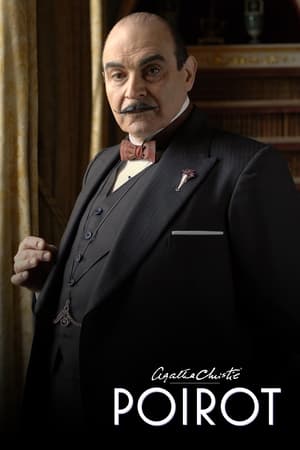
From England to Egypt, accompanied by his elegant and trustworthy sidekicks, the intelligent yet eccentrically-refined Belgian detective Hercule Poirot pits his wits against a collection of first class deceptions.