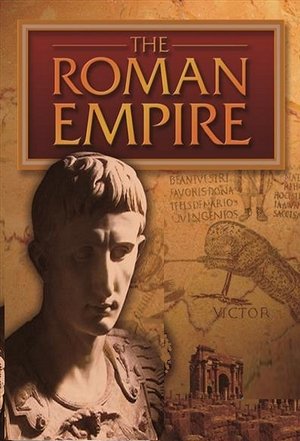
Throughout history, civilizations have come and gone, but few have altered the world as immensely as the Roman Empire. From its legendary founding by Romulus and Remus to its magnificent takeover of the Mediterranean to its eventual fall amidst the rise of Christianity, the many lasting influences of the Roman civilization remain with us today. Experience documentary history at its best and bear witness to the rise and fall of an empire.
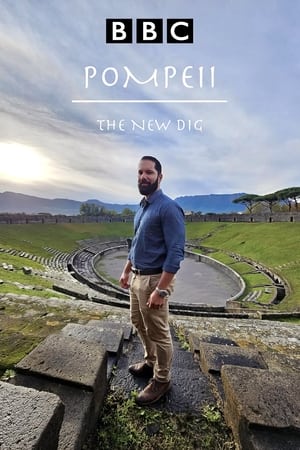
This new series follows International teams of archaeologists on the front line, as they embark on a season of excavations to unravel the secrets of life in the Roman Empire. Crawling beneath Pompeii, unearthing an enormous lost coliseum, and hauling a 2000 year old battleship ram from the depths of the ocean, they race to unlock the secrets of this ancient civilization.
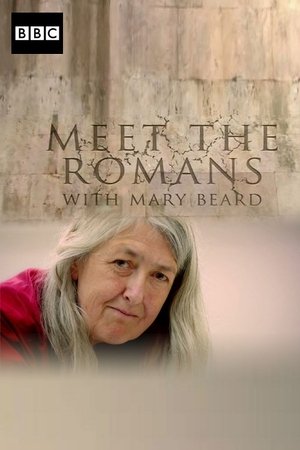
A down-to-earth account of the lives of both illustrious and ordinary Romans set in the last days of the Roman Republic.
Up Pompeii! is a British television comedy series broadcast between 1969 and 1970, starring Frankie Howerd. The first series was written by Talbot Rothwell, a scriptwriter for the Carry On films, and the second series by Rothwell and Sid Colin. Two further specials were transmitted in 1975 and 1991. In ancient Pompeii, much-put-upon slave Lurcio navigates the chaotic lives of his owner's family
Each episode explores a decisive clash that forged pharaonic power and sparked cultural exchanges that helped build one of the greatest empires in history.
In 90 A.D., ancient Rome played host to a sporting spectacle that attracted crowds three times the size of the Colosseum?s gladiator games: chariot racing. Every week, 150,000 fans packed the massive Circus Maximus, not just to cheer on the speed, fury, and danger of the races, but to witness the champion charioteer, Flavius Scorpus. Examine his improbable rise from young slave to arguably the most successful competitor in the sport?s history.
Do you know the real story behind the New Testament? We all share a fascination for discovering ‘the rest of the story.’ Through reading the New Testament we discover that God indeed keeps his promises, but those promises don’t always look like what people expected. Especially when it comes to Jesus. Join well-known Bible scholars N.T. Wright and Michael F. Bird as they team up to take you on a tour of the explosive story behind the story of the New Testament.
Three people's fates are interwoven in the Battle of the Teutoburg Forest in 9 A.D., during which Germanic warriors halt the spread of the Roman Empire.
Against the background of decline of the Roman Empire, "Peplum" takes us into the lives of Bravus, a former slave who became adviser to the tyrannical Emperor Maximus. Under pressure, stuck between a professional life stressful and chaotic family life, his days are not looking easy. Indeed, work side Bravus must wet the gown to slow a decline that has a tendency to accelerate under the leadership of the incompetent messy, cruel, capricious and narcissistic Maximus. Personal side, he must face every night his son Caius freshly converted to Christianity, his wife Octavia, foreign to the codes of good Roman society and daughter Lydia sassy which assimilates too well. "Peplum" or how to avoid the burn out in a declining society. The parallel with today can not be a coincidence.
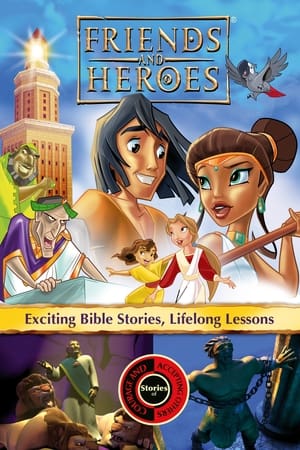
Friends and Heroes is a Christian children's program that airs on TBN, Smile of a Child TV, and was also shown on BBC TV. The show is both traditionally animated and computer animated. It takes place from 69 - 71 AD. There are three series each of 13 Episodes: Series 1 is set in Alexandria, Egypt; Series 2 in Jerusalem and Series 3 in Rome. The series was created by Brian D. Brown and Eric J. Danenberg, who also worked on The Storykeepers.
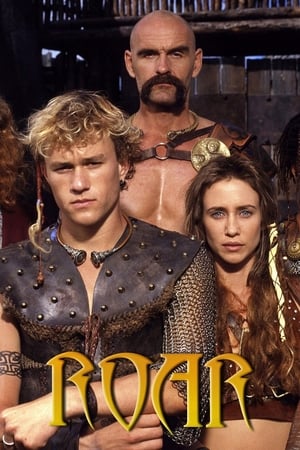
Roar is an American television show that originally aired on the Fox network in July 1997. In the year AD 400, a young Irish man, Conor, sets out to rid his land of the invading Romans, but in order to accomplish this, he must unite the Celtic clans.
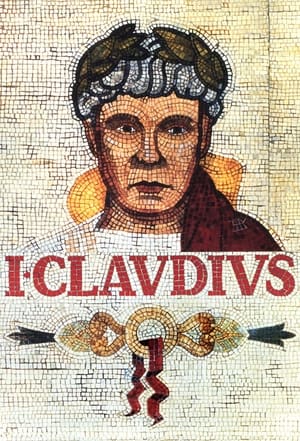
Acclaimed blackly comic historical drama series. Set amidst a web of power, corruption and lies, it chronicles the reigns of the Roman emperors - Augustus, Tiberius, Caligula and finally Claudius.
Archaeologist and historian Richard Miles traces the development of Western civilization, from the first cities in Mesopotamia to the fall of the Roman Empire. In this six-part series, Miles travels through the Middle East, Egypt, Pakistan and the Mediterranean to discover how the challenges of society -- religion and politics, art and culture, war and diplomacy, technology and trade -- were dealt with and fought over in order to maintain a functioning civilization. Stories are told of disappeared, ruined and modern cities, from ancient Iraq to modern Damascus, to reveal how successes and failures of the ancients shaped the world today.
This stylish mix of documentary and historical epic chronicles the reign of Commodus, the emperor whose rule marked the beginning of Rome's fall.
Four mighty civilisations - Rome, Egypt, Japan's Samurai and the Aztecs. Their legends remain - now priceless artefacts reveal what led them to fall into the echoes of history.
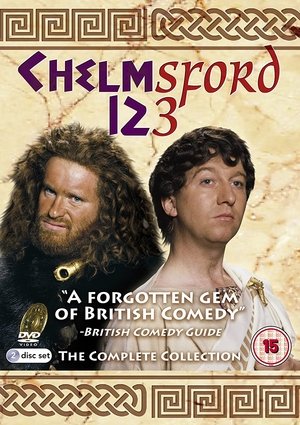
Chelmsford, Britain in the year AD 123; there is a power struggle between Roman governor Aulus Paulinus and the British chieftain, Badvoc. Britain is a miserable place, cold and wet – just the place to exile Aulus for accidentally insulting the Emperor's horse, but also give him something useful to do. Aulus, probably a play on Aulus Platorius Nepos, the governor of Roman Britain between 122 and 125, was a rather delicate Roman, who was usually outwitted by the scheming Badvoc, who hadn't had a haircut for twenty-five years.
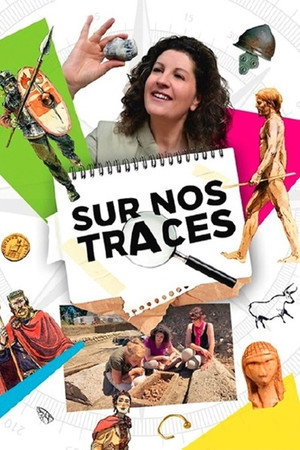
Sur nos traces
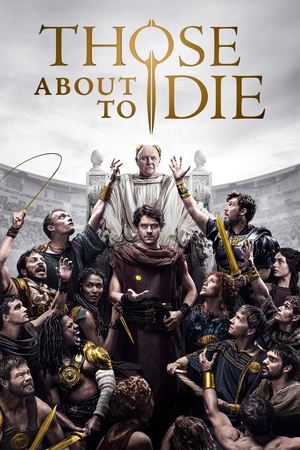
Within the spectacular, complex and corrupt world of gladiatorial sports in Ancient Rome, follow an ensemble of diverse characters across the many layers of Roman society where sports, politics and business intersect and collide.
The Caesars is a British television series produced by Granada Television for the ITV network in 1968. Made in black-and-white and written and produced by Philip Mackie, it covered similar dramatic territory to the later BBC adaptation of I, Claudius, dealing with the lives of the early emperors of Ancient Rome, but differed in its less sensationalist depictions of historical characters and their motives.
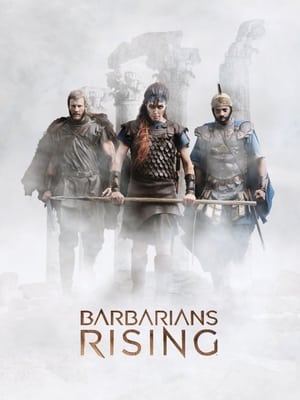
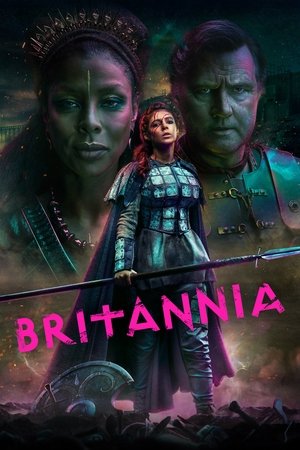
Told from the perspective of the rebel leaders, the series chronicles a wave of rebellions against absolute power by those the Roman Empire called “barbarians” – tribes they viewed as beyond the fringe of civilization that lived a brutish and violent existence. But these also were men and women who launched epic struggles that shaped the world to come with a centuries-long fight to defeat the sprawling empire.