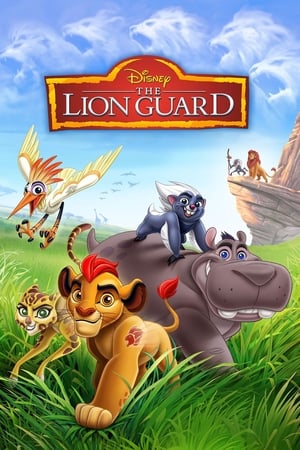
Simba's son, Kion, assembles a group of animals to protect the Pride Lands, known as the Lion Guard.
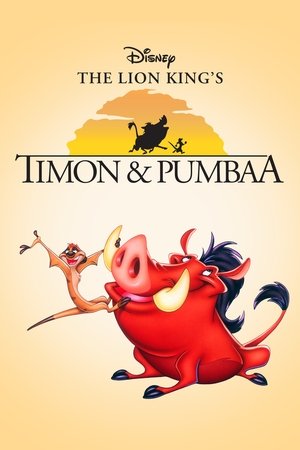
Set after the events of the "The Lion King," follow Timon and Pumbaa as they go on misadventures in the jungle, as well as across the globe in various.
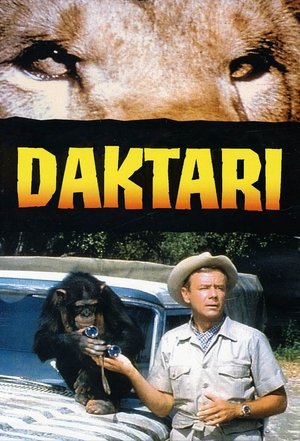
Daktari is an American children's drama series that aired on CBS between 1966 and 1969. The series, an Ivan Tors Films Production in association with MGM Television, stars Marshall Thompson as Dr. Marsh Tracy, a veterinarian at the fictional Wameru Study Centre for Animal Behaviour in East Africa.
Scout's Safari is a children's television series that aired on the Discovery Kids Channel and Saturday mornings on NBC. The series was created by Thomas W. Lynch.
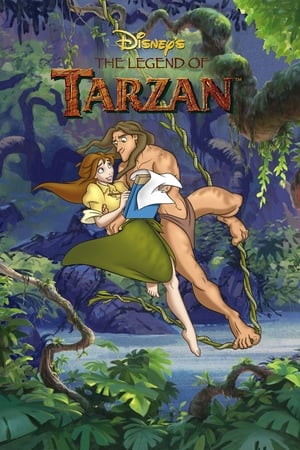
The Legend of Tarzan picks up where the 1999 feature film left off, with the title character adjusting to his new role as leader of the apes following Kerchak's death, and Jane adjusting to life in the jungle. Rounding out the cast are Jane's father, Professor Archimedes Porter; Tantor, the germophobic elephant; and Terk, a wisecracking female gorilla and Tarzan's old wrestling buddy.
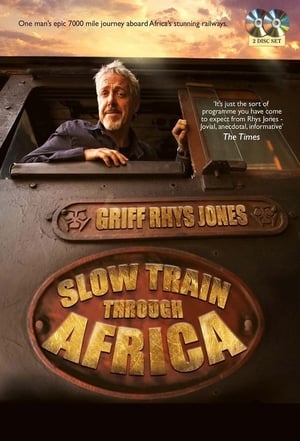
In this series, Griff Rhys Jones embarks on a leisurely journey across Africa, utilizing the continent's railways as a means to truly experience its beauty and charm. Spanning 7,000 miles over five separate journeys, Griff explores diverse landscapes, encounters remarkable wildlife, and meets intriguing individuals. Through a combination of breathtaking aerial footage and insightful travelogue, Griff shares his unique perspective on Africa, gained from his experiences on and off the train. As he traverses the continent in five episodes, Griff discovers how the railway network offers a window into the history, culture, and daily life of the places he visits. By train, he ventures into remote deserts, forests, villages, and cities, uncovering their stories and learning about their modern-day significance.
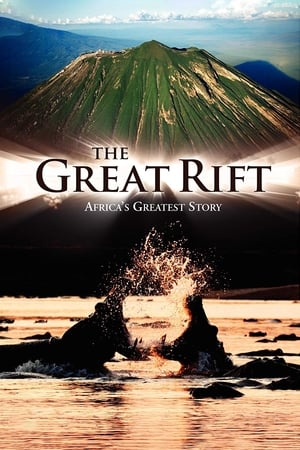
A BBC/Animal Planet co-production, the three-part series focuses on the landscape and wildlife of the Great Rift Valley in East Africa.
When a family come into possession of a statue called The Grinnygog, a trio of benevolent witches are summoned to the village where they live.
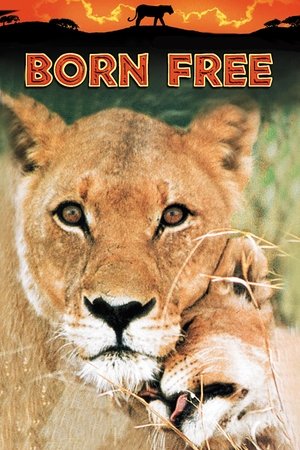
The adventures of two married game wardens in Kenya. George Adamson and Diana Muldaur live with their adopted lioness Elsa the Lioness, where they protect the animals in the surrounding area from all sorts of danger, both natural and human.
Jungle Jim is a 26-episode syndicated adventure television series which aired from 1955 till 1956, starring Johnny Weismuller, as Jim "Jungle Jim" Bradley, a hunter, guide, and explorer in, primarily, Africa. The program should not be confused with Ramar of the Jungle, but is based on the Jungle Jim comic strip created by Alex Raymond and Don Moore. Starring with Weismuller were Martin Huston as Jungle Jim's teenage son, Skipper; Dean Fredericks as Haseem, the Hindu manservant, and Neal, a chimpanzee from the World Jungle Compound, as Tamba. Paul Cavanagh played Commissioner Morrison in nine episodes. Produced by Harold Greene, the series was filmed by Screen Gems, a subsidiary of Columbia Pictures. The program aired in 158 American media markets and in thirty-eight other nations.Earl Bellamy directed the first four episodes of the new series. The series capitalized on the popularity of Weismuller, who had just completed his last film of Tarzan, the jungle character created by Edgar Rice Burroughs. Jungle Jim was a low-budget offering that relied heavily on stock footage and was not renewed beyond its original episodes.
The cameras follow the lives of human and animal families living in Kenya’s Samburu National Reserve. They also follow the story of a safari camp run by wildlife expert Saba Douglas-Hamilton and an elephant conservation charity run by her husband Frank Pope.
This series explores the facts and investigates the truth behind the British Redcoat Army's campaign in Zululand during 1879. The war was started by a country at the height of it's imperial powers and prosecuted by an army charged with the responsibility of implementing a policy known as Confederation - a proposal to unite various black and white factions in South Africa under British authority. Interviews, on-location footage and new geological surveys all help to reconstruct the conflicts and give insight into the tactics used in these epic battles.
Stephen Tompkinson and hot air balloon pilot Robin Batchelor embark on the journey of a lifetime across the African continent. They experience the amazing abundance and diversity of wildlife and explore the relationship between Africa's game and its people.
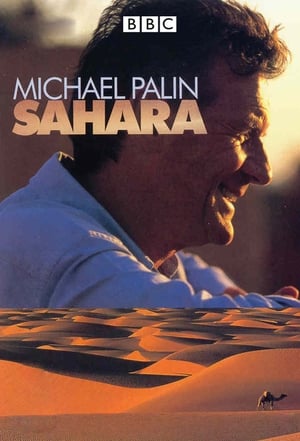
In this four-part BBC documentary, former Monty Python funnyman and renowned globe-trotter Michael Palin sets off from Gibraltar to travel across the Sahara, his witty humor downplaying the hardships he faces along the arduous journey. He travels to Morocco, Mauritania, Mali and beyond, across some of the harshest terrain on the planet.
A series about the history of Africa with Basil Davidson. It was produced in a collaboration between Channel 4, the Nigerian Television Authority and RM Arts in 1984 and consisted of eight parts in four episodes. The film received the Gold Award from the 1984 International Film and Television Festival of New York. Each part is around an hour long.
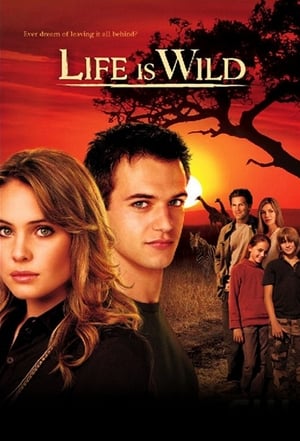
The story of a dysfunctional blended family from New York who moves to a rural South African town and finds they must rely on each other more than they ever did back home.
A four-part series set over a year in Africa and focuses on each season, revealing the different conditions they bring. Temperatures, rain, and light change every animal as they adapt to the new season.
The Earth’s continents are instantly recognizable. These iconic landmasses seem permanent and unchanging, yet they are merely the wreckage of a much larger long-lost supercontinent – Pangaea. In this stunning four part series Professor Iain Stewart uncovers the evidence for this ancient past. He reveals how the world around us is full of clues – in the rocks, the landscapes and even the animals. All of which tell us how the land we live on was created.
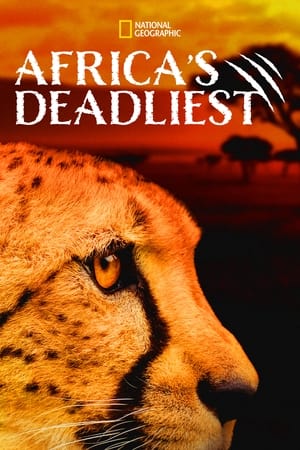
Africa is a land sculpted by time where animals have evolved complex weapons to arm them in the battle to live another day. An elephant's tusks can defend, or attack. An octopus uses camouflage to find food, or hide from an enemy. A Cape Fur Seal's speed and agility are valuable tools to catch a penguin, but ineffectual against a Great White Shark. A single hippopotamus holds a pride of twelve lions at bay with his sheer bulk, but backs down when faced with the piercing teeth of another hippo. With lethal weapons wielded by fearsome predators and prey, animals walk a precarious path, here among Africa's Deadliest.
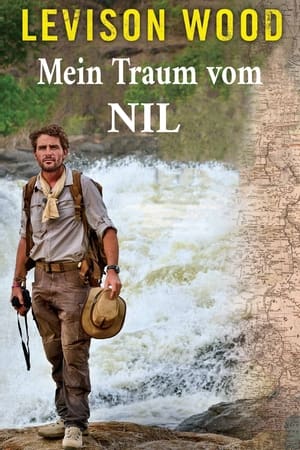
Explorer Levison Wood sets out on a nine-month walk along the length of the River Nile, visiting rainforests, deserts, cities and war zones, and encountering modern Africa, its people and its wildlife.