Follow a tight-knit, but slightly dysfunctional, family through their misadventures.
A mysterious organization known as Panther Claw make their presence known by terrorizing Tokyo and giving the cops a run for their money. Police are further baffled by the appearance of a lone cosplaying vigilante who thwarts all of Panther Claw's evil schemes before disappearing. That cosplayer is Honey Kisaragi, the result of the late Professor Kisaragi's prize experiment. A master of disguise, Honey can instantly alter her physical appearance and outfits. But with a push of the heart-shaped button on her choker, she transforms herself into Cutie Honey, the scantily clad, sword-wielding warrior of love and justice.
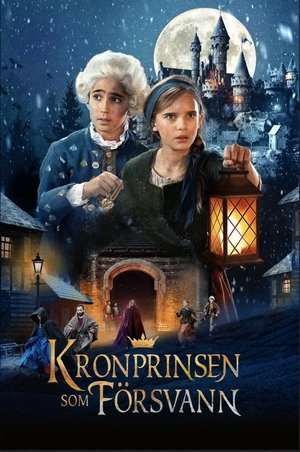
Ever since Clint's father Pontus disappeared on Christmas Eve five years ago, Clint has loathed Christmas. But everything changes when a mysterious man appears in his closet and drops a time spy. When Clint tries the binoculars, he sees his father stuck in ancient times. At the same time, strange things begin to happen - Gustav Vasa steps out of the closet, misplaced by 500 years. With the help of the time viewer, Clint embarks on a breathtaking adventure to save his father, where he travels through history.
When Håkan's mother Karin, who usually does most of the work in the family, becomes so stressed at the beginning of December that she breaks down and has to be admitted to a psychiatric hospital, there is a crisis, because Christmas is coming soon. Who will clean up, decorate and buy Christmas presents? And above all, where will the money come from?
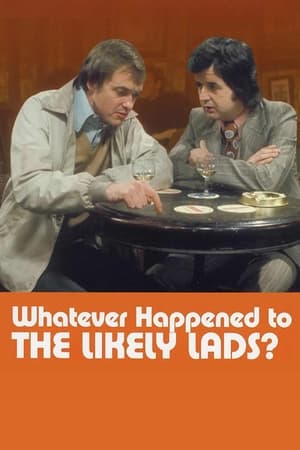
Whatever Happened to the Likely Lads? is a British sitcom which was broadcast between 9 January 1973 and 9 April 1974 on BBC1. It was the colour sequel to the mid-1960s hit The Likely Lads. It was created and written, as was its predecessor, by Dick Clement and Ian La Frenais. There were 26 television episodes over two series; and a subsequent 45-minute Christmas special was aired on 24 December 1974. The cast were reunited in 1975 for a BBC radio adaptation of series 1, transmitted on Radio 4 from July to October that year. In 1976, a feature film spin-off was made. Around the time of its release, however, Rodney Bewes and James Bolam fell out over a misunderstanding involving the press and have not spoken since. This long-suspected situation was finally confirmed by Bewes while promoting his autobiography in 2005. Unlike Bewes, Bolam is consistently reluctant to talk about the show, and has vetoed any attempt to revive his character.
Having a hard time making ends meet after her divorce, Millicent Torkelson moves her three children to Seattle, where she becomes the nanny to the spoiled Morgan children.
The continuing adventures of paranormal investigators Dr. Peter Venkman, Dr. Egon Spengler, Dr. Ray Stantz, Winston Zeddemore, their secretary Janine Melnitz and their mascot ghost Slimer.
This animated series chronicles the further adventures of renegade scientist Dr. Jumba Jookiba's beloved Experiment 626, who is now living happily as Lilo's alien buddy Stitch. Jumba’s remaining experiments have landed all over Hawaii in the form of dehydrated pods. Lilo and Stitch’s mission is to catch Stitch’s "cousins" before they fall into the clutches of the evil Dr. Jacques von Hamsterviel!
A brilliant chocolatier who's afraid of making eye contact meets an heir who can't touch others — but somehow, they're immune to each other.
Nan Harding is the new student at Mr. and Mrs. Bhaer's school. Everyone thinks that she is a pain in the head, but not Mrs. Jo. Together with the other kids, they all embark on their personal adventures and misfortunes while learning in school.
Honey, I Shrunk the Kids: The TV Show is an American syndicated science fiction sitcom based on the 1989 film, Honey, I Shrunk the Kids. It expands upon the original film's concept of a shrinking experiment gone wrong to include a myriad of experiments gone awry. It debuted in first-run syndication on September 1, 1997 and ran for three consecutive seasons, concluding with the 66th episode on May 20, 2000. Peter Scolari took over the role as Wayne Szalinski, the wacky inventor in the original film, played by Rick Moranis. Each episode incorporates new technologies and digital effects to feature the family in various new adventures. The series was filmed in Calgary, Alberta, with its main studios located in Currie Barracks, a decommissioned Canadian Forces dormitory.
Going Straight is a BBC sitcom which was a direct spin-off from Porridge, starring Ronnie Barker as Norman Stanley Fletcher, newly released from the fictional Slade Prison where the earlier series had been set. It sees Fletcher trying to become an honest member of society, having vowed to stay away from crime on his release. The title refers to his attempt, 'straight' being a slang term meaning being honest, in contrast to 'bent', i.e., dishonest. Also re-appearing was Richard Beckinsale as Lennie Godber, who was Fletcher's naïve young cellmate and was now in a relationship with his daughter Ingrid. Her brother Raymond was played by a teenage Nicholas Lyndhurst. Only one series, of six episodes, was made in 1978. It attracted an audience of over 15 million viewers and won a BAFTA award in March 1979, but hopes of a further series had already been dashed by Beckinsale's premature death earlier in the same month.
The gang from Bayside High is leaving home and heading to the campus of California University for four years of new challenges, new faces and wild, new adventures.
A League of Their Own is an American sitcom that aired from April 10, 1993 to April 24, 1993 with two additional episodes aired on August 13, 1993. based on the movie from 1992 starring Sam McMurray in his first leading role on a TV Show. Megan Cavanagh and Tracy Reiner reprised their roles from the movie.
Mr Bloom's Nursery: Special: Christmas 2012: Hoe Hoe Hoe
Coming on the heels of the direct-to-video sequel The Return of Jafar, the series picked up where that installment left off, with Aladdin now living in the palace, engaged to beautiful and spunky Princess Jasmine. "Al" and Jasmine went together into peril among sorcerers, monsters, thieves, and more. Monkey sidekick Abu, the animated Magic Carpet, and the fast-talking, shape-shifting Genie came along to help, as did sassy, complaining parrot Iago, formerly Jafar’s pet but now an antihero.
The hilarious, wacky investigator and his pal Spike attempt to solve a series of baffling cases involving missing or stolen animals.
Histórias Quase Verdadeiras
Catch up with Harper, Robyn, Jordan, Lance, Quentin, Shelby, Candace, and Murch as their relationships evolve and past grievances resurface in the unpredictable stages of midlife crisis meets midlife renaissance.
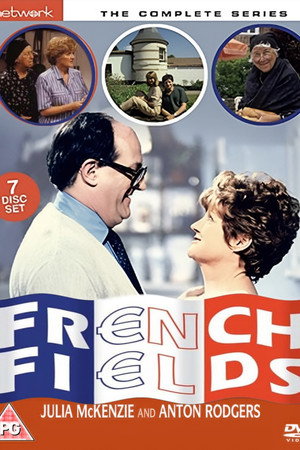
French Fields is a British situation comedy. It ran for 19 episodes from 5 September 1989 to 8 October 1991. It was written by John T. Chapman and Ian Davidson and was produced by Thames Television for ITV. The series starred Anton Rodgers and Julia McKenzie as husband and wife William and Hester Fields and followed the series Fresh Fields, which ran from 7 March 1984 to 23 October 1986. At the end of the last series of Fresh Fields, William accepted a position with a French company. French Fields follows Hester and William after they make the move to Calais. Other regular cast included their French real estate agent Chantal, who was also the Fields' neighbour to the left. On the right, were the horrible and snobbish English couple the Trendles. Hester and William also coped with Madame Remoleux, an unintelligible and ancient French woman who lived in and cared for the estate — called Les Hirondelles — where they all lived. Also, popping in on a regular basis, were local farmer and mayor Monsieur Dax and his daughter Marie-Christine, to whom Hester did her best to teach English. Nicholas Courtney also appeared frequently as the Marquis.