Behind the scenes of one of the most arduous basic military training programmes in the world. Each episode focuses on a cross-section of trainees that are either struggling or excelling at the physical and mental challenges the training presents.
Professor Suzannah Lipscomb wends her way around the country on the trail of history's most fascinating dynasty.
Three-part documentary about the sinking of the Spanish Armada, featuring dramatic reconstructions and information gleaned from recently recovered documents. Dan Snow takes to the sea to tell the story of how England came within a whisker of disaster in summer 1588.
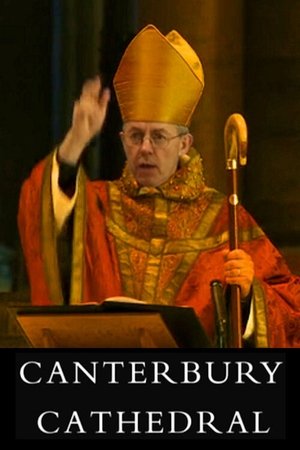
Documentary series covering a year in the life of Canterbury Cathedral.
The beloved and, to be fair, revered broadcaster returns to Britain after a year in Saudi Arabia to ask some important questions.
Presented by criminologist Professor David Wilson, this series focuses on the cases of seven notorious, cold-blooded psychopathic killers. Professor Wilson walks in their footsteps, living and breathing their movements and speaking to those closest to them as he tries to get inside their twisted minds.
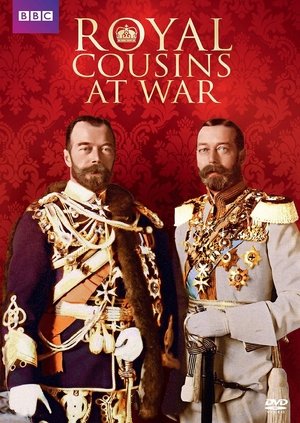
At the time World War I broke out, the King of England, the Czar of Russia, and the Kaiser of Germany were first cousins. This two-part series looks at the role played by Tsar Nicholas II of Russia, Kaiser Wilhelm II of Germany and King George V of England, and their relationships with each other, in the outbreak of war. Mismanaging their countries and mishandling foreign policy, they failed to adapt to the forces of nationalism and democracy, and so brought tumbling down their own ideal of a Europe governed by the descendants of Queen Victoria. While it was war that delivered the final blow, this fascinating series shows how the problems had set in much earlier. A two part miniseries.
The landmark documentary series that captures real life drama at its most intense, following police detectives around the clock as they investigate major crimes.
Most people stop at 2 , a few brave souls go on to have 3 or 4. But when it comes to having kids there are a handful of families who are bucking the trend... This 3 part series explores the lives of some of the UK's biggest families.
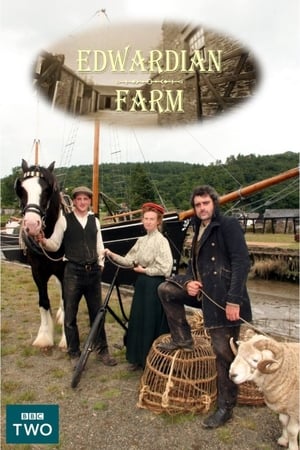
Edwardian Farm is an historical documentary TV series in twelve parts, first shown on BBC Two from November 2010 to January 2011. It depicts a group of historians trying to run a farm like it was done during the Edwardian era. It was made for the BBC by independent production company Lion Television and filmed at Morwellham Quay, an historic quay in Devon. The farming team was historian Ruth Goodman and archaeologists Alex Langlands and Peter Ginn. The series was devised and produced by David Upshal and directed by Stuart Elliott. The series is a development from two previous series Victorian Farm and Victorian Pharmacy which were among BBC Two's biggest hits of 2009 and 2010, garnering audiences of up to 3.8 million per episode. The series was followed by Wartime Farm in September 2012, featuring the same team but this time in Hampshire on Manor Farm, living a full calendar year as wartime farmers. An associated book by Goodman, Langlands, and Ginn, also titled Edwardian Farm, was published in 2010 by BBC Books. The series was also published on DVD, available in various regional formats.
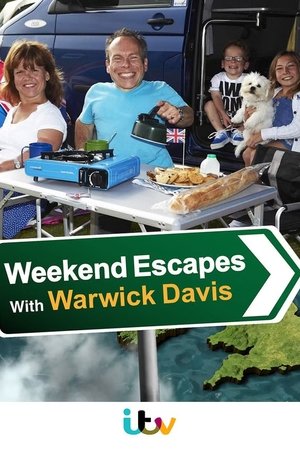
Warwick Davis is joined by his family for this new series about holidaying in Great Britain. As a keen ‘staycationer’, Warwick loves nothing more than spending time in Britain rather than travelling abroad, however his family don’t feel quite the same way. Over six episodes, Warwick and his wife Sam, kids Annabelle and Harrison and dog Sherlock explore the British Isles investigating what makes a quintessential British holiday. Warwick also tries to convince them of the benefits of holidaying near home. The Davis family visit some of Britain’s most famous holiday spots, camping, caravanning or staying in their campervan. As well as showing some of the great destinations the UK has to offer, the series is also an amusing insight into how families behave on holiday.
In an ambitious and groundbreaking approach to drama and history featuring dramatic reconstruction, historian Lucy Worsley time travels back to the Tudor Court to witness some of the most dramatic moments in the lives of Henry VIII's six wives.
This eight-part series interviews the Queen's Prime Ministers, members of the Royal Household and closest friends, to build a uniquely personal picture of Elizabeth, the woman, the mother, the Queen.
Insight into the London, West Midlands and North West of England ambulance services, from the highly-pressurised control room to the crews on the streets. Ambulance provides an honest 360-degree snapshot of the daily dilemmas and pressures.
The railway age in the Austrian Empire began with the construction of the horse-drawn railway from Linz to Budweis. Plans soon followed to connect the imperial capital of Vienna with the iron and coal deposits in northern Moravia and with the port city of Trieste. In 1837 the Kaiser Ferdinands Nordbahn was opened, in 1857 the Semmeringbahn planned by Karl Ritter von Ghega, overcoming one of the most difficult obstacles on the way to the Adriatic. The crossing of the Alps by train, such as over the Arlberg or the Brenner, is still considered a unique engineering masterpiece. The expansion of the railway network brought epochal changes. Goods and people circulated on an unprecedented scale – life accelerated. It had succeeded in connecting the northern crown lands such as Silesia or Bohemia and Moravia with Carinthia, Tyrol or the coastal region.
A Passion for Churches is a 1974 BBC television documentary written and presented by the then Poet Laureate Sir John Betjeman and produced and directed by Edward Mirzoeff. Commissioned as a follow-up to the critically acclaimed 1973 documentary Metro-land, the film offers Betjeman's personal poetic record of the goings-on taking place throughout the Anglican Diocese of Norwich and its churches in the run-up to Easter Sunday using the framing device of the Holy sacraments. Created with the approval of the Bishop of Norwich, Maurice Wood, the 49-minute film was shot on location in Norfolk and parts of Suffolk throughout the spring of 1974 on 16 mm colour film by cameraman John McGlashan. For the film, John Betjeman wrote an original poetic commentary consisting of blank verse, free verse, and prose and he appeared on-screen in several segments to describe features of ecclesiastical buildings and to reminisce about his lifelong "passion for churches". The programme was praised by critics upon its original BBC 2 screening in December 1974 and gained high audience appreciation figures. It has since been repeated on BBC Four in 2006. It was released on a limited-edition DVD in 2007.
Travelogue of England, Ireland and Wales, presented by Billy Connolly, including clips from his stand-up performances.
In this 3-part documentary series, Lucy Worsley travels across Britain and Europe visiting the locations where royal history was made. In palaces and castles and on battlefields she investigates how royal history is a mixture of facts, exaggeration, manipulation and mythology.
Monarchy is a Channel 4 British TV series, 2004-2006, by British academic David Starkey, charting the political and ideological history of the English monarchy from the Saxon period to modern times. The show also aired on PBS stations throughout the United States, courtesy of PBS-member station WNET. In Australia, all four seasons were broadcast on ABC1 from May 2005 onwards.
An epic story about the rebirth of one of England’s most historic clubs, Burnley FC under the ownership of a charismatic group of American owners and the leadership of Vincent Kompany in a season of footballing evolution.