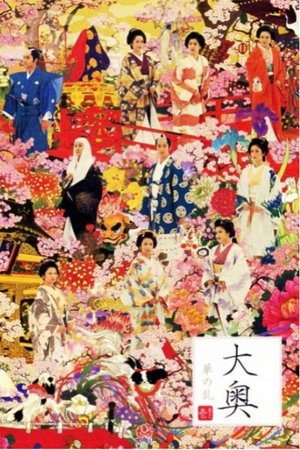
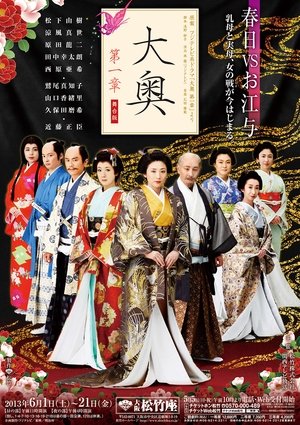
Tells the story of the women surrounding Tokugawa Tsunayoshi, the fifth shogun.
A dramatized biography of the second of Japan's three legendary leaders. Rising from obscurity, Hideyoshi served under the command of Oda Nobunaga. With an extraordinary combination of intelligence, bravery and military skill, Hideyoshi rose to near-absolute power and greatly expanded upon Nobunaga's unification of Japan's warlords. This series also focused on Hideyoshi's personal life, particularly his relationships with his mother and his wife, and the pair's rivalry for influence over him.
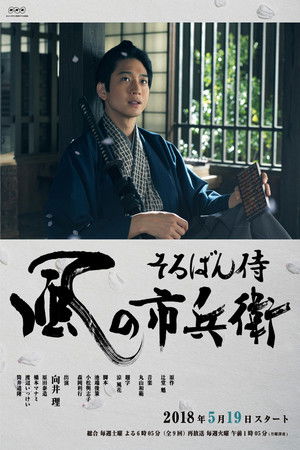
Set during the Bunsei period (1818-1931). Ichibei Karaki (Osamu Mukai) is a samurai with elite swordsman skills. He is also good at accounting and managing money. He is hired by various samurai families as their accountant and management consultant. He knocks down evils who give hard time to diligent people.
A dramatization of Ryotaro Shiba's novel of the same title about the life of Kobayashi Sahē, a chivalrous man who actually existed at the end of the Edo period.
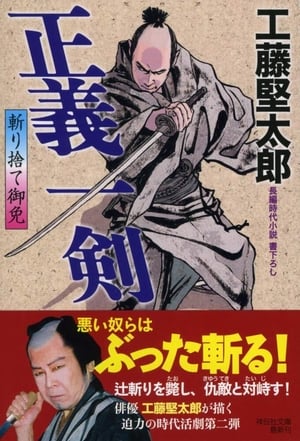
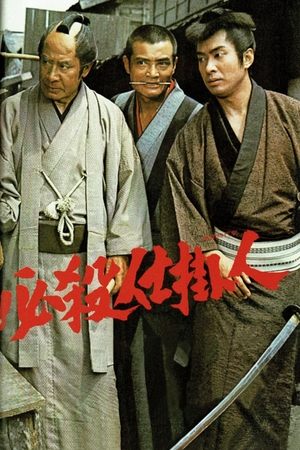
We're in Shamisen-bori of the bustling city of Edo. The officers of Guardhouse 36 monopolize the popularity in Edo. They're strong against evil, soft in compassion. Even the shogun depends on them. They're called the “Kirisute Bansho”... with a right to kill.
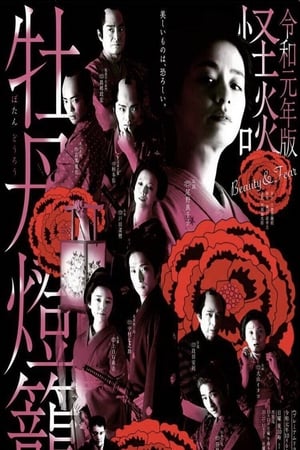
Botan Dōrō is a Japanese ghost story that is both romantic and horrific; it is one of the most famous kaidan in Japan. The plot involves sex with the dead and the consequences of loving a ghost.
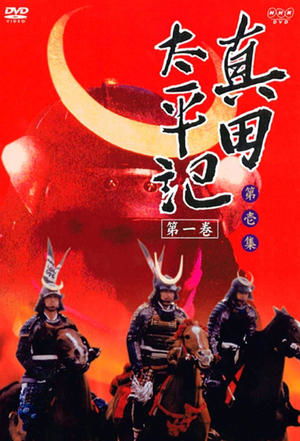
The drama tells the story of the Sanada family. Originally serving the Takeda Clan they ruled the northern district of Shinano. The story begins right after the death of Takeda Shingen, continues through the rise of Tokugawa Ieyasu who founded the Tokugawa shogunate and covers roughly the period 1580-1610.
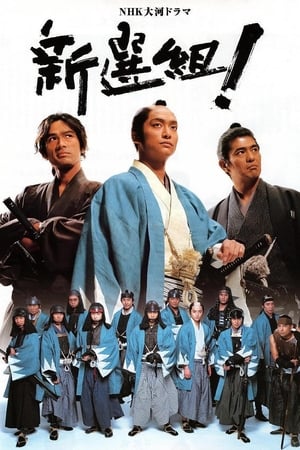
Shinsengumi! is a Taiga drama television series produced by Japanese broadcaster NHK. It was a popular drama about the Shinsengumi, a Japanese special police force from the Bakumatsu period.
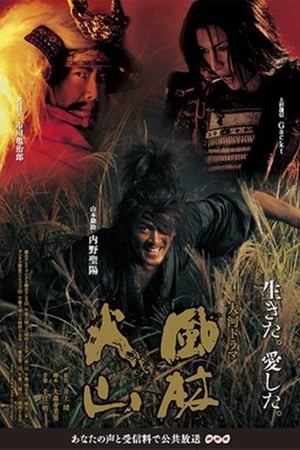
Fūrin Kazan was the 46th NHK Taiga drama beginning on January 7, 2007. It was aired throughout 2007. The four characters from left to right are wind, woods, fire, and mountain. The title is a reference to the war banner used by Takeda Shingen, which in turn was taken from Sun Tzu's The Art of War. It means "Swift as the Wind, Silent as a Forest, Fierce as Fire and Immovable as a Mountain."
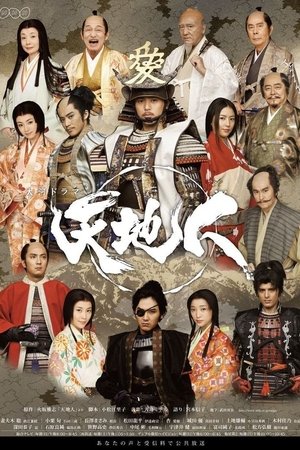
Tenchijin is the 48th NHK Taiga drama. It airs on NHK from January 4, 2009 every Sunday from 20:00 to 20:44 JST to November 22, 2009 spanning 47 episodes. The story centers on the life of the 16th century samurai Naoe Kanetsugu. Production began on April 27, 2007. The story is based on the novel Tenchijin by Masashi Hisaka and was adapted for screen by scriptwriter Eriko Komatsu. The series' music composer was Michiru Oshima. The protagonist of the drama, Naoe Kanetsugu, was taught by Uesugi Kenshin in his youth that to conquer the world is a trifling matter, but what matters is to live one's life with righteousness. After Uesugi's death, Naoe supports Uesugi Kagekatsu, who holds the destiny of Echigo province.
大奥 第一章
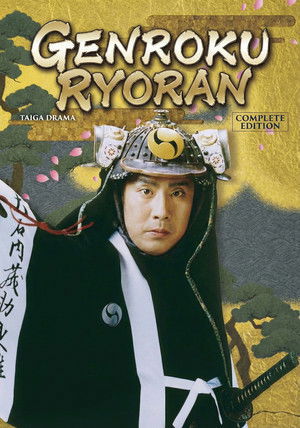
The 38th NHK Taiga Drama is Genroku Ryoran. The "Forty-seven Loyal Samurai" is one of the most enduring and best loved stories of Japan's history. Generations have grown up hearing the stirring tale of Oishi Kuranosuke, chief councillor of the Ako clan who leads his men through suffering and hardship to ultimately avenge their lord after he is unjustly forced to commit harakiri. NHK's 38th Taiga Drama "Genroku Ryoran" is the ambitious remake of this classic epic and boasts a cast that reads like a Who's Who in Japanese entertainment.
A shikakenin was an under-the-cover trade that undertook killing in Edo. Hanemon of Otowa, an agency that introduced laborers and maids, was also one of these. Katsugoro Iseya was a timber dealer who had come in as a client. His target was the constructions magistrate Hanno, and the Tatsumiya who sipped on the benefits. Hanemon who had a stong code towards killing, where he would only kill those who do no good to be in the world, accepts this request. Baian Fujieda, a needle doctor would carry out the killing. However, the professional killer Baian fails to bring down Tatsumiya. Hanemon then looks to another shikakenin, the ronin Sanai Nishimura for the role. Although Sanai's ability with the sword is good, he lives poorly in a tenement, and accepts this commission on the condition that it is kept a secret from his wife and child. Here, they close in on Hanno and Tatsumiya again...
In Edo, a determined young swordsman, Chiba Shūsaku, joins a dojo to pursue his dream. He forges strong friendships with fellow students, including one who works for a magistrate. As Shūsaku trains under a respected master, he faces challenges both within the dojo and in the city, growing as a swordsman and navigating the vibrant Edo society.
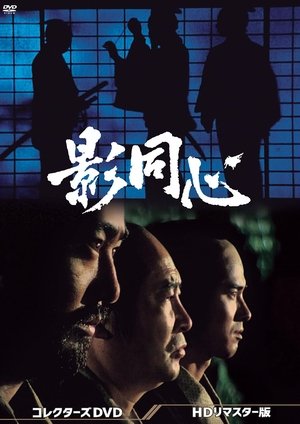
During the Tenpo period, the three samurai under the command of the Nanba magistrate were responsible for handling exceptional cases. However, their true identities as shadow assassins were hidden because they were secretly sent to eliminate villains who had escaped punishment by the law.
Shadow Warriors is a Japanese television jidaigeki show featuring Sonny Chiba that ran for four seasons in the early 1980s. Chiba played different ninja characters in each series. In the first series he played Hattori Hanzō III, in second one he played Tsuge Shinpachi, in the third one he played Tarao Hanzō, in the fourth series and in Bakumatsu Hen, he played Hattori Hanzō XV. In the 2003 direct-to-DVD series Shin Kage no Gundan he played Hattori Hanzō I.
Based on Kazuo Koike's extensive manga (over 110 volumes), this Edo-period drama follows an unlikely pair of law enforcement officers. One is a serious, skilled investigator, while the other is a witty, unconventional problem-solver, creating a dynamic partnership. The series also features the charmingly unorthodox detective Suruyoshi in a notable period drama debut. A memorable and catchy soundtrack complements the engaging stories brought to life by a large and talented cast.
The 36th NHK Taiga Drama is Mori Motonari. This series chronicles the life of Mori Motonari, a warlord of the early 1500s who stood at the vanguard of the Warring States era. All Japanese school textbooks contain the Mitsuya no kyokun, Mori's famous lesson to his three sons that teaches that while one arrow is easily broken, three arrows together cannot be broken. In 1997, 500 years after his birth, NHK dramatizes Motonari's rise from a chief of the region of Aki (now Hiroshima) to a daimyo who rules over ten provinces of the Chugoku region. Motonari was 64 years old and already the patriarch of a powerful dynasty about the time Oda Nobunaga and Takeda Shingen appeared on the scene. And even after his death, the Mori family figured prominently in Japanese history. His grandson Terumoto became a loyal Toyotomi vassal. Defeated at the Battle of Sekigahara, Ieyasu confiscated most of his lands, leaving him only with Suwo and Nagato, later known as Choshu. But 260 years later, the Mori got their ultimate revenge, leading the imperial forces against the Tokugawa in the Meiji Restoration.
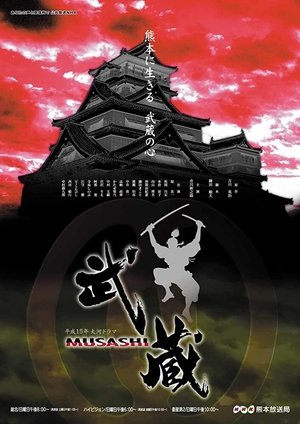
Orphaned when he was not yet ten, Musashi grows up skilled in the martial arts. During the Battle of Sekigahara, he fights on the side of the losing Toyotomi forces, but eludes the enemy as they hunt down the vanquished soldiers. He then spends years wandering the countryside mastering the sword. As his fame spreads throughout the nation, men seek him out to test their skills against him--most notably Sasaki Kojiro who faces Musashi in the ultimate duel at Ganryujima.
The dynamic achievements of Fuyukirosuke, who, with the help of his wife Nene and his comrades, overcomes the challenges posed by Nobunaga.