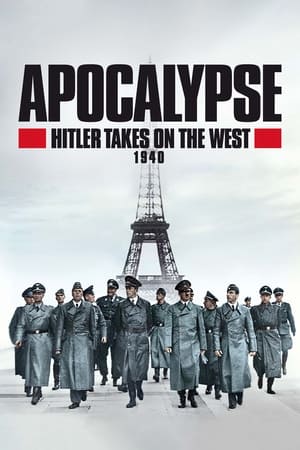
May 10th, 1940, Hitler takes on the West. Will he precipitate Europe into the Apocalypse?
This outstanding and sensitive drama series tells a young and family audience the stories of children who lived through a most difficult era in recent history - and who grew with its challenges.
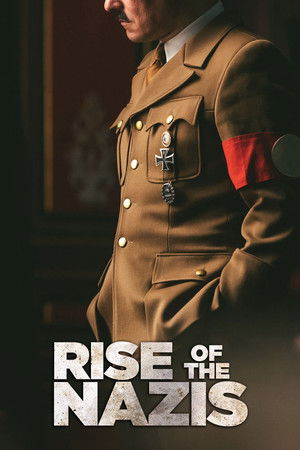
How did 20th Century Europe's most liberal democracy fall into the hands of fascists? From Hitler's political scheming that turned Germany's parliament into a House of Cards, his War on Truth leading to book burning, and his scapegoating of minorities, this series explores in extraordinary detail the events leading up to the outbreak of World War II.
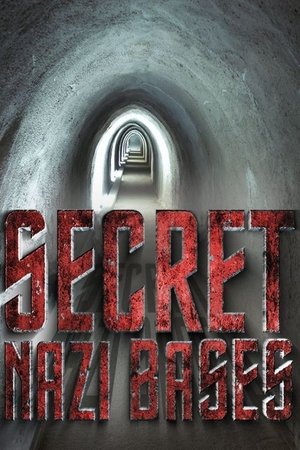
From tunnels to towers, artillery sites, resistance nests and communication centers, Nazi Germany left their footprint throughout the world. To this day, silent remains still exist, sentinels guarding clues about plots that Hitler was unable to carry out. The collapse of the Third Reich left as many secrets as it did relics. Still today, remnants of the Nazi's schemes lie concealed in structures scattered across the globe. Skeletons of projects give way to mysteries. Conspiracies abound about science fiction scenarios. The Nazis were nothing if not methodical, and a deeper look reveals even darker plans. From tunnels to towers, artillery sites and communication centers; the remains of these schemes lie waiting to reveal truths about the Fuhrer's tactics and dreams in Secret Nazi Bases. What did Hitler have planned?
After a terrible winter, 1942 starts badly for Stalin due to a ruthless Nazi campaign that leaves millions of Soviets captive and without food.
Germany loves biathlon – and you’ve never been this close to the stars. The documentary series accompanies them through a dramatic year and shows tears, pressure, and emotional moments from the inner workings of the team. It tells of fierce competition and the struggle to return to the top of the world in 2024/25. The camera is there when there are arguments, laughter, and celebrations behind the scenes – as in the case of Franziska Preuß’s spectacular overall World Cup title.
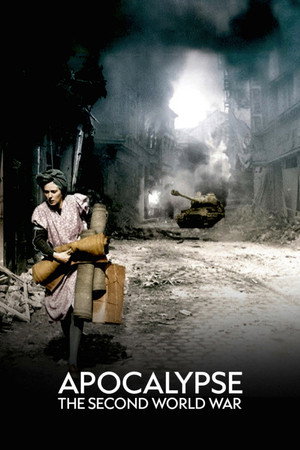
A six-part French documentary about the Second World War composed exclusively of actual footage of the war as filmed by war correspondents, soldiers, resistance fighters and private citizens. The series is shown in color, with the black and white footage being fully colorized, save for some original color footage. The only exception to the treatment are most Holocaust scenes, which are presented in the original black and white.
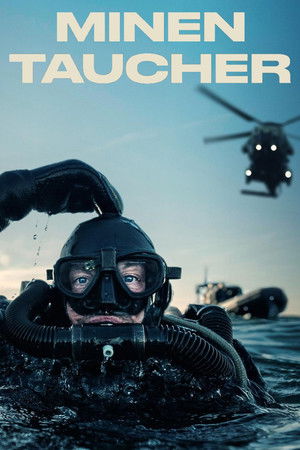
The six-part documentary series follows a training course for mine clearance divers – a specialized unit tasked with finding and defusing mines. Eleven men undergo a grueling training program: freediving to the point of near unconsciousness, deep dives, forced marches, weeks at sea, and helicopter jumps from a height of ten meters into the Baltic Sea. While the instructors meticulously record every mistake, the trainees struggle with cold, exhaustion, and self-doubt. The series reveals their motivations, their courage, and their determination to assume responsibility in a tense global situation.
They're not just fire chiefs, inspectors, or skilled technicians, but also buddies, athletes, fathers, soccer fans, and amateur chefs. This series follows the firefighters of Station 4 in Stuttgart in their daily lives, revealing the individuals behind the helmets—their diverse personalities, strengths, and weaknesses. In their demanding and dangerous job, these men must rely on each other completely. They can only overcome the challenges together as a team. When the alarm sounds, absolute concentration is required. But how do they cope with stressful impressions and experiences? And do arguments sometimes arise within the team?
A century ago, the world experienced a revolution in mobility. Cities like Berlin grew rapidly, with the Graf Zeppelin soaring over the city in 1928, sparking excitement for airship travel. These majestic airships made ocean crossings faster and more luxurious, and even enabled polar expeditions. At the same time, automobiles and motorcycles became staples for many, although streets became congested. Women like Amelia Earhart and Elly Beinhorn broke barriers in aviation, inspiring new possibilities for both genders in the field of technology. While air travel grew in popularity, trains remained the main long-distance transport. The era also saw an explosion of new mobility options, with faster, cheaper ways to travel across the globe, making the world seem smaller and more connected. However, this golden age of mobility would be cut short by the outbreak of World War II.
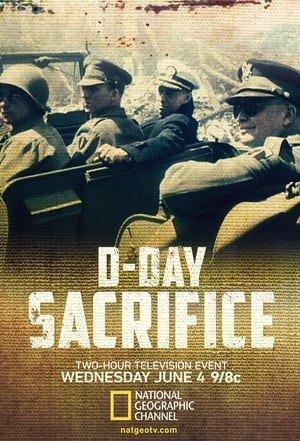
Comprised entirely of re-mastered and colorised archive footage from World War II, much of it never before seen, Sacrifice recounts the story of D-Day through the testimonies of those who lived it. These important historical days are seen through the eyes of French civilians and members of the military fighting on both sides. The testimonies of famous individuals like Dwight D. Eisenhower and Erwin Rommel are intertwined with those of anonymous soldiers and citizens, such as film director Samuel Fuller and Eisenhower's chauffeur, Kay Summersby. From the preparations for D-Day all the way through to the liberation of Paris, the accounts of these men and women provide a moving and invaluable retelling of this pivotal time in history.
Between storms and towering waves, in sunshine or in the dead of night: Sea rescuers from the German Maritime Search and Rescue Service (DGzRS) risk their lives for people in distress on the high seas! The documentary series "The Sea Rescuers" accompanies these heroes of the seas up close during their spectacular missions on the North and Baltic Seas.
Historian James Holland goes inside the Nazi war machine, exploring the extraordinary weapons produced under the Third Reich, in a series that includes rare archive material
"Talent" Chip Tsao went to London, Greenwich, Wales, Oxford, Cambridge, England, to analyze the British people's living habits, academic development, economic conditions, etc .; and went to Warsaw, Gdansk, Krakow to know a country with a hundred years of blood and tears. Eason Chan visited Tokyo, Kyoto, Osaka, and Fukuoka in Japan to learn about the cultural differences; Social worker Shiu Ka-chun went deep into Finland's Turku, Helsinki, Nokia and other places to experience the local customs through living with locals. They will introduce the details of each famous city from a social, historical, and cultural perspective, bringing different connotations, depths, and education.
A close look at the engineers who designed powerful military technology for the Nazis and who also encouraged a technological revolution that would forever change warfare.
Hitler was determined to extend Germany eastwards to make Germany a great continental power. Hitler's policy, based on a racist ideology, planned to eliminate or enslave the population that stood in the way of the Reich. It was this determination that propelled the world into war. Hitler believed that the conquest territories including Poland, the Belarussian and Ukrainian Soviet Socialist Republics, and the Baltic States "for the German people" was his destiny.
Six one hour episodes each focusing on a key individual that traces the trajectory and design of Hitler’s thousand year Reich. From the beer halls of Munich to the horrors of the Final Solution, these individuals were truly Architects Of Darkness of the Nazi Third Reich.
Once voted out, written off countless times, convicted multiple times – and unstoppable. The comeback of the century: Trump is transforming the USA. And perhaps even the world? This documentary tells the story of an American president who stirs up and unsettles Europe with deals and harsh words. What is his strategy and what has he achieved with it so far? How is Germany responding? How is Europe faring? And what will become of the America we knew? Will the “system crasher” Trump merely dismantle bureaucracy and inefficiency – or democracy itself?
A candid look at what life was really like for those living in, and under Hitler's Swastika - at home - and abroad, a record not only of what they saw, but of what they knew.
Investigations, arrest, conviction: Journalist Sven Voss reconstructs sensational criminal cases and speaks with experts, police officers and prosecutors at crime-relevant locations.