Explore mind-bending developments in basic science and math research. Quanta Magazine is an award-winning, editorially independent magazine published by the Simons Foundation.
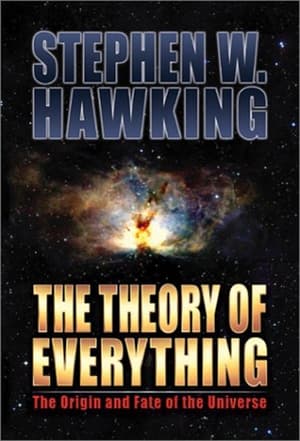
Hawking gives us the ultimate guide to the universe, a ripping yarn based on real science, spanning the whole of space and time -- from the nature of the universe itself, to the chances of alien life, and the real possibility of time travel.
Extinct for millions of years, dinosaurs continue to fascinate as scientists struggle to understand the creatures that went from domination to extinction seemingly overnight. This four-part documentary series attempts to provide some answers. From the badlands to the Yucatán Peninsula, paleontologists scour the earth to learn about the predatory habits of carnivorous dinosaurs, the land area required to feed a large sauropod and much more.
Humanity's race to mine asteroids and unlock boundless resources in deep space. Trailblazing companies spearhead cutting-edge engineering to potentially reshape the future.
Explore the impact of A.I. and how it is transforming the way we live and work -- both now and in the future, featuring some of the brightest minds in science, philosophy, technology, engineering, medicine, futurism, entertainment and the arts to tell the dynamic story of A.I.
Life Beyond explores humanity's future, the evolution of technology, and the mysteries of the universe. From AI and space exploration to philosophical reflections on existence, each chapter combines stunning visuals with emotional music, creating an immersive experience.
Hannah Fry takes a deep dive into some of the most extraordinary human stories emerging from the world of AI, from falling in love with a chatbot to life and death decisions made by robots.
From the planets to the stars and out to the edge of the unknown, history and science collide in a wondrous yet deadly adventure through space and time.
An irregularly broadcast omnibus series of two-minute mini-dramas based on the 17 goals of the SDGs (UN's "Sustainable Development Goals"). In these short stories, a message is conveyed that we should work together to achieve a society where no one is left behind, and how Japanese society, culture, and traditions are facing each goal.
Ufo - I casi italiani
100 miles south of Atlanta, Dr. Hodges and Dr. Ferguson are two longtime friends who own and operate Critter Fixer Veterinary Hospital. Together with their loving staff, Drs. Hodges and Ferguson treat and care for over 20,000 patients. Between emergency visits to the office, and farm calls throughout rural Georgia - the Critter Fixers are constantly bombarded with unique cases you only see in the country.
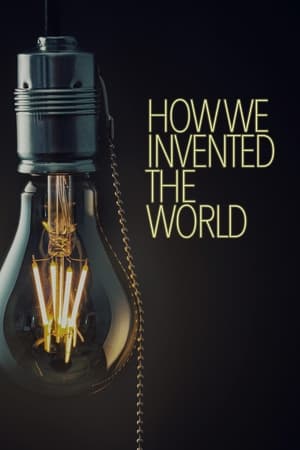
How We Invented the World is the ultimate action-packed, hi-energy, landmark series that examines the four inventions that define the modern world - mobiles, cars, planes and skyscrapers -celebrating the people and connections that made them possible. Each playing a crucial role in where we are now in the 21st Century - able to travel the globe, to talk to one another at any time at the push of a button, to live in huge cities, to commute, to capture the world we live in, making the fantasies we create come to life. This four part series lifts the lid on how these iconic inventions came to be. Showcasing the people who have shaped our lives in ways that they could have never imagined or anticipated, this series reveals stories of human ingenuity, extraordinary connections, unprecedented experimentation and jaw dropping accidents that created the world as we know it.
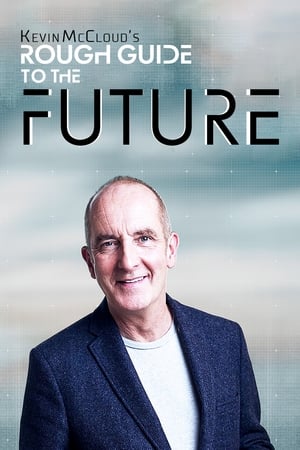
Kevin McCloud is passionately optimistic about technology and the future, but Jon Richardson, Phil Wang and Alice Levine aren't so sure. Can Kevin persuade his trio of sceptics to see the light?
A fascinating insight into the evolution of modern medicine as we explore the medical treatments for certain issues from past to present, seeing just how much we have learned through trial and error. The series is also a chance to see how medical advancements are currently used to treat problems in the fields of oncology, ophthalmology, dentistry, neurology, obstetrics and orthopaedics, and to see what the future may hold.
Will there come a point when our brain stops thinking without a computer? When we consider digital sex better than the real thing? And turn our body into a machine? We are living in the midst of an upheaval that could be more radical than anything our parents or grandparents ever experienced. But what does it all mean for us as human beings? In seven episodes the protagonist Helen Fares goes on a journey through futuristic technologies. She meets virtual friends, learns to steer a drone with her brain and to hack her own DNA. Encounters with experts in the US, Japan and Britan provide context to the posed question: Are we evolving into a new species - the Homo Digitalis? Simultaneously Homo Digitalis is a scientific experiment. In a playful test either as chatbot or as website the user can find out his or her personal future.
Join visionary philanthropist Bill Gates as he delves into pressing global issues and uncovers cutting-edge technologies that will transform the world.
There is nowhere more powerful and unforgiving yet more beautiful and compelling than the ocean. Join us and explore the greatest yet least known parts of our planet.
Where and how will we be in 60 years? The next decades will undergo the biggest and fastest transformation ever. In technology, in science, in the environment, in interpersonal relationships. We live in a kind of great accelerator of science, in which the pace of discoveries does not cease to amaze. In the last decades more scientific knowledge accumulated than in all the history of the Humanity. In 2077 this scientific knowledge will have doubled several times.
We have been colonised by the machines we have built. Although we don't realise it, the way we see everything in the world today is through the eyes of the computers.
Professor Jim Al-Khalili unravels the mysteries of arguably the most complex object in the cosmos: the human brain.