Big money gameshow, where it pays to know what's valuable and what's not. The show's antique expert has travelled around the country and found 8 collectibles, ranging in value from 500 dollars up to a staggering 500 000 dollars. In each show a couple competing together faces the task of eliminating these objects, one by one, winning the value of the last collectible standing. Will their instincts and the expert's advice send them home with a piece of trash or a valuable piece of treasure?
The anime centers on four girls at the full bloom of their youth, working hard to achieve their dreams as they struggle valiantly. In Japanese entertainment, Maesetsu! refers to an introductory talk or explanation addressed to the audience before the broadcast of television programs, usually performed by assistant directors and particularly comedians in variety or comedy shows.
Could you pass off a complete stranger as your new best friend for one short weekend to win £10k, even if your 'friend' was actually a brilliant actor hell-bent on humiliating you?
Catchphrase is a British game show based on the short-lived U.S. game show of the same name. It originally aired on ITV in the United Kingdom between 12 January 1986 and 19 December 2002. It was presented by Northern Irish comedian Roy Walker from 1986–1999; followed by Nick Weir from 2000–2002, and Mark Curry in 2002. In the original series, two contestants, one male and one female would have to identify the familiar phrase represented by a piece of animation accompanied by background music. The show's mascot, a golden robot called "Mr. Chips", appears in many of the animations. In the revived version of the show, the same format remains, but there are three contestants. In August 2012, it was announced that Stephen Mulhern would host a revived version of the show beginning on 7 April 2013. On 21 August 2013, it was confirmed that Catchphrase has been re-commissioned for a second series, following the success of the first.
Shooting Stars is a British television comedy panel game broadcast on BBC Two as a pilot in 1993, then as 3 full series from 1995 to 1997, then on BBC Choice from January to December 2002 with 2 series before returning to BBC Two for another 3 series from 2008 until its cancellation in 2011. Created and hosted by double-act Vic Reeves and Bob Mortimer, it uses the panel show format but with the comedians' often slapstick, surreal and anarchic humour does not rely on rules in order to function, with the pair apparently ignoring existing rules or inventing new ones as and when the mood takes them.
Hollywood Squares is an American panel game show, in which two contestants play tic-tac-toe to win cash and prizes. The "board" for the game is a 3 × 3 vertical stack of open-faced cubes, each occupied by a celebrity seated at a desk and facing the contestants. The stars are asked questions by the host, or "Square-Master", and the contestants judge the veracity of their answers in order to win the game. Although Hollywood Squares was a legitimate game show, the game largely acted as the background for the show's comedy in the form of joke answers, often given by the stars prior to their "real" answer. The show's writers usually supplied the jokes. In addition, the stars were given question subjects and plausible incorrect answers prior to the show. The show was scripted in this sense, but the gameplay was not. In any case, as host Peter Marshall, the best-known "Square-Master" and the man in whose honor the show's first announcer, Kenny Williams, actually "coined" the term, would explain at the beginning of the Secret Square game, the celebrities were briefed prior to show to help them with bluff answers, but they otherwise heard the actual questions for the first time as they were asked on air.
Teams of amateur robot fighting enthusiasts battle it out over a series of rounds in a huge purpose-built arena aiming to become the Robot Wars Champion.
Monét X Change and Rob Anderson host a competition where eight RuPaul's Drag Race queens face off in outfit construction challenges to win the grand prize and the title of Glam Slampion.
The table is set for the ultimate culinary clash in this one part cooking competition, one part game show. Host Adam Richman ("Man v. Food") will give homegrown amateur cooks the chance to test their skills against professional chefs. Every down-home cook has that one signature dish or secret family recipe that always gains favor with friends and family. Now, imagine going head-to-head in the kitchen against five professional chefs, who try to cook your specialty dish even better than you in the hopes of winning over a dinner party made up of the American public. With each savored victory, the cash prize gets bigger and bigger as the home cooks rise to every challenge and outcook the professional chefs. Think you've got what it takes to serve up the competition?
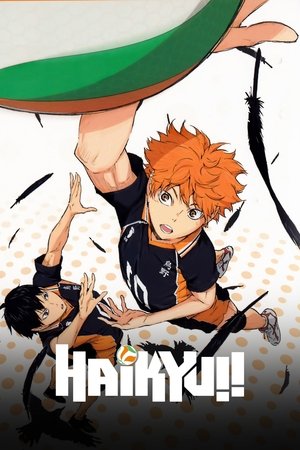
Inspired by a small-statured pro volleyball player, Shouyou Hinata creates a volleyball team in his last year of middle school. Unfortunately the team is matched up against the "King of the Court" Tobio Kageyama's team in their first tournament and inevitably lose. After the crushing defeat, Hinata vows to surpass Kageyama. After entering high school, Hinata joins the volleyball team only to find that Tobio has also joined.
The show where everything's made up and the points don't matter. Not a talk show, not a sitcom, not a game show, Whose Line Is It Anyway? is a completely unique concept to network television. Four talented actors perform completely unrehearsed skits and games in front of a studio audience. Host Drew Carey sets the scene, with contributions from the audience, but the actors rely completely on their quick wit and improvisational skills. It's genuinely improvised, so anything can happen - and often does.
Jin Xia, a 27-year-old assistant to a wedding dress designer, buys an old seaside house, hoping for a happy life as a homeowner. However, she soon discovers the house has an unexpected resident—a mysterious young man who seems to be linked to her in strange ways. Unable to leave the house and with no memory of his past, their connection unfolds as they begin an unusual cohabitation.
Join us in Bit City every other Friday!
80 treasure hunters will compete for 10 million rubles on a desert island.
The Games is a British reality television series that ran on Channel 4 for four series, in which 10 celebrities competed against each other, by doing Olympic-style events, such as weight lifting, gymnastics and diving. At the end of the series, the contestants with the most points from each round were awarded either a gold, silver or bronze medal. The show was mainly filmed in Sheffield, at the Sheffield Arena, Don Valley Stadium and Ponds Forge. In later series, the English Institute of Sport – Sheffield, iceSheffield and in series 4 the National Watersports Centre in Nottingham were used for the first time. The Games was presented by Jamie Theakston for the entirety of its run, with track-side reports from Jayne Middlemiss in series 1–3 and Kirsty Gallacher in series 4. The Games also had an after-show called The Games: Live at Trackside, aired on Channel 4's sister channel E4. The first series was presented by Dougie Anderson, whilst the second was hosted by Gamezville presenters Darren Malcolm and Jamie Atiko. Justin Lee Collins and Caroline Flack took over as presenters for the third and fourth series. For the final series an extra one-hour show was added on E4 in the afternoon called The Games: Live at the Heats, and the evening show changed title to become The Games: Inside Track.
Remote Control is a TV game show that ran on MTV for five seasons from 1987 until 1990. It was MTV's first original non-musical program. New episodes were made for first-run syndication from 1989 until 1990 which were distributed by Viacom. Three contestants answered trivia questions on movies, music, and television, many of which were presented in skit format. The series was developed by producers Joe Davola and Michael Duggan, and directed by Dana Calderwood.
Making the Band 2 aired on MTV from October 19, 2002 to April 29, 2004. It centered around the creation of the hip-hop group Da Band.
SBFIVE competes for treasure.
100 contestants go head-to-head in a range of simple, quirky and hilarious games that anyone can win, but there’s one rule they must follow – Don’t. Come. Last. As contestants battle against each other, each round will see the number of players whittled down until one person takes the cash prize.
Each Challenge pits numerous cast members from past seasons of reality shows against each other, dividing them into two separate teams according to different criteria, such as gender, which show they first appeared on, whether or not they're veterans or rookies on the show, etc. The two teams compete in numerous missions in order to win prizes and advance in the overall game.