Destino: São Paulo is an original television miniseries created for the Brazilian branch of the HBO Latin America. The series was produced by O2 Filmes, and directed by Alex Gabassi and Fábio Mendonça. It first aired on November 25, 2012. The miniseries consists of six episodes focusing on the lives of immigrants in São Paulo, Brazil. Each episode follows the life of a different group, portraying the frustrations, joys, and culture shock they face daily. Most of the characters are played by immigrants who were selected for the production, playing with their native language.
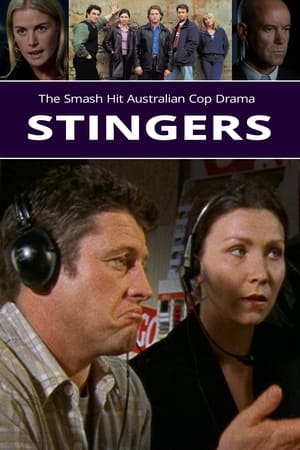
An unconventional team of homicide detectives face various cases, as led by Tessa Vance and Steve Hayden. Hayden is an often light-hearted 'man's man' who is moving up the career hierarchy, while Vance is more introspective and no-nonsense, and often solves the murder with intuition and insight. Their team includes boss Inspector Malcolm Thorne, Constable Dee Suzeraine, forensic services expert Lance Fisk, and unorthodox doctor Imogen 'Tootsie' Soames.
After a plane crash, a group of schoolboys find themselves stranded on a tropical island without adults. Ralph is elected leader and, with the help of the intelligent Piggy, strives to maintain order and civilization. Jack, responsible for the signal fire, becomes increasingly focused on hunting and power struggles. This leads to tensions within the group, gradually pushing the boys from hope and structure into chaos and tragedy.
The Young Doctors is an Australian early evening soap opera. The series was set in the fictional Albert Memorial hospital and primarily concerned with romances between younger members of the hospital staff, rather than typical medical issues and procedures. It screened on the Nine Network from Monday, 8 November 1976 until Wednesday, 30 March 1983.
Head of the family before his time, Odin Freeburn is being pulled in all directions. Can he let go of his past in time to save the future?
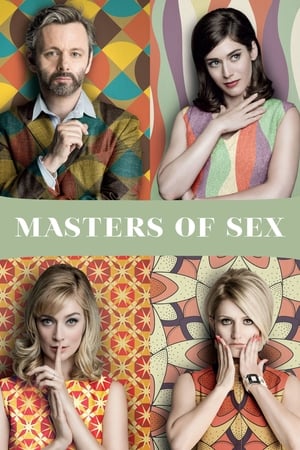
William Masters and Virginia Johnson are real-life pioneers of the science of human sexuality. Their research touched off the sexual revolution and took them from a midwestern teaching hospital to the cover of Time magazine and multiple appearances on Johnny Carson's couch. He is a brilliant scientist out of touch with his own feelings, and she is a single working mother ahead of her time. The series chronicles their unusual lives, romance, and unlikely pop culture trajectory.
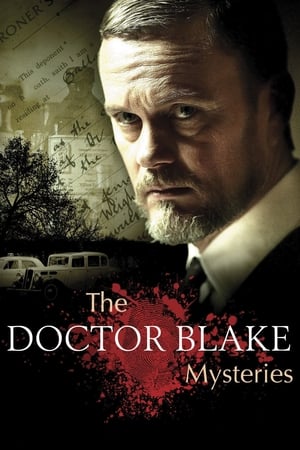
Dr Lucien Blake left Ballarat as a young man. But now he finds himself returning to take over not only his dead father's medical practice, but also his on-call role as the town's police surgeon, only to find change is afoot, nothing is sacred, and no one is safe.
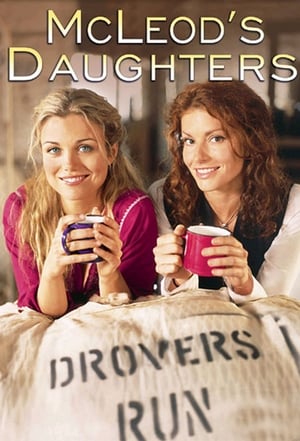
When Jack McLeod passes away, his two daughters inherit Drovers Run, a vast cattle ranch in the Australian outback. Ultimately, Tess and Claire decide to run the ranch together, with their housekeeper, Meg, her teenage daughter, Jodi, and a local girl, Becky. Their lives are hard and the obstacles many, but the rewards are every bit as grand as the wild open land they've inherited.
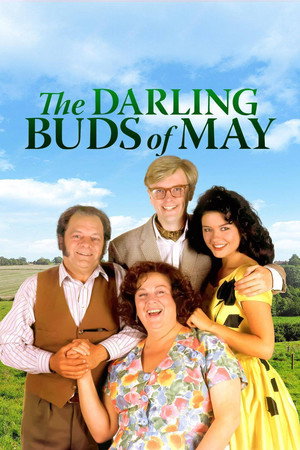
An idyllic picture of 1950's rural England as seen through the lives of the Larkins, a farm family living in Kent. The show revolves around Pa Larkin, a man of a kind and mischievous nature with a penchant for getting into scrapes and talking his way out of them with equal equanimity; and his daughters, as they deal with growing up and discovering the joys and sorrows of young love.
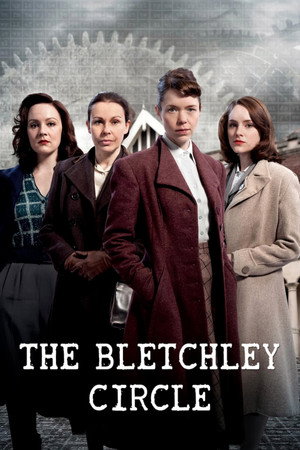
The Bletchley Circle follows the journey of four ordinary women with extraordinary skills that helped to end World War II. Set in 1952, Susan, Millie, Lucy and Jean have returned to their normal lives, modestly setting aside the part they played in producing crucial intelligence, which helped the Allies to victory and shortened the war. When Susan discovers a hidden code behind an unsolved murder she is met by skepticism from the police. She quickly realises she can only begin to crack the murders and bring the culprit to justice with her former friends. The Bletchley Circle paints a vivid portrait of post-war Britain in this fictional tale of unsung heroes.
An understaffed police district in 1950s Sweden launches a bold experiment to introduce its first group of female officers.
Polish immigrant Abel Rosnovski and Boston banker William Lowell Kane are two men born on the same day, and whose lifelong rivalry shapes their empires and families over decades. Their contrasting paths from poverty and wealth lead to a destructive, decades-long feud for power.
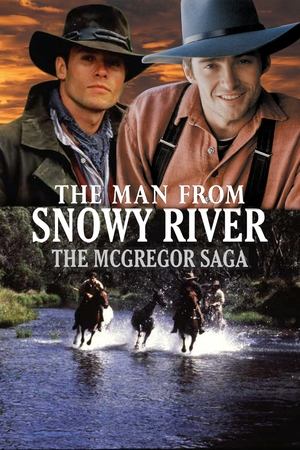
The Man from Snowy River is an Australian television series based on Banjo Paterson's poem "The Man from Snowy River". Released in Australia as Banjo Paterson's The Man from Snowy River, the series was subsequently released in both the United States and the United Kingdom as Snowy River: The McGregor Saga. The television series has no relationship to the 1982 film The Man from Snowy River or the 1988 sequel The Man from Snowy River II. Instead, the series follows the adventures of Matt McGregor, a successful squatter, and his family. Matt is the hero immortalized in Banjo Paterson's poem "The Man from Snowy River", and the series is set 25 years after his famous ride.
The story of an English aristocrat, Lady Sarah Ashley, who inherits a large cattle ranch in Australia after her husband dies. When Australian cattle barons plot to take her land, she joins forces with a cattle drover to protect her ranch.
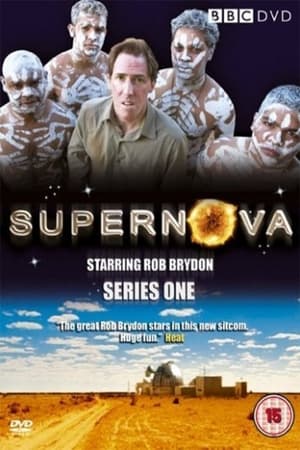
Supernova is a British comedy series produced by Hartswood Films and jointly commissioned by the BBC in the UK and UKTV in Australia. It follows Dr Paul Hamilton, a Welsh astronomer, who leaves a dull academic post and unloved girlfriend for a new job at the Royal Australian Observatory, deep in the Australian outback. The comedy centres around his difficulties adjusting to life in the outback and his eccentric fellow astronomers. The first series was released in the United Kingdom and Australia in October 2005 and consisted of six 30-minute episodes. The second series began airing on 3 August 2006 in the UK. The exterior scenes were shot at Broken Hill in New South Wales, Australia. The observatory itself is a CGI creation, according to the DVD commentary, and only a partial doorway was constructed on site for filming purposes.
At the end of the 1950s, in a more innocent America, the brutal, meaningless slaying of a Midwestern family horrified the nation. This film is based on Truman Capote's hauntingly detailed, psychologically penetrating nonfiction novel. While in prison, Dick Hickock, 20, hears a cell-mate's story about $10,000 in cash kept in a home safe by a prosperous rancher. When he's paroled, Dick persuades ex-con Perry Smith, also 20, to join him in going after the stash. On a November night in 1959, Dick and Perry break into the Holcomb, Kansas, house of Herb Clutter. Enraged at finding no safe, they wake the sleeping family and brutally kill them all. The bodies are found by two friends who come by before Sunday church. The murders shock the small Great Plains town, where doors are routinely left unlocked. Detective Alvin Dewey of the Kansas Bureau of Investigation heads the case, but there are no clues, no apparent motive and no suspects...
An unmistakable Australian icon - a smoking revolver, two piercing eyes behind a makeshift mask of armour. But beyond the armour, behind the eyes was a man both ruthless and gentle, rugged and kind - the infamous last outlaw, Ned Kelly was his name. Both revered and reviled throughout the ages Ned Kelly was an Irish-Australian battler-cum-bushranger, fiercely independent and pushed into action by the repressive colonial authorities of the time. The Last Outlaw examines the life of Ned Kelly, and expounds the legend from early indiscretions and the formation of his gang through to the violent killings at Stringy Bark Creek, culminating in his explosive last stand and shoot out at Glenrowan. The Last Outlaw is a remarkable four-part miniseries presentation that deflects historical judgement and allows the legend to live on.
Marking Time was an Australian television mini-series, consisting of four one-hour episodes. It first aired on 9 and 10 November 2003 on ABC-TV. Directed by Cherie Nowlan and written by John Doyle, it was the first mainstream television/film project to address the issue of the Australian government's refugee policy, a topic it approaches by chronicling the emotional journey of one young man during his year off after graduation, in his fictional rural home-town of Brackley, Australia. The storyline of Marking Time was inspired by the real-life experiences of Afghan refugees and their hosts in the rural town of Young, New South Wales; however much of the outdoor scenes of the series were actually shot at Singleton, New South Wales, in the Hunter Region.
The Sullivans is an Australian drama television series produced by Crawford Productions which ran on the Nine Network from 1976 until 1983. The series told the story of an average middle-class Melbourne family and the effect World War II had on their lives. It was a consistent ratings success in Australia, and also became popular in the United Kingdom, Ireland, Netherlands, Gibraltar and New Zealand.
A limited anthology series that explores terror in America.