The High-Sierra adventures of Ben Cartwright and his sons as they run and defend their ranch while helping the surrounding community.
Danny Thomas, an entertainer, tries to balance his home life with the needs of his career, with hilarious results.
Sisters Maila and Natalie have different approach to their mother, Onay who has Achondroplasia. Maila is a nice and attentive daughter, while Nataile is arrogant and disobedient. Besides their different upbringing, they have a different father as well.
Family Reunion follows a family of six who travel from Seattle, Washington to Columbus, Georgia for the McKellan Family Reunion and decide to stay to be closer to their family.
Leave It to Larry is a 1952-1953 CBS sitcom starring Eddie Albert as Larry Tucker, a shoe salesman who lives with his own family in the residence of his employer and father-in-law, played by Ed Begley, Sr., in the role of Mr. Koppel. Begley though only five years older than Albert was still cast as the father-in-law. Joining Albert and Begley on the short-lived series were Betty Kean as wife Amy Tucker; Glenn Walken as 7-year-old Stevie Tucker, and Lydia Schaffer as daughter Harriet Tucker in her only acting role. The program aired five years before Jerry Mathers starred in the similarly titled Leave It to Beaver, originally on CBS and later ABC. Leave It to Beaver also had a character named “Larry" – Larry Mondello played by Rusty Stevens, the son of Margaret Mondello, played on the series by character actress Madge Blake. Leave It to Larry aired on Tuesday at 8 p.m. before The Red Buttons Show on CBS and opposite Milton Berle’s Texaco Star Theater on NBC. In the 1953-1954 season, The Gene Autry Show replaced Leave it to Larry on the CBS schedule, and Red Buttons yielded to the long-running The Red Skelton Show.
Groeten uit
Rick Boswell is an unhappy man who lives in a suburban home with his wife of ten years, Ronnie, their two young sons and his lazy brother, and works at a small ad agency.
The Brothers García is an American sitcom that premiered in 2000 on Nickelodeon and ended in 2004. It was among the first projects of Sí TV, an effort to produce programming featuring Latino characters, however being aimed at a diverse audience. The series was billed as the first English-language sitcom to have an all Latino cast and creative team. The series aired on the programming block Nick on CBS from September 18, 2004 to September 17, 2005, where the series ended its initial run. Reruns on The N started on April 7, 2008, and ended in May 23, 2008. Similarities to the series could be made to the style of The Wonder Years and Everybody Hates Chris, with an older version of the main character narrating each episode in a witty and sarcastic manner.
Three Sisters is an American television sitcom that aired on NBC for two seasons from January 9, 2001, to February 5, 2002.
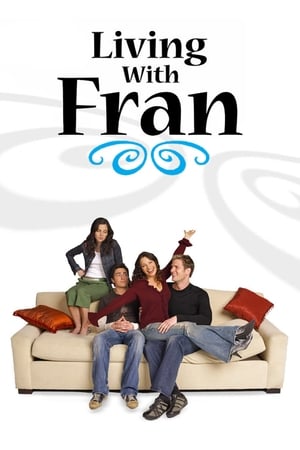
Hope, a down-to-earth, happily married mother of three has her tidy world turned upside down when her celebrity sister moves in. Faith was living the Hollywood life as a soap opera star before her character was killed off.
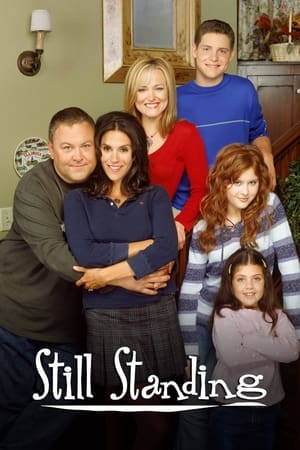
The daily trials and tribulations of handyman Tim Taylor, a TV show host raising three boys with help from his loyal co-host, domineering wife, and unseen neighbor.
Two estranged brothers reunite in their small hometown to deal with their mother who has just been released from a psychiatric facility and has yet to discover her ex-husband is about to have a baby with his new girlfriend.
Robert James, an entertainment reporter for a local Los Angeles television station, is handsome, smart and thoroughly modern in his thinking. Recently divorced from the somewhat self-absorbed Neesee, the mother of their endearing 6-year-old son, Robert refuses to buy into the old stereotype that being divorced means you can't get along with the ex.
Englishman Bryan Jenkins was living peacefully with his Japanese wife Itsuki and daughter Alice in London, when his Japanese mother-in-law suddenly passes away, and the family decides to uproot to Tokyo to look after his father-in-law Tsuneo.
The Montefuscos is an American sitcom that aired on NBC in 1975. It centered on three generations of an Italian-American family living in Connecticut.
Sitcom spin-off from Only Fools and Horses, featuring the characters of Boycie and Marlene adapting to life in rural Shropshire. Starring John Challis and Sue Holderness
Rayman: The Animated Series, or The Rayman TV Series, is a French 3-D animated children's television series featuring the French video game hero Rayman. Created by Ubisoft and based on the Rayman adventure game series, the show was originally in French but was dubbed into various languages for foreign countries. Ubisoft was able to produce only four episodes and never managed to broadcast its episodes in the United States.
Set in Springfield, the average American town, the show focuses on the antics and everyday adventures of the Simpson family; Homer, Marge, Bart, Lisa and Maggie, as well as a virtual cast of thousands. Since the beginning, the series has been a pop culture icon, attracting hundreds of celebrities to guest star. The show has also made name for itself in its fearless satirical take on politics, media and American life in general.
...And Mother Makes Five is a British sitcom that aired on ITV from 1974 to 1976. Starring Wendy Craig, it is the sequel of ...And Mother Makes Three and aired for four series. ...And Mother Makes Five was written by Richard Waring, Brian Cooke and Johnnie Mortimer. Wendy Craig also wrote some episodes under the pseudonym Jonathan Marr. It was made for the ITV network by Thames Television.
Second thoughts is a British sitcom that ran from 3 May 1991 to 14 October 1994. It was broadcast on ITV and made by LWT. It was followed by a sequel, Faith in the future. Second thoughts followed the lives of two middle-aged divorcees, Bill MacGregor and Faith Greyshott, from very different backgrounds trying to develop a relationship, despite the pressures pulling it apart. Second thoughts was based upon the real-life relationship of the writers, husband and wife Jan Etherington and Gavin Petrie. It originally aired as a radio series on BBC Radio 4 broadcast between 1 November 1988 and 23 July 1992. The radio series consisted of four series and a Christmas special broadcast in 1992 with a total of 31 episodes. The radio scripts were used for the television series on ITV. The fifth series was considered weaker than the first four series; it was the only series not to be based on the original radio scripts. Second thoughts ended on 14 October 1994, but has since been repeated on ITV3. The original radio series is often replayed on BBC7.