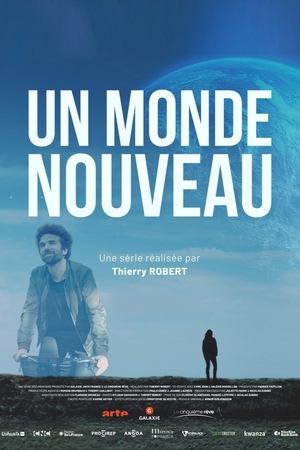
Un monde nouveau
See the real modern-day Amazonia through an exploration of the Amazon Basin, meeting a different group of people who live there in each episode.
Sérieux ?
Brings to life the epic story of the people and landscapes of Minnesota - from the retreat of the last ice sheets to the growth of today’s suburbs - using nature videography from across the state, never-before-seen historic images, state-of-the-art animations, and historic recreations.
Martin Boudot, investigative journalist, investigates major environmental scandals around the world: river contamination, air pollution, radioactivity, illegal exploitation of resources, toxic waste...
200 km à la ronde
New Zealand is a geologically young land, created and shaped by tectonic forces, volcanism and the elements. It is a living laboratory for scientists seeking to more accurately understand and predict volcanic eruptions and earthquakes.
David Biello, energy and environment editor at Scientific American magazine, walks viewers through a series of scenarios that outline what the nation’s energy future might look like. What if America invests in carbon capture? Could we see a nuclear power renaissance? Is wind power possible? What is a super grid, anyway?
Sale temps pour la planète
Super plantes
David Attenborough examines the ecological and conservation crises that threaten the world
The Nature of Things is a Canadian television series of documentary programs. It debuted on CBC Television on November 6, 1960. Many of the programs document nature and the effect that humans have on it. The program was one of the first to explore environmental issues, such as clear-cut logging. The series is named after an epic poem by Roman philosopher Lucretius: "Dē Rērum Nātūrā" — On the Nature of Things.
Trippin is a 2005 MTV environmental documentary television series hosted by Cameron Diaz. It also features many other celebrities, including Drew Barrymore, Redman, Jessica Alba, Eva Mendes, Mark Hoppus and Justin Timberlake. On the show, said celebrities visit various ecological locales around the world, in particular underprivileged areas of the world.
Lac-Mégantic investigates one of the worst oil train tragedies in history: a foreseeable catastrophe ignited by corporate and political negligence.
Travel from the steamy delta beyond New Orleans, upstream to headwaters in great northern swamps, and along the Mississippi's greatest tributary, the Missouri. The crew encounter a wealth of wildlife, from tropical manatees to ancient horseshoe crabs, primitive giant fish, colorful herons, industrious beavers, deadly rattlesnakes, herds of buffalo, and prairie dog colonies. Dramatic reconstructions illustrate what the river was like when the first explorers encountered it, meeting Indian tribes and witnessing new wildlife spectacles.
Ross Kemp looks into the socio-economic and environmental pressures facing the Amazon regions of Brazil, Ecuador and Peru.
Simon Reeve sets off on an extraordinary adventure across Australia. This mad adventure, involving specially adapted off-road vehicles and a chopper, is part of an ongoing effort to stop the damaging spread of up to a million feral camels across the country.
With Canadian wildlife habitats under mounting pressure from climate change and environmental degradation, scientific studies are crucial. In this series, we tag along with Canadian wildlife biologists on their often-challenging quest to temporarily capture wild creatures so they can install various monitoring technologies. Particular focus is on the biologists' equipment, the animals they study and the thrill of tracking them down.
Who Killed Lake Erie is a two and a half hour television documentary that aired on NBC in September 1969.
Norwegian documentary series from 2018. Line Elvsåshagen want to save the whales, fishes and birds that die of the plastic in the sea. Is there anything we can do or is it already too late? Will our sea be flooded by plastic?