In this adaptation of the award-winning podcast, Slow Burn’s Leon Neyfakh excavates the strange subplots and forgotten characters of recent political history—and finds surprising parallels to the present.
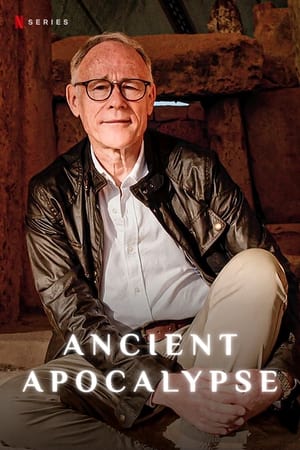
Journalist and writer Graham Hancock travels the globe hunting for evidence of mysterious, lost civilizations dating back to the last Ice Age. He attempts to prove that a climatic event 12,000 years ago wiped out an entire civilization far more sophisticated than the simple hunter-gatherers some archaeologists believe lived at that time.
The story of how women have fought their way into the world of sport, an arena jealously guarded by men.
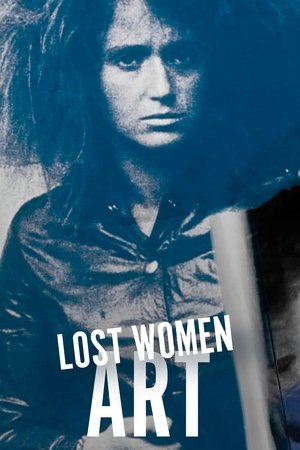
Women write art history – but in turn are systematically ignored by it. LOST WOMEN ART tells the story of the suppressed female avant-garde and by doing so introduces a new art history.
Jules
Aux frontières de l'Histoire - La France
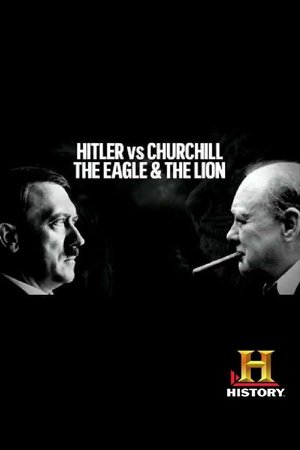
A documentary which explores the remarkable parallels between the careers of Adolf Hitler and Winston Churchill, as well as their personal rivalry and animosity.
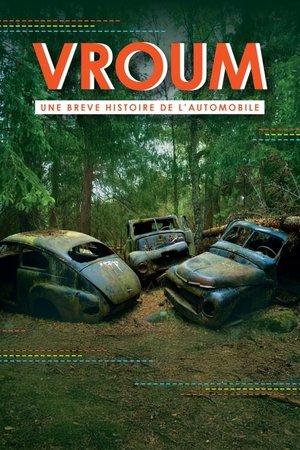
Our cities, transformed a mere century ago to accommodate cars, now want to rid their streets of them. Countries go to war over fuel shortages, and automobiles are at the core of a global ecological crisis. Today, the history of automobile has hit its climax. How did we get here? How did the invention of a single machine reorganize how we work, revolutionize our lifestyles, transform our landscapes, trigger global crises and wreak havoc with the equilibrium of our planet? This documentary series explores the creation and meteoric development of an unprecedented object - the automobile - and its role in mankind’s wild race toward progress.
How the Silk Road Made the World 3 x 60' NHNZ/CCTV (China Central Television) The Silk Road is one of humanity’s greatest enterprises. For thousands of years across the vastness of Eurasia, a trade route linking east and west has deeply influenced history. Silk Road trade has helped to build and break empires, fed revolutions and profoundly affected civilisations. Humanity as we know it, and all we have created, owes much to the legendary Silk Road. This is true of objects as basic yet revolutionary as a piece of paper, to the complex metropolis of New York City. Travel through time to witness the evolution of ancient warfare, experience the horror of the Black Death, see the explosive impacts of innovations and live through radical social change. Embark on a dramatic historical journey throughout Eurasia and delve into the captivating tales of this world-famous trade route. Discover How the Silk Road Made the World.
This documentary series tackles one of history's most horrifying subjects: the Holocaust and the infamous Auschwitz-Birkenau concentration camp.
Les gangsters et la république
Award-winning journalist and author Chris Masters investigates the tumultuous 1920s and 1930s and the events that laid the foundation for Australia in the 21st Century. In Australian mythology nationhood was forged in the slaughter of Gallipoli in 1915. But in this documentary series, Chris Masters introduces a very different proposition. Far from bringing the nation together, the First World War tore the country apart and threatened to destroy the Federation Dream. The Great Depression wrecked a struggling recovery and just when light appeared on the horizon, the gates of hell reopened with the Second World War. This is the story of how the parents, grandparents and great grandparents of today’s Australians survived crisis after crisis and laid the groundwork for the nation we know today. Through the prism of his own working class family, Chris provides extra life, light and shade to the politics and economics of rapid change.
Three hard-core crews of gold prospectors take the gamble of a lifetime and battle to strike it big, deep in the wild west of outback Australia. The soaring highs and the crushing lows of the gold season are revealed as the crews pursue their all-important targets - braving brutal heat, punishing conditions, mechanical breakdowns and constant pressure.
Despite decades of research, many mysteries remain about the ancient Maya. Now, archaeologists are unearthing new clues that transform long held ideas about how these people came to dominate vast areas of Mexico and Central America. Through immense lost monuments, ancient inscriptions and new forensic evidence, this series tracks the Maya from their earliest origins all the way to the present day, unlocking the dark secrets of the rise and fall of the Maya.
A documentary series about heroines of the II World War. Stories told from the perspective of the characters are full of emotions and tension, they show courage, sacrifice, willpower but also recklessness or pragmatism. Characters of the series are not flawless monuments but regular women with their own problems, who happened to play an important role in the history. The visual style of the project is animadoc. It comprises archival materials, interviews with experts, and sequences of fictionalised scenes: shots stylised as comic frames, where an actor is connected with scenography hand-drawn by comics illustrators.
Le Siècle des icônes
Berlin 1933 – Diary Of A Metropolis tells the story of how Berlin, the vibrant hub of modernity, became Germany's staunch capital city in step with the Third Reich. Contemporary journals, letters and documents, photographs and film material, form a dense collage of the dynamics of this collectively organised disaster.
A lecture series about the basic problems of flight, explained by visual presentation of flow experiments. As the material of the lectures should be understood by every interested listener, no mathematical or other theoretical knowledge is used for explanation. Every problem is demonstrated by a true-life experiment and purely scientific language is avoided. Each of the lectures deals with a basic problem of flight. The experiments are mostly shown as flow picture but at certain points scale models and flying models are used to ensure easier understanding.
A multimedia course for secondary school and college teachers that examined global patterns through time, seeing history as an integrated whole. Topics were studied in a general chronological order, but each is observed through a thematic lens, showing how people and societies experience both integration and differences.
1942, un monde en guerre