In this adaptation of the award-winning podcast, Slow Burn’s Leon Neyfakh excavates the strange subplots and forgotten characters of recent political history—and finds surprising parallels to the present.
WWII in HD is a 10-part American documentary television miniseries that originally aired from November 15 to November 19, 2009 on the History Channel. The program focuses on the firsthand experiences of twelve American service members during World War II, including an Army nurse, a member of the Tuskegee Airmen, a second generation Japanese American and prisoner of war, and an Austrian Jewish immigrant. The twelve members recorded their time in both theaters and some had later interviews; found footage from the battlefield was paired with the stories of the twelve service members. The episodes premiered on five consecutive days, with two episodes per day. The series is narrated by Gary Sinise and was produced by Lou Reda Productions in Easton, Pennsylvania, United States.
Journalist and writer Graham Hancock travels the globe hunting for evidence of mysterious, lost civilizations dating back to the last Ice Age. He attempts to prove that a climatic event 12,000 years ago wiped out an entire civilization far more sophisticated than the simple hunter-gatherers some archaeologists believe lived at that time.
The story of how women have fought their way into the world of sport, an arena jealously guarded by men.
Mussolini seized power in Italy in 1922, after his March on Rome. He would hold it in his grasp until his death in 1945, establishing a dictatorship that lasted more than 20 years. Long considered a buffoon and a second-rate dictator, Il Duce invented fascism that was imitated by Hitler, who viewed the Italian as his political master. He wanted to transform his country into a warrior nation and promised Italians a return to the grandeur of the Roman Empire. He governed by violence and trickery and was one of the first populist leaders of modern times, leading his country into the catastrophe of the World War II. But who was Mussolini, this former teacher who came from the extreme left to become a newspaper editor and creator of the Fascist Party? Why did he ally himself with Hitler? Were the Italians really behind him? With archives and interviews with the last-surviving witnesses of the era, this portrait takes a look back at one of the most notorious dictators of the 20th century.
The three-part documentary series, compiled from over 60 hours of unseen footage, captures the warmth, camaraderie, and creative genius that defined the legacy of music's most iconic foursome. The series also includes – for the first time in its entirety – The Beatles' final performance at London's Savile Row.
'Kingdom of Dreams' is a stunning four-part series chronicling three critical decades of the fashion world, from the early 1990s through to the 2010s. Described as a Golden Age, this period of time was an era of disruption and innovation as the traditional fashion business bumped heads against the young and exciting international visionaries who were shaking up the industry. Using rare library material, never-before-seen personal archives and story-driven interviews, explore a pivotal time in fashion history up close.
War and Remembrance is an American miniseries based on the novel of the same name by Herman Wouk. It is the sequel to highly successful The Winds of War.
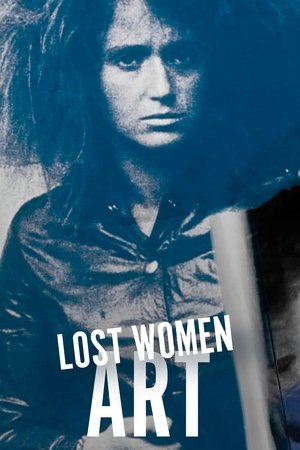
Women write art history – but in turn are systematically ignored by it. LOST WOMEN ART tells the story of the suppressed female avant-garde and by doing so introduces a new art history.
A candid look at what life was really like for those living in, and under Hitler's Swastika - at home - and abroad, a record not only of what they saw, but of what they knew.
May 1945: With the end of the war and the surrender of the Third Reich, the world discovered the full horror of a genocidal system on a scale never before seen in the history of humanity. The elimination of millions of individuals had been meticulously planned by a regime whose organization and methods were just beginning to be understood.
The Second World War began on September 1, 1939, with the invasion of Poland and ended on May 8, 1945, as a global catastrophe with over 50 million deaths and devastated cities. Hitler’s expansion plans and Japan’s imperial ambitions led to bloody battles such as Stalingrad and Iwo Jima, the bombing of German cities, and the atomic bombings of Hiroshima and Nagasaki. SPIEGEL-TV author Michael Kloft recounts the war’s chronology and presents rare, partly unpublished footage from both the front lines and the home front, beyond propaganda. He is supported by experts Antony Beevor, Jörg Friedrich, and Rolf-Dieter Müller, who provide insights into military strategies and personal stories. Together, they create a comprehensive portrait of the Second World War.
Set against the backdrop of the greatest clandestine race against time in the history of science with the mission to build the world's first atomic bomb in Los Alamos, New Mexico. Flawed scientists and their families attempt to co-exist in a world where secrets and lies infiltrate every aspect of their lives.
The story of three decades of war told through the eyes of various men who were its key players: Roosevelt, Hitler, Patton, Mussolini, Churchill, Tojo, DeGaulle and MacArthur. The series examines the two wars as one contiguous timeline starting in 1914 and concluding in 1945 with these unique individuals coming of age in World War I before ultimately calling the shots in World War II.
Two women embark on a harrowing journey to discover the fate and final resting place of loved ones snatched by the Nazis.
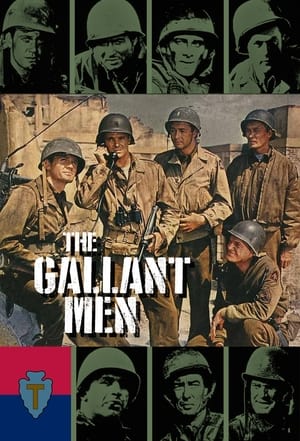
The Gallant Men is a 1962–1963 ABC television series which depicted an infantry company of American soldiers fighting their way through Italy in World War II.
A documentary series that gives a historical account of the events of World War II, from its roots in the 1920s to the aftermath and the lives it profoundly influenced.
Colditz is a British television series co-produced by the BBC and Universal Studios and screened between 1972 and 1974. The series deals with Allied prisoners of war imprisoned at the supposedly escape-proof Colditz Castle when designated Oflag IV-C during World War II, and their many attempts to escape captivity, as well as the relationships formed between the various nationalities and their German captors.
Drama of the penalty parts of political prisoners, who fought on the Soviet fronts.
Na De Bevrijding