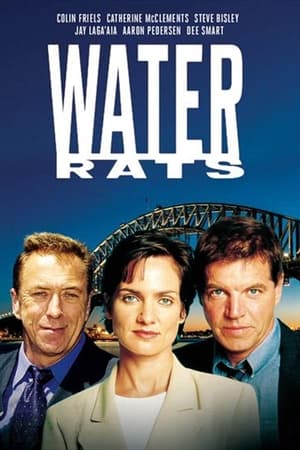
Water Rats is an Australian TV police procedural broadcast on the Nine Network from 1996 to 2001.
For the very first time, the SQ has agreed to open its doors to the cameras, and the results are unfiltered and uncensored! Chases, arrests and investigations are all on tap!
RoboCop: The Series is a 1994 television series based on the film of the same name. It stars Richard Eden as the title character. Made to appeal primarily to children and young teenagers, it lacks the graphic violence that was the hallmark of RoboCop and RoboCop 2. RoboCop has several non-lethal alternatives to killing criminals, which ensures that certain villains can be recurring. The OCP Chairman and his corporation are treated as simply naïve and ignorant, in contrast to their malicious and immoral behavior from the second film onward.
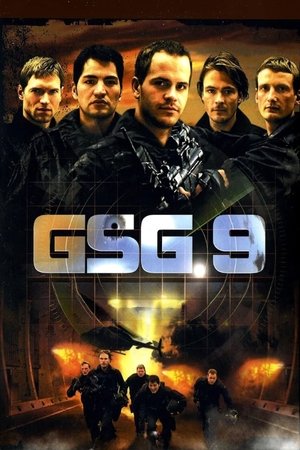
GSG 9 is a German TV-series about the special unit GSG 9 der Bundespolizei of the German Federal Police. It premièred in the Spring of 2007. Its original title, GSG 9 - Ihr Einsatz ist ihr Leben, is a pun on the word Einsatz. Einsatz can be translated as "mission, stake, bet, dedication", depending on the context. Thus, it can be translated as, GSG 9 - Their Mission Is Their Life or GSG 9 - They Put Their Lives at Stake.
Police Academy: The Series is a syndicated 1997 television series spin-off from the Police Academy series of films. Michael Winslow was the only actor from the Police Academy films to have a recurring role on the show, although several of the film's cast made occasional guest appearances. The series was written by Paul Maslansky and produced by James Margellos and Gary M. Goodman. Music by Ari Wise and Jim Guttridge
A Chicago-based wizard works as a private investigator.
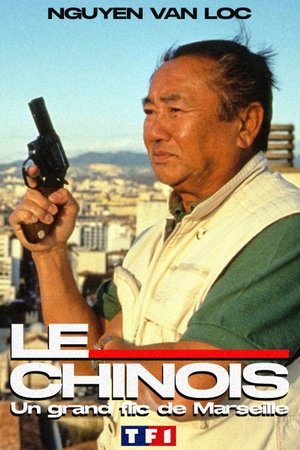
Le Chinois : Un grand flic de Marseille
Charlie Summers, ex-Kiwi Broadway director, is forced by circumstance to return to his home town of Tauranga, where his mum makes him join her amateur theatre society.
The members of a diverse vigilante group formed to boost the police's image are put in jeopardy when they stumble upon an unexpected drug deal.
Homicide was an Australian television police drama series The series dealt with the homicide squad of the Victorian Police force and the various crimes and cases the detectives are called upon to investigate. Many episodes were based on real life crime cases.
Bob Lee Swagger is an expert marksman living in exile who is coaxed back into action after learning of a plot to kill the president.
Rafferty's Rules was an Australian television drama series which ran from 1987 to 1990 on the Seven Network. Rafferty's Rules was one of the first programs undertaken by the Seven Network's then new in-house drama unit, going into production in May 1985 as "a 15-part courtroom drama". The program had started out as a pilot episode, recorded in early 1984 with the actor Chris Haywood in the lead role. When the pilot episode was remounted later in 1984, Chris Haywood wasn't available and the lead role was re-cast to John Wood. This second recording was eventually broadcast as the program's first episode.
Shows the interaction between Hamburg police officers and paramedics.
Follows an elite police unit traveling across Morocco to pursue organized crime while confronting personal struggles that shape them into deeply human and empathetic characters.
In the crime-ridden, mafia-governed city of Ergastulum, Worick and Nicolas are two “handymen” known as “Benriya” who would take any dirty job from either police or mafia, for a good price. After an assignment from police the two met and later joined by Alex, a former prostitute who got interested in the mysterious background of the team, in particular of Nicolas’ abilities.
Barlow at Large is a British television programme created by Troy Kennedy Martin and Elwyn Jones. It broadcast from September 1971 to February 1975, with a total of 29 episodes across four series. Stratford Johns reprises his role of DCI Charles Barlow from Z-Cars, Softly, Softly, and Softly, Softly: Taskforce. Barlow at Large originated as a three-part self-contained spin-off from Softly, Softly in 1971 with Barlow co-opted by the home office to investigate police corruption in Wales. Johns departed in 1972, but returned for a further series of Barlow at Large in the following year, Barlow having gone on full-time secondment to the Home Office. In 1974, the series was rebranded Barlow and two further series of eight episodes each followed, introducing DI Tucker. After the finale's transmission in February 1975, Barlow was next seen in the programme Second Verdict in which he, alongside a former colleague, investigates unsolved cases and unsafe historical convictions.
As a reference to Article 38 which pertains to tax payments, this special police unit utilizes the criminals' own tactics of scams and deceit to catch rich tax cheats.
In the near future, an undercover Detective Inspector gunned down and killed during a botched sting is brought back via an experimental Artificial Intelligence project. Full of glitches, he’s got to track down the person who shot him, prove himself as a cop so as not to get shut down, and save his marriage and his friendship, all with his partner Carver to boot.
After a billionaire engineer witnesses his best friend’s murder, he takes charge of Chicago’s troubled 13th District and reboots it as a technically innovative police force, challenging the district to rethink everything about the way they fight crime.
A slightly unhinged former Navy SEAL lands a job as a police officer in Los Angeles where he's partnered with a veteran detective trying to keep maintain a low stress level in his life.