An investigation into the nature, details and reasons for the collaboration, from 1940 to 1944, during World War II, between the Vichy regime, established in the south of France and headed by Marshal Pétain, and Nazi Germany.
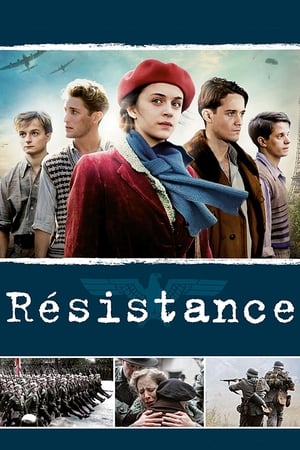
World War II drama about covert organisation Lifeline helping allied airmen escape after being shot down in occupied Europe, working with the Resistance and hiding from the Gestapo.
Narrow Escapes of WWII
The SS was the Nazi state’s instrument of domination and oppression, responsible for the intelligence services and the police. The SS committed a horrific range of atrocities, including the Holocaust, the persecution of political opponents, and brutal war crimes. Millions of people were victims of the Schutzstaffel, and many of the perpetrators were unrepentant to the end. This six-part documentary provides a comprehensive overview of the SS, describing how a small group of thugs rose to become the most feared organ in the Nazi state. With the help of international experts, the film examines common myths about the organisation. Interviews with eyewitnesses and unapologetic perpetrators take us closer to the psyche of the SS supporters in an attempt to make the inconceivable comprehensible.
War and Remembrance is an American miniseries based on the novel of the same name by Herman Wouk. It is the sequel to highly successful The Winds of War.
End of Innocence is a two-part television film that focuses on the work of the German Uranium Association during World War II. At Farm Hall in England, the ten German nuclear scientists interned there as part of Operation Epsilon learn of the dropping of the first atomic bomb on Hiroshima in August 1945. In flashbacks, the development of the German uranium project is recapitulated chronologically from the discovery of nuclear fission by Otto Hahn to the work of Kurt Diebner at the Heereswaffenamt to the experiments of the Kaiser Wilhelm Institute for Physics under Werner Heisenberg and Carl Friedrich von Weizsäcker at the Haigerloch research reactor in spring 1945.
The incredible, true story of the Norwegian Crown Princess Märtha’s efforts to support her country during World War II. After a headlong flight from the Nazis, she was forced to part from her husband and cross the Atlantic Ocean to seek refuge in the United States. There, she soon found herself involved in a close relationship with the President of the United States: Franklin D. Roosevelt.
The story of the Second World War through the personal accounts of a handful of men and women from four American towns. The war touched the lives of every family on every street in every town in America and demonstrated that in extraordinary times, there are no ordinary lives.
Six one hour episodes each focusing on a key individual that traces the trajectory and design of Hitler’s thousand year Reich. From the beer halls of Munich to the horrors of the Final Solution, these individuals were truly Architects Of Darkness of the Nazi Third Reich.
A candid look at what life was really like for those living in, and under Hitler's Swastika - at home - and abroad, a record not only of what they saw, but of what they knew.
Tajemství mrtvých mužů
The misadventures of hapless cafe owner René Artois and his escapades with the Resistance in occupied France.
Blueprints of War will strive to encompass the most famous military conflicts, leaders and weapons throughout time. From the beaches of Normandy to the fields of Gettysburg and the minefields of Vietnam, Blueprints of War will traverse the battlefields of the globe telling the story hour-by-hour and minute-by-minute
WWII in HD is a 10-part American documentary television miniseries that originally aired from November 15 to November 19, 2009 on the History Channel. The program focuses on the firsthand experiences of twelve American service members during World War II, including an Army nurse, a member of the Tuskegee Airmen, a second generation Japanese American and prisoner of war, and an Austrian Jewish immigrant. The twelve members recorded their time in both theaters and some had later interviews; found footage from the battlefield was paired with the stories of the twelve service members. The episodes premiered on five consecutive days, with two episodes per day. The series is narrated by Gary Sinise and was produced by Lou Reda Productions in Easton, Pennsylvania, United States.
I ve smrti sami
Hitler was determined to extend Germany eastwards to make Germany a great continental power. Hitler's policy, based on a racist ideology, planned to eliminate or enslave the population that stood in the way of the Reich. It was this determination that propelled the world into war. Hitler believed that the conquest territories including Poland, the Belarussian and Ukrainian Soviet Socialist Republics, and the Baltic States "for the German people" was his destiny.
Comprised entirely of re-mastered and colorised archive footage from World War II, much of it never before seen, Sacrifice recounts the story of D-Day through the testimonies of those who lived it. These important historical days are seen through the eyes of French civilians and members of the military fighting on both sides. The testimonies of famous individuals like Dwight D. Eisenhower and Erwin Rommel are intertwined with those of anonymous soldiers and citizens, such as film director Samuel Fuller and Eisenhower's chauffeur, Kay Summersby. From the preparations for D-Day all the way through to the liberation of Paris, the accounts of these men and women provide a moving and invaluable retelling of this pivotal time in history.
"Die Kinder der Flucht" is a three-part German docudrama that portrays the harrowing experiences of children and young people during the final months of World War II and its aftermath in Eastern Europe. The series weaves together dramatized reenactments, archival footage, and poignant interviews with real-life survivors to tell three distinct yet interconnected stories of displacement, survival, and resilience.
Historian James Holland goes inside the Nazi war machine, exploring the extraordinary weapons produced under the Third Reich, in a series that includes rare archive material
In this four-part documentary series, leading Hollywood actors undertake a fascinating journey into their family's past by re-tracing the footsteps of their grandparents during World War Two. We follow the moving, personal stories of Helena Bonham Carter, Mark Rylance, Kristin Scott Thomas, and Carey Mulligan as they travel to historic locations, from the beaches of Dunkirk to prisoner of war camps in Asia, to learn about the war their grandparents experienced. All of the actors have unanswered questions about the scars war left on their grandparents, and in each episode one of the actors explore how six years changed the lives of their family and the world forever while learning about the life and death decisions that their grandparents faced.