This captivating docuseries examines Winston Churchill's pivotal role in World War II and the formative events that made him an ideal leader for the era.
Wings of War
A series that explains the history and technology of weapons at war.
The only major fleet engagement of World War I, the Battle of Jutland has been surrounded by controversy ever since. The British public felt Admiral Jellicoe had failed – a reaction rooted in a hundred years of the 'Nelson cult', a conviction that anything short of a Trafalgar-style annihilation was letting the side down. On the 31st of May 1916 – 251 British and German battleships set out to annihilate one another in the North Sea. In a vicious engagement that lasted over 12 hours – 25 ships were sunk and 8,600 lives were lost. The German Fleet had sunk more ships and suffered fewer casualties, but the British had forced them to disengage and run for port. This two-hour special tells the true story of the battle. An international team of marine divers and historians set out to explore the wrecks of the great Dreadnoughts that lie 100 miles from shore and up to 60 metres deep. The dives will at last reveal why the British navy failed to score a decisive victory.
Balkan in Flammen
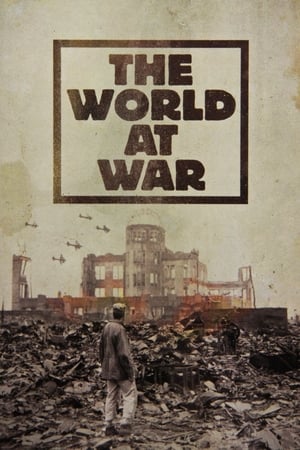
A Total War is all encompassing, a war without boundary or limitation. It is a war of material and morale. A war that mobilizes, destroys and displaces civilian populations. The Second World War was a war in which massive armies advanced, confronting whole populations with impossible choices. The manufacture of weapons transformed industry and the workforce; area bombing campaigns reduced cities to rubble; sieges doomed populations to starvation; racial policies sponsored campaigns of genocide. Told through archive footage and expert interviews, we learn how WWII shattered the boundaries between home-front and battlefield.
Légionnaires - Missions de combat
Battle Treasures tells the stories behind some of the rarest and most remarkable military artefacts ever discovered.
The history of warfare from antiquity to the Falklands War; each episode looks at warfare from the perspective of different participants: infantryman, artillerist, cavalryman, tanker, airman, guerrilla, surgeon, logistician and commander.
In the tradition of WWII-themed graphic novels such as Maus, six remarkable motion comics tell the dramatic stories of the brave people who raised their voices to advocate for Jewish refugees victimized by the Nazis
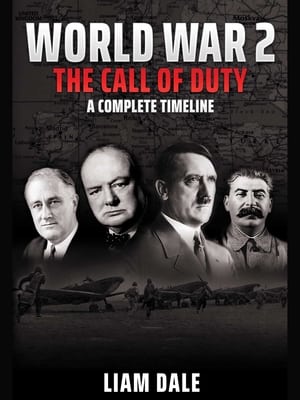
Track the main events of World War II with the help of remarkable archive footage and see exactly what happened, and when. Learn about Pearl Harbor, The Battle of Britain, D-Day, the dropping of the atomic bomb and more. From the early battles right through to the complexities of the endgame, this extensive 24 episode series shines a spotlight on a period of history that should never be forgotten.
アニメンタリ・ 決断
The Vasa was built for war but also to impress the enemy and display power. However, she sank on her maiden voyage, taking about thirty people with her to the depths. Many were rescued from the water by small boats that were in Stockholm’s ström to witness the proud vessel. Today, 400 years later, researchers study this unique time capsule from the early 17th century. How powerful were Vasa’s 64 cannons? Who do the countless, colorful sculptures on the ship actually depict? And the big question: what was the reason the ship sank?
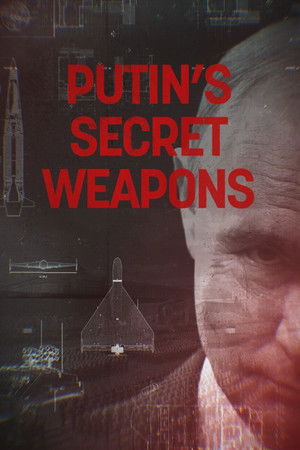
The Russian army has no shortage of weapons despite sanctions: With an arsenal mixing old Soviet stocks and modern hypersonic weapons, the country could strike Europe in minutes. An opaque network of spies, shell companies and oligarchs ensures its war capacity through the arms trade, technology theft and state-organized policy of terror.
Baskoniako Historia Bat
Sensacje XX wieku
1940, Les secrets de l’Armistice
An investigation into the nature, details and reasons for the collaboration, from 1940 to 1944, during World War II, between the Vichy regime, established in the south of France and headed by Marshal Pétain, and Nazi Germany.
On 23 August 1939, the world was shocked to discover that Hitler and Stalin, the most intractable of their enemies at the time, had signed a pact that allowed them to divide Poland between them and gave the Nazi leader complete freedom to concentrate his forces in the West, against France and the United Kingdom. Through this agreement, Europe was to be thrown into war. For a long time, the relationship between Hitler and Stalin was ignored: their mutual fascination, their moves to get closer, the marks of confidence they exchanged and all the benefits they derived from the German-Soviet pact, before resuming their war to the death in June 41 with the "Barbarossa" operation.
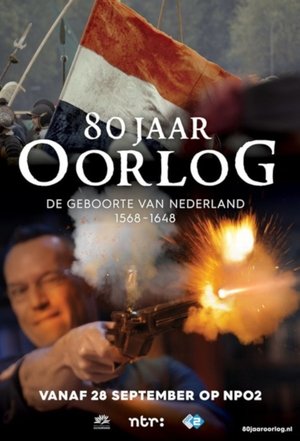
At the end of the 16th century, Dutch subjects revolted against legitimate Spanish rule. What starts with the discontent of a minority grows into a war that will last more than a lifetime. From Groningen to Brussels, from Den Briel to Groenlo, the battle erupts everywhere. And often that struggle has a strangely modern appearance. Terrorism, propaganda, executions, radicalization, shock and awe; all themes that can easily be found in the war that was fought from 1568 to 1648. In a 7-part television series, the NTR will bring the stories about the 80-year war that can be found all over the country from September 28, every Friday at 9.05 pm on NPO 2. And Hans Goedkoop oversees the battlefield with experts.