A devoted traditional medicine doctor modernizes his father’s medicated oil and challenges the city’s reliance on painkillers. Using ancient medical wisdom and daring acupuncture methods, he treats patients abandoned by Western medicine, risking controversy to bring hope to the poor and hopeless.
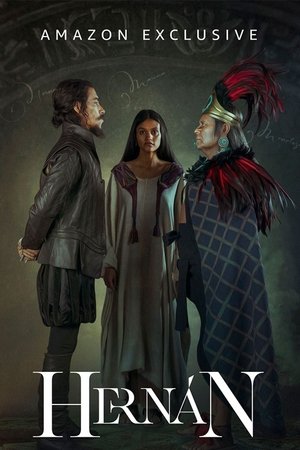
Gird your loins for the tragic tale of Lady Jane Grey, the young Tudor noblewoman who was Queen of England for nine days and then beheaded, back in good ol’ 1553. Actually... f*ck that. We’re retelling history the way it should have happened: the damsel in distress saves herself. This is an epic tale of true love and high adventure set in an alt-universe of action, history, fantasy, comedy, romance, and rompy-pompy. Buckle up.
In 1949, the People's Liberation Army launched a successful offensive across the Yangtze River, breaking the Nationalist defenses. Deng Xiaoping led efforts to train young cadres and restore the southwest, achieving unity and rapid development in the region. Through their dedication, soldiers and cadres played a crucial role in transforming and rebuilding southwestern China.
In Meiji-era Matsue, a fallen samurai’s daughter and a lonely foreign teacher connect through ghost stories and an unlikely friendship.
Zhang Guimei, a middle school teacher in China's western mountains, was determined to help girls escape the cycle of poverty after seeing many drop out due to financial struggles. She founded a free high school for girls, providing them with the opportunity for education and a better future. Despite ongoing challenges, her efforts continue to bring hope to girls from the mountains.
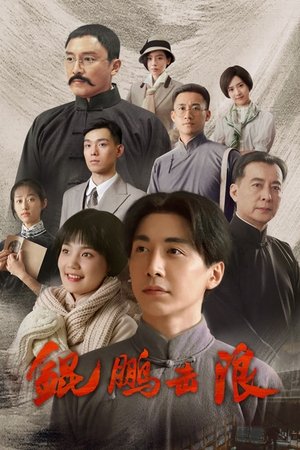
After the outbreak of the May 4th Movement, Li Dazhao, Chen Duxiu and others discussed China's crisis and the way out, and put forward the idea of saving China with Marxism. The National Congress of the Communist Party of China was held on a cruise ship in Nanhu Lake. Thirteen representatives including Mao Zedong came together with the common goal of reforming China.
In the middle of the Cold War, a Soviet submarine runs aground outside Karlskrona and suddenly Sweden finds itself at the center of events. Prime Minister Thorbjörn Fälldin tries to resolve the conflict and avoid a world war between two nuclear powers while struggling with a wise foreign minister and a belligerent commander-in-chief.
Massan is based on the lives of Masataka Taketsuru and his wife Jessie Roberta "Rita" Cowan, a Scotswoman Taketsuru met while studying abroad.
The life story of María Félix, from her humble beginnings as one of fifteen children to her rise to fame and infamy as one of the most storied Mexican actresses of the 1940s and beyond.
Noe Ito. Women's liberation activist in the Taisho era. 100 years ago, with a stroke of her hand, she challenged the institution of marriage and social morality head-on. She uses her exuberant passion as her sole source of support. Admiration for Raiteu Hiratsuka, who wrote that “in the beginning, women were the sun”, her life with her first husband, Dadaist Jun Tsuji, and Sakae Osugi, the anarchist who became the better half of her life. Meeting with... She lived a wild life in search of freedom, and when she tried to flourish as a writer, unreasonable violence took her life at the age of 28, but her life was a life that boldly confronted social contradictions that are common today, such as poverty and gender disparity. is once again shaking the present filled with a sense of stagnation.
A heartwarming drama inspired by true stories of individuals who built new lives in 12 cities and towns across Fukushima.
Amid the upheaval of Chiang Kai-shek’s 1927 coup, young revolutionary Xi Zhongxun defies political terror and emerges as a leader. Inspired by Liu Zhidan’s uprising, he joins forces to establish the Shaanxi-Gansu Red Army. During the Anti-Japanese War, he strengthens the revolutionary base and fosters its development, earning Mao Zedong’s praise for his loyalty to the cause. After Japan’s surrender, Xi Zhongxun fiercely defends the Northwest, helping to lay a foundation for national progress.
The series follows Mao Zedong’s journey from a young student to a devoted Marxist between 1918 and 1921, set against China’s political turmoil, social movements, and the rise of new ideas, as he searches for a path to save his country and its people.
The wild story of young William Shakespeare's arrival onto the punk-rock theater scene in 16th century London -- the seductive, violent world where his raw talent faced rioting audiences, religious fanatics and raucous side-shows. It's a contemporary version of Shakespeare's life, played to a modern soundtrack that exposes all his recklessness, lustful temptations and brilliance.
A dramatization of the life of Albert Speer, Hitler’s young architect and onetime confidant, and his meteoric rise into the Nazi hierarchy. Based upon Speer’s own monograph of the same title.
Fascinated by cars since childhood, Brazilian racer Ayrton Senna became a sports legend — until tragedy struck, changing Formula 1 forever.
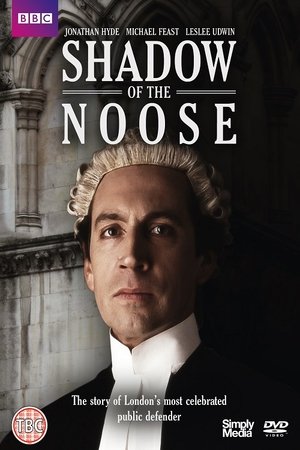
Shadow of the Noose is a 1989 BBC One legal drama miniseries starring Jonathan Hyde as real-life English barrister Sir Edward Marshall Hall. The eight-episode serial depicts Marshall Hall's high-profile, controversial cases, earning him the nickname 'The Great Defender', while also exploring his personal struggles, particularly those related to his unhappy first marriage.
A dramatisation of the life of famed playwright William Shakespeare from 1590 to 1607.
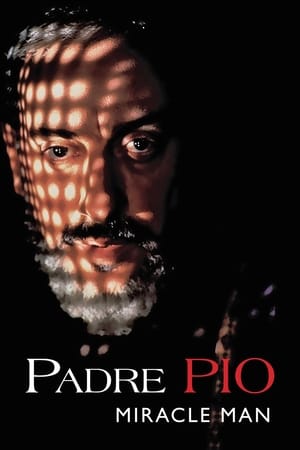
The amazing details and events in Padre Pio's life as a boy and throughout his 50 years as a friar. Padre Pio was a man of great faith and devotion, deep spiritual concern for others, and great compassion for the sick and suffering, but he was persecuted by the church.
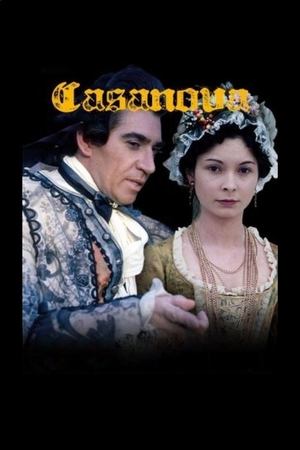
Italian adventurer and libertine Giovanni Jacopo Casanova lived from 1725 to 1798, but in this six-part series Dennis Potter attempted to find a contemporary relevance through his central themes of sex and religion. He commented that Casanova "was concerned with religious and sexual freedom, and these are the things we have to address ourselves to now." Casanova was imprisoned in Venice in 1755, and Potter used that event as a central device, constantly inter-cutting to contrast Casanova's amorous escapades, radiant, joyful and brightly lit, with his oppressive solitary confinement in the gloom of a half-darkened cell.