Introducing a game show of fandom minutiae one-upmanship, where nerds do what nerds do best: flaunt encyclopedic nerd knowledge at Millennium Falcon nerd-speed.
Pub Landlord comedian, All Murray hosts an hour-long show quiz show that pits the UK's most passionate pub quiz teams against each other.
In a Temple filled with lost treasures and protected by mysterious Mayan temple guards, six teams of two children compete to retrieve one of the historical artifacts in the Temple by performing physical stunts and answering questions based on history, mythology, and geography. After three elimination rounds, only one team remains, who then earns the right to go through the Temple to retrieve the artifact within three minutes and win a grand prize.
Förr eller senare
Upp till bevis
David Tennant hosts the competition to determine which of Britain's comedians have the biggest fountain of funny knowledge
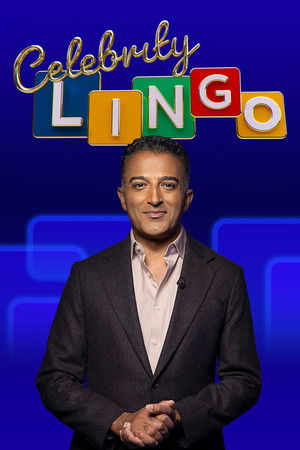
Hosted by Adil Ray, Celebrity Lingo will see famous faces pair up and go head-to-head in the fast-paced word play game as they vie to fill in the blanks and find the missing words.
Tjuv och polis
Card Sharks is an American television game show created by Chester Feldman for Mark Goodson-Bill Todman Productions. Two contestants compete for control of a row of oversized playing cards by answering questions posed by the host and then guessing if the next card is higher or lower in value than the previous one. The concept has been made into a series four separate times since its debut in 1978, and also appeared as part of CBS's Gameshow Marathon. The primary announcer for the first three series was Gene Wood.
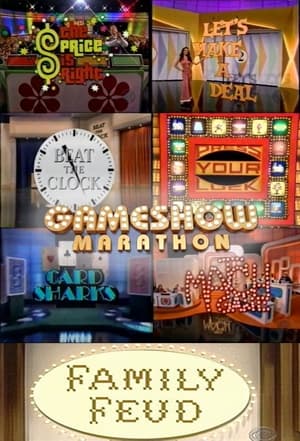
Game$how Marathon is an American television program which aired on CBS from May 31, 2006 to June 29, 2006. It is based on the UK series Ant & Dec's Gameshow Marathon which aired on ITV in 2005. The show features contestants competing in some of television's most historically popular game shows, in a single-elimination format until an ultimate winner is found. Both the UK and US versions featured celebrity contestants. The US version was produced by FremantleMedia North America and Granada America and was hosted by Ricki Lake and announced by Rich Fields. In the US, the series only aired for a single season, while in the UK a second season aired in 2007, this time entitled Gameshow Marathon and hosted by Vernon Kay. This program was recorded at Stage 46, CBS Television City in Los Angeles, CA, USA.
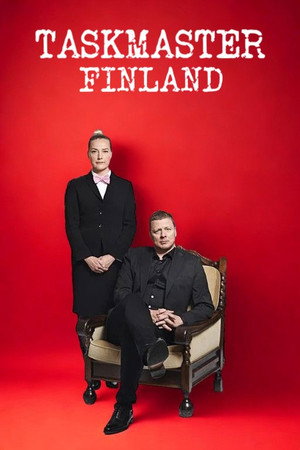
In this Finnish version of popular British format "Taskmaster," Jaakko Saariluoma will be seen in the role of Taskmaster, with Pilvi Hämäläinen as his right hand. They will be judging the stars competing as they explore the limits of their insight in a variety of tasks that require intelligence, skill, and wit. Guests will be visiting the studio and joining the fun.
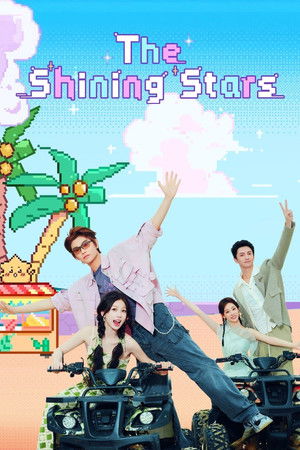
The Four Bamboo Masters come together once again to document their adventurous 3-day, 2-night trip to Weizhou Island. Together, they face a series of challenges designed by the "system" to test their teamwork and camaraderie.
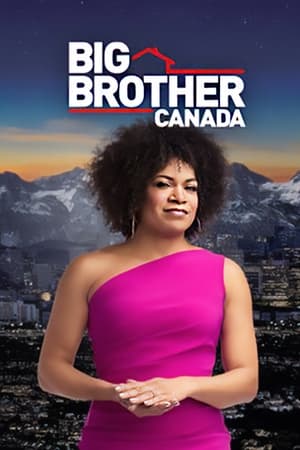
A Canadian reality television show in which a group of contestants, known as "house guests", are sequestered in the Big Brother House, under the surveillance of cameras and microphones, for the chance to win a grand prize of $100,000 by being the last remaining house guest. Each week, the house guests vote to evict one of their own until two house guests remain on finale night. The winner is decided by the last seven evicted house guests, known as the Big Brother Jury.
Sporting quiz show, with regular captains leading teams of celebrities.
Celebrity contestants compete for a chance to win money for a charity of their choice.
Bamzooki is a mixed reality television gameshow on the BBC which features a toolkit developed by Gameware Development. The first series aired in March 2004 on CBBC. The show was presented by Jake Humphrey. It has occasionally featured specials with Sophie McDonnell. In July 2008, it was announced on CBBC on BBC One that Bamzooki was returning. A new thirteen part series began in November 2009 and was now hosted by Barney Harwood and Gemma Hunt.
Concentration is an American television game show based on the children's memory game of the same name. Matching cards represented prizes that contestants could win. As matching pairs of cards were gradually removed from the board, it would slowly reveal elements of a rebus puzzle that contestants had to solve to win a match. The show was broadcast on and off from 1958 to 1991, presented by various hosts, and has been made in several different versions. The original network daytime series, Concentration, appeared on NBC for 14 years, 7 months, and 3,770 telecasts, the longest run of any game show on that network. This series was hosted by Hugh Downs and later by Bob Clayton, but for a six-month period in 1969, Ed McMahon hosted the series. The series began at 11:30 AM Eastern, then moved to 11:00 and finally to 10:30. Nearly all episodes of the NBC daytime version were produced at 30 Rockefeller Plaza, New York City. A weekly nighttime version appeared in two separate broadcast runs: the first aired from October 30 to November 20, 1958 with Jack Barry as host, while the second ran from April 24 to September 18, 1961 with Downs as host.
Australian version of British game show Tipping Point (2012). Contestants can win up to $40,000 by inserting counters into a jackpot machine.
In a thrilling game of skill and luck, contestants compete to solve word puzzles with a spin of the wheel to win cash and prizes. Everything is up for grabs, but only one lucky contestant will get the chance to take home money in their cash pot.
Bad Influence! is an early to mid-1990s British factual television programme broadcast on CITV between 1992 and 1996, and was produced in Leeds by Yorkshire Television. It looked at video games and computer technology, and was described as a "kid’s Tomorrow's World". It was shown on Thursday afternoons and had a run of four series of between 13 and 15 shows, each of 20 minutes duration. For three of the four series, it had the highest ratings of any CITV programme at the time. Its working title was Deep Techies, a colloquial term derived from 'techies' basically meaning technology-obsessed individuals.