Starlight Theatre is an American anthology series that aired on CBS television from April 2, 1950 to September 20, 1951.
Greatest Heroes of the Bible
Letter to Loretta is an American anthology drama series telecast on NBC from September 1953 to June 1961 for a total of 165 episodes. The filmed show was hosted by Loretta Young who also played the lead in various episodes. Letter to Loretta was sponsored by Procter & Gamble from 1953 through 1960. The final season's sponsor was Warner-Lambert's Listerine.
Startime, an anthology of drama, comedy and variety, was one of the first American television shows broadcast in color.
Series of 54 original televised plays and classic dramas produced by public television station KCET in Los Angeles, featuring all-star talent, was broadcast nationally on the National Educational Television (NET) network and its successor PBS between 1970 and 1978.
'I Can See You' is a one-of-a-kind anthology that features compelling and thrilling stories every week on GMA Telebabad
i STORIES tells the separate tales of a transgender woman, a bisexual woman, a gay man, and a lesbian, who all share the name "i."
The Edwardians is an eight-part miniseries broadcast in 1972–73. An anthology, each 90-minute episode explores influential figure(s) of the Edwardian era: Charles Rolls and Henry Royce; Horatio Bottomley; E. Nesbit; Sir Arthur Conan Doyle; Robert Baden-Powell; Marie Lloyd; Daisy Greville, Countess of Warwick; and David Lloyd George.
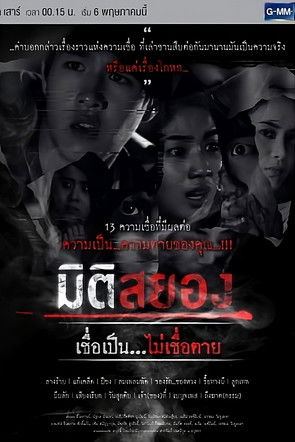
An anthology of seven psychological dramas, each with a different cast and crew, exploring deaths in unusual circumstances.
This series reimagines Thailand in a dystopian future where technology scrapes at the surface of old customs, exposing rips in the fabric of culture.
A series of animations based on prize-winning short stories for women.
The Great Adventure is a historical anthology series that appeared on CBS for the 1963-1964 television season. The series, narrated each week by Van Heflin, and featuring theme music by Richard Rodgers, presented a weekly one-hour dramatization of the lives of famous Americans and important historical events in American History.
Ford Star Jubilee is an American anthology series that aired once a month on Saturday nights on CBS at 9:00 P.M., E.S.T. from the fall of 1955 to the fall of 1956. The series was approximately 90 minutes long, aired in black-and-white and color, and was typically broadcast live. Ford Star Jubilee was sponsored by the Ford Motor Company.
On their way to London for the Rugby League final, a group of northerners start telling each other stories, in the manner of Chaucer's pilgrims in The Canterbury Tales.
A weekly anthology of inspiring stories, featuring the life experiences of famous personalities – and ordinary people – who loved and lost on their way to success.
Tales from the Darkside is an anthology horror TV series created by George A. Romero, each episode was an individual short story that ended with a plot twist. The series' episodes spanned the genres of horror, science fiction, and fantasy, and some episodes featured elements of black comedy or more lighthearted themes.
Sam Ashley, a graduate of 1965 class of Bret Harte High School, who was now a teacher at the school, served as the narrator describing what had happened to his fellow graduates in the decade since they had graduated.
An anthology of six plays, contemporary twists on well-loved tales with dark endings.
An anthology horror drama series centering on different characters and locations, including a house with a murderous past, an asylum, a witch coven, a freak show, a hotel, a farmhouse in Roanoke, a cult, the apocalypse and a summer camp.
Out of the Unknown is a British television science fiction anthology drama series, produced by the BBC and broadcast on BBC2 in four series between 1965 and 1971. Each episode was a dramatisation of a science fiction short story; some were created for the series, but most were adaptations of already published stories. The first three years were exclusively science fiction, but that genre was abandoned in the final year in favour of horror and fantasy. A number of episodes were wiped during the early 1970s, as was standard procedure at the time.