Master Quine
Hyvät katsojat
Still Standing : Qui passera à la trappe ?
Skinnet bedrar
Coup de dès
Known or unknown, taking risks or playing it safe, walking familiar paths or exploring new horizons. In The Unknown, a new adventurous waste race devised by the makers of De Verraders, Axel Daeseleire takes a group of candidates on a journey. During their adventure they are constantly challenged and have to choose between 'the known' or 'the unknown'. The game can take an unexpected turn at any time, causing emotions to run high. Who dares to choose the unknown path in an adventure program where no one knows what the rules are? And what yields the most: known or unknown? In the end, only one person will go home with the cash prize.
Intervilles
Ten of Birmimghams best filmmakers are here to battle it out for the most prestigious title of all. In one week they will have to Write, Shoot and edit a Short film. They will then be judged by top names in the industry!
Welcome to the Nerfhouse. Come on in and take a look around the house as we meet our contestants for our series.
Letters and Numbers is an Australian game show on SBS One. It is hosted by Richard Morecroft, and co-hosted by David Astle and Lily Serna. It is based on the French format Des chiffres et des lettres while its structure is similar to the UK version of the show, Countdown. It began airing on 2 August 2010. On 22 June 2012 SBS announced on the official website its decision to "rest" the show, the final episode aired on 27 June 2012. The show has been replaced, at 6pm weeknights, by the UK series, Countdown.
Neo Match Up
Sabotage
"Die Millionenshow" is the Austrian version of the television quiz “Who Wants to Be a Millionaire?”. c
Hvem kan slå Ylvis?
Mokshû Patamû
Qui sera millionnaire ? est la version belge francophone du célèbre jeu télévisé d'origine britannique Who Wants to Be a Millionaire?. Cette émission est présentée par Alain Simons et diffusée sur RTL-TVi depuis l'année 2000. Il existe aussi dans le même pays une version néerlandophone diffusée sur VTM : Wie wordt euromiljonair ?. Le principal objectif du jeu est de gagner 1 million d'euros en répondant à 15 questions à choix multiple. Qui Sera Millionnaire ? a été diffusée de 1999 à 2001 puis une reprise en 2002 à 2005 et enfin un autre arrêt jusqu'en 2008 . De 1999 à 2001, le plus grand prix était de 10 millions de francs belges, c'est la seule différence avec la version d'aujourd'hui qui est en euros. Quand un compétiteur a sa cinquième réponse correcte, il part avec 500 €. Quand un compétiteur emporte la dixième question, il part avec 12 500 €. Avant 2001, l'émission était diffusée une seule fois par semaine, le lundi en première partie de soirée. Elle réalisa de bonnes audiences, atteignant notamment 30 % de parts de marché en Belgique francophone. Après une longue absence de 3 ans, l'émission a fait son retour à l'antenne dès septembre 2008, toujours sur RTL-TVI, mais a été supprimée seulement quelques semaines plus tard, suite à de mauvaises audiences.
Teams of young athletes compete in a game of two halves, facing challenges both in the field and in the kitchen. It's a sugar rush that celebrates children's love for sport and cake!
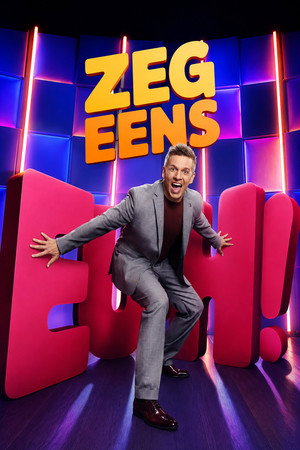
Zeg Eens Euh
Following a successful pilot, Alex Horne’s play-at-home gameshow sees five teams of friends and family compete from across the UK. Tackling inventive and devious tasks without leaving their homes, the teams must use creativity, lateral thinking, speed, knowledge and teamwork to win. Each week, the winning household can take its cash prize or risk it for the chance to double its winnings.
Finders Keepers is a children's game show broadcast by the BBC from 1981 to 1985. The show combined a quiz element with a computerised version of the game Battleships. Two teams of three primary school-aged pupils would compete against each other. On scoring a "hit" at the Battleships game, the team had to answer a question to gain the associated points. The show was also notable for host Richard Stilgoe playing the theme on a synthesiser live in the studio at the beginning, as well as the use of the phonetic alphabet to indicate the square on the battleship grid. The game of Battleships was played on a 7x7 grid and ran on a BBC Microcomputer. According to the Kaleidoscope Children's Guide, some editions of the series were wiped from the BBC archives in 1993.