A veteran comedian is reluctantly paired with a younger, edgier comedian for a late-night comedy sketch show.
Common As Muck is a gritty BBC comedy drama serial focusing on the lives of a crew of bin men and their management staff. It ran for two series. The first series was screened in 1994 and the second in 1997. Both were nominated for a BAFTA for Best Drama.
Hardware is a British sitcom that aired on ITV from 2003 to 2004. Starring Martin Freeman, it was written and created by Simon Nye, the creator of Men Behaving Badly. The show's opening theme was A Taste of Honey by Herb Alpert's Tijuana Brass.
The Thin Blue Line is a British sitcom starring Rowan Atkinson set in a police station that ran for two series on the BBC from 1995 to 1996. It was written by Ben Elton.
A young and idealistic Doctor Stephen Daker arrives at Lowlands University to work at the Health Centre, but has to cope with an eccentric set of colleagues.
Texas native Jamie King is an aspiring actor who heads to Hollywood in hopes to find fame and fortune in the entertainment industry. To support himself, he works at his Aunt Helen and Uncle Junior's Los Angeles hotel, the King's Towers.
A group of high-school teens are the products of government employees' secret experiment. They are the genetic clones of famous historical figures who have been dug up, re-created anew. Joan of Arc, Cleopatra, JFK, Gandhi, Abraham Lincoln and more are juxtaposed as teenagers dealing with teen issues in the 20th century.
PhoneShop is a British sitcom that was first broadcast on Channel 4 as a television pilot on 13 November 2009, as part of the channel's Comedy Showcase season of comedy pilots. It was then followed by a six-episode series that was commissioned on E4 and broadcasting began on 7 October 2010.
When a Cincinnati radio station switches from sedate music to top-40 rock 'n' roll, its staff of oddball characters is forced to switch gears quickly. New programming director Andy Travis brings in a new DJ named Venus Flytrap to work with the station's burned-out veteran, Dr. Johnny Fever. Neurotic newsman Les Nessman, eager beaver Bailey Quarters, sleazy salesman Herb Tarlek, blonde bombshell Jennifer Marlowe, who serves as the station's ultra-capable receptionist, and station manager Arthur Carlson, whose domineering mother owns WKRP, round out the eccentric bunch.
The fortunes of a former chat show host who is reduced to a lowly slot on Radio Norwich. Alan Partridge is divorced, living in a travel tavern, and desperate for a return to television.
Susan Keane is a glamorous San Francisco magazine writer beginning to adjust to being single, who learns to be independent-minded, after being taken care of all her life.
Executive Stress is a British sitcom that aired on ITV from 1986 to 1988. Produced by Thames Television, it first aired on 20 October 1986. After three series, the last episode aired on 27 December 1988. Written by George Layton, Executive Stress stars Penelope Keith as Caroline Fairchild, a middle-aged woman who decides to go back to work. Her husband, Donald, is played by Geoffrey Palmer in the first series. However, Palmer was unable to return for the second series, so Peter Bowles played Donald in the last two series. Keith and Bowles had previously appeared in together in To the Manor Born.
Spoof technology magazine show by Stuart Ashen and Karen Hayley.
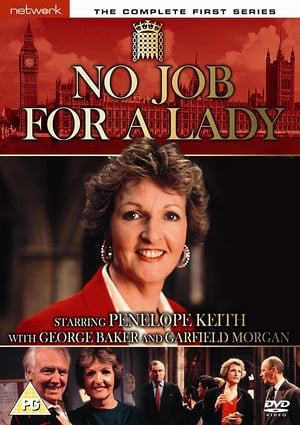
Jean Price is the newly elected, somewhat rebellious Labour MP for an inner-city constituency, and her life in the House of Commons. She's married to Geoff Price, a public defender and carer of many household chores so that Jean can pursue her new career. Jean balances her personal life with parliamentary duties, including 'women's issues', which Jean alternately fights for and is frustrated by, as other MPs think she cares about nothing else due to her gender. She often is surprised by others' duplicity and hypocrisy, holding them to a significantly higher standard.
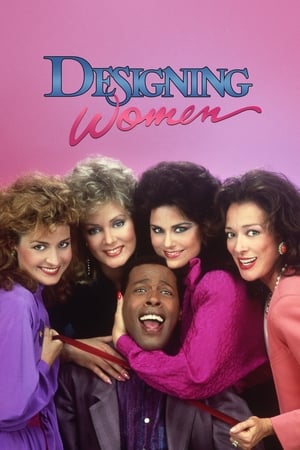
Julia Sugarbaker, Mary Jo Shively, Charlene Frazier-Stillfield and Suzanne Sugarbaker are associates at their design firm, Sugarbaker and Associates. Julia is the owner and is very outspoken and strong-willed. Mary Jo is a divorced single-parent whom is just as strong-willed as Julia, but isn't as self-confident. Charlene is the naive and trusting farm girl from Poplar Bluff, Missouri. Suzanne is the self-centered ex-beauty queen whom has a number of wealthy ex-husbands.
Disillusioned after a long career at Sunshine Desserts, Perrin goes through a mid-life crisis and fakes his own death. Returning in disguise after various attempts at finding a 'new life', he gets his old job back and finds nothing has changed. He is eventually found out, and in the second series has success with a chain of shops selling useless junk. That becomes so successful that he feels he has created a monster and decides to destroy it. In the third and final series he has a dream of forming a commune which his long suffering colleagues help bring to reality. Unfortunately that also fails and he finds himself back in a job not unlike the one he originally had at Sunshine Desserts.
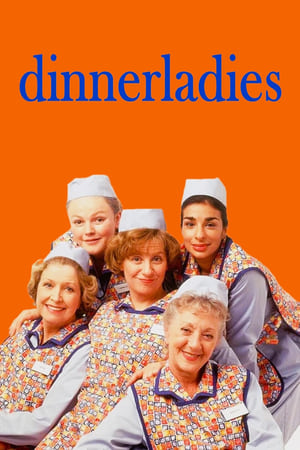
Dinnerladies is a BBC sitcom written by and starring Victoria Wood that chronicles the antics of a group of workers in a canteen in the north of England. Bren tries to maintain a semblance of order in amongst the chaos, while dealing with the canteen supervisor, slightly sex-obsessed cancer sufferer Tony. Dolly and Jean are the bickering menopausal older women, always at odds but best friends beneath it all. Then there's thick-as-two-short-planks Anita, and the terminally uninterested Twinkle, more concerned with having a good time than anything else. Making up the motley crew are military man handyman Stan, all rules and regulations, and ditzy Philippa, who never seems to get anything right.
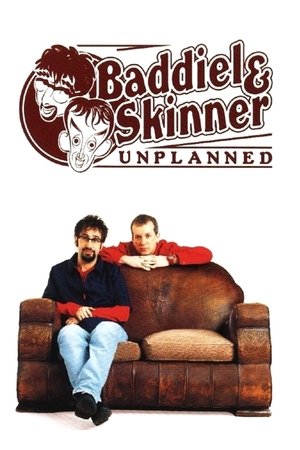
Baddiel and Skinner unplanned was a free-form talk show hosted by British comedians/personalities David Baddiel and Frank Skinner and produced by Avalon Television. Its concept was developed at the Edinburgh Festival Fringe, and had a run in the West End at the Shaftesbury Theatre in 2001. The show features the two hosts sitting on a couch on-stage and responding to questions from the audience — at times rather seriously, but usually with bizarre digressions into satirical comedy. An audience member is chosen as "Secretary" and has the job of keeping a note of the topics covered on a white board. In practice, the personality of the secretary will also prompt many jokes — usually at his or her expense. At the end of the show, Skinner asks either the secretary or the audience to choose between two song books, and to pick a page number between 1 and 20. This process determines which song is performed by the duo, sung by Skinner with Baddiel accompanying him on piano. Topics of discussion are wholly mandated by the audience and have ranged from discussions of the war against Iraq and other political events to comments on the latest plot twists of popular soap operas and the Atkins diet. Skinner's Catholicism and Baddiel's Jewish faith are also occasional targets of humour.
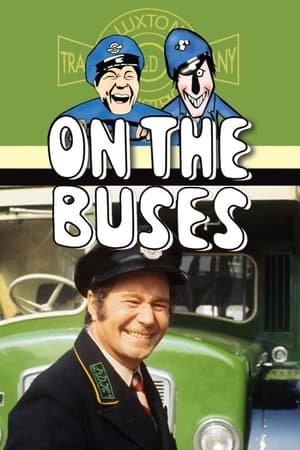
On the Buses is a British comedy series created by Ronald Wolfe and Ronald Chesney, broadcast in the United Kingdom from 1969 to 1973. The writers' previous successes with The Rag Trade and Meet the Wife were for the BBC, but the corporation rejected On the Buses, not seeing much comedy potential in a bus depot as a setting. The comedy partnership turned to a friend, Frank Muir, Head of Entertainment at London Weekend Television, who loved the idea; the show was accepted and despite a poor critical reception became a hit with viewers.
Sitcom following the misadventures of laddish flatmates Gary and Tony