Data Science vs Fake
Carl Sagan covers a wide range of scientific subjects, including the origin of life and a perspective of our place in the universe.
Horizon tells amazing science stories, unravels mysteries and reveals worlds you've never seen before.
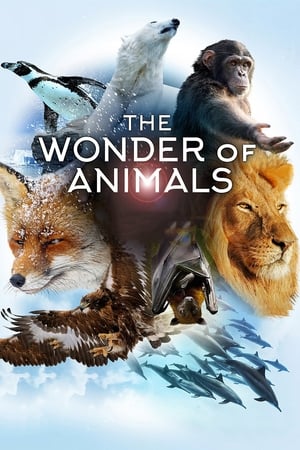
Chris Packham uses groundbreaking science and brand-new behaviour to delve deep beneath the skin and discover the unique features that have made certain animal groups successful.
Professor Brian Cox asks the biggest questions we can ask. Are we alone? Why are we here? What is our future? Join him in a stunning celebration of human life as he explores our origins, our place and our destiny in the universe.
Newton's Apple is an American educational television program produced and developed by KTCA, and distributed to PBS stations in the United States that ran from 1983 to 1999. The show's title is based on the rumor of Isaac Newton sitting under a tree and an apple falling near him—or, more popularly, on his head—prompting him to ponder what makes things fall, leading to the development of his theory of gravitation. The show was produced by Twin Cities Public Television. For most of the run, the show's theme song was Ruckzuck by Kraftwerk, later remixed by Absolute Music. Later episodes of the show featured an original song. An occasional short feature appeared called "Science of the Rich and Famous" in which celebrities appeared to explain a science principle.
The stories behind innovations such as TV, radio, phones, airplanes, motorcycles and power tools as well as the inventors including Nikola Tesla, William Harley, Alexander Graham Bell, Duncan Black and Alonzo Decker.
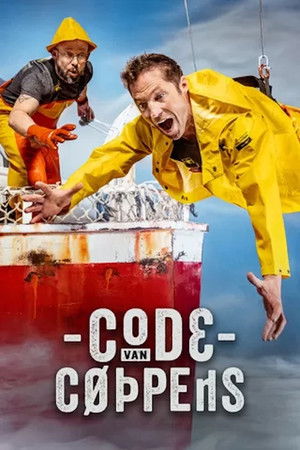
Every day we are inundated with information. Can facts still be distinguished from fables? With a nod to today's 'do your own research' internet culture, Marijn, Joep and Tim invent their own experiments, of which they are part. They have one goal: to find out the truth once and for all.
From the biology of attraction to the history of birth control, explore the ins and outs of sex in this entertaining and enlightening series.
Since the Big Bang 13.8 billion years ago, light has sculpted the cosmos. It traverses the void, interacts with matter, and dances with shadows. It multiplies and proliferates, offering the world ever more complex and luminous structures. If it could speak, what would it tell us?
Tout s'explique
Two-part documentary which deals with two of the deepest questions there are - what is everything, and what is nothing? Professor Jim Al-Khalili searches for an answer to these questions as he explores the true size and shape of the universe and delves into the amazing science behind apparent nothingness.
An NHK flagship program, centered around a diverse range of documentaries, delves into the dynamic shifts of society, politics and history, as well as the breathtaking wonders of the natural world.
Did democracy actually originate in Greece? Was the plague the worst epidemic of all time? And did we really work harder in the past than we do today? Is it true that ...? questions what we think we know and takes another look at history.
꾸러기 탐구생활
The European Space Agency (ESA) has selected a new team of trained astronauts to go not only to the International Space Station, but also to the Moon with the Artemis mission. With the discoveries made by James Webb and new-generation launchers such as Ariane 6, there are many new developments in European space exploration.
Science, superstition, culture: This animated documentary series delves into various aspects of man's relationship with the Earth's satellite.
C'est pas sorcier is a French educational television program that originally aired from November 5, 1994 to present.
Host Felipe Castanhari explores science, history, mysteries and marvels, uncovering mind-blowing facts with help from his lab buddies.
Catching History's Criminals: The Forensics Story