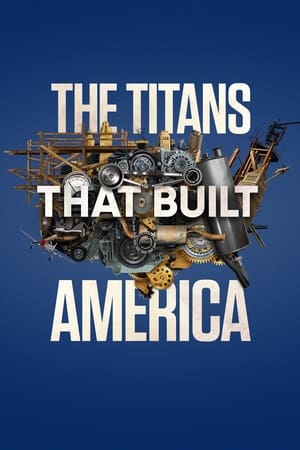
From the Gilded Age to the present day, the history of modern United States of America has been one of wealth and power concentrated into the hands of a few families with enormous fortunes.
Ancient Māori heroes of yesteryear, re-discovered, re-examined and re-imagined.
How did the Soviet Union impose its communist ideology on the countries of Central and Eastern Europe after World War II? The story of how, from 1945 until the construction of the Berlin Wall in 1961, these countries were gradually subjected to the totalitarian Soviet yoke.
For the first time, key figures from John Lennon's life and death—including friends, doctors, and investigators—share personal memories and reveal what happened on the night of his killing.
An unprecedented look at the decade-long odyssey to land a man on the moon. This documentary pulls back the curtain on the familiar narrative of the moonshot, revealing a fascinating stew of scientific innovation, political calculation, media spectacle, visionary impulses and personal drama.
Antigang
Woodstock 1969 promised peace and music, but its '99 revival delivered days of rage, riots and real harm. Why did it go so horribly wrong?
This is the story of one of Europe's biggest migrations; one of people fleeing poverty or persecution and hoping for a better life. German-speaking people descended the Rhine and Danube rivers, from the 17th century until the end of the First World War, and settled in America, Eastern Europe, Russia and Africa.
Franco, le dernier dictateur
Love, conflict, family - nobody's done it better. Acting legends reflect on the greatest writer who ever lived – and the dangerous, exciting world that ignited his creativity.
La Nuit de cristal : Les pogroms de novembre
Haunted Places
The definitive story of the deadly 2004 tsunami as it travels from country to country, with unseen archive video and untold stories of survival.
Explores the Third Reich from a contemporary perspective to investigate how the Nazis managed to conquer Germany and then half of Europe in the wake of World War I.
"L'histoire au scalpel" (History under the Scalpel) is a French documentary series, notably broadcast on France 5 and Histoire TV, in which the forensic doctor and anthropologist Philippe Charlier uses modern scientific methods to investigate historical mysteries. By examining the relics and bodies of historical figures such as Napoleon, Louis XIII, Louis XIV, or Saint Louis, he seeks to elucidate the causes of their death, the diseases they suffered from, or to authenticate objects.
Unknown histories take center stage as the hitmakers themselves - from ABBA to T-Pain - explore dimensions of pop music you never knew existed.
Out of the ashes of World War I, a new generation of titan rises…Pierre Du Pont, Walter Chrysler, J.P. Morgan Jr., Henry Ford, and William Boeing. Their fight to reach the top will transform America as they compete to dominate new industries—from the highways to the skyways. After years of fighting each other, and FDR, these rivals must unite during World War II to defeat a greater enemy and save the world.
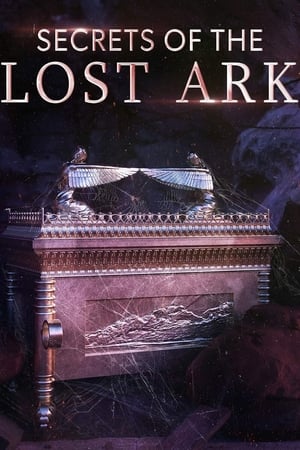
For centuries, explorers have searched for the Bible’s most sacred religious artefacts. One of the most mysterious of these objects is the famed Ark of the Covenant. The gold-plated wooden chest – one of the most instrumental symbols of faith and God's presence – was believed to house the two tablets bearing the Ten Commandments. The Ark’s exact whereabouts has long puzzled scholars. Where did it go? And why has it remained such a mystery?
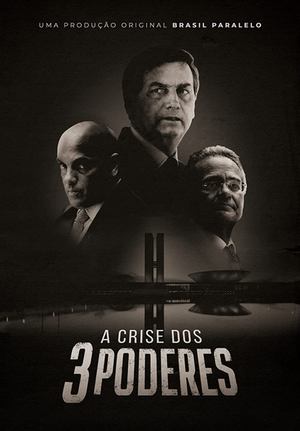
A Crise dos Três Poderes
One of the most important historical investigations carried out by Rai, signed by the great Sergio Zavoli with the collaboration of Luciano Onder and Edek Osser and the scientific consultancy of Alberto Aquarone, Gaetano Arfé, Renzo De Felice, Gabriele De Rosa, Gastone Manacorda and Salvatore Valitutti. The six-part series, broadcast for the first time in the autumn of 1972, represented, half a century after the "March on Rome", a significant assessment of the years of the advent of the Mussolini regime, recalled with the rigor of the best television journalism (Saint-Vincent Award 1973) and through the direct testimonies of over fifty protagonists of the time, both fascists and anti-fascists.