Jérôme Kerviel – the trader who hid €50 billion in trades at a major international bank – and his former superiors reveal all sides of the scandal.
Atheism: A Rough History of Disbelief – known in the United States as A Brief History of Disbelief – is a 2004 television documentary series written and presented by Jonathan Miller for the BBC and tracing the history of atheism.
Ruben langs de Zuid-Chinese Zee
After years away from the CIA, Elizabeth McCord is pulled back into the political arena. The newly appointed Secretary of State is tough, fair, and smart, driving international diplomacy, wrangling office politics, and circumventing protocol as she negotiates global and domestic issues, both at the White House and at home.
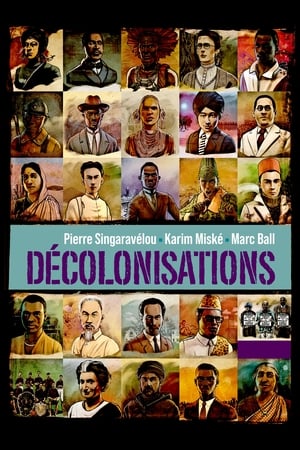
The history of decolonization from the point of view of colonized peoples, an epic story that still resonates and reverberates to this day.
Not for a generation have we been closer to war. Set against the backdrop of mounting global instability, War Room drops a cast of senior politicians, military strategists and intelligence chiefs into a high-stakes COBRA-style simulation — testing how Britain’s leaders might respond if the country was under attack. When the chips are down, what decisions will they make, and how will those decisions impact all of us?
Katya Adler examines the political situation in Europe.
The discovery of oil brought unprecedented economic growth to humanity. Initially, oil was available in large quantities and cheap – but in 1973, a consequential oil price crisis hit, and the sticky commodity became part of a geopolitical poker game. The struggle for global resources is more relevant than ever.
A top Israeli agent comes out of retirement to hunt for a Palestinian militant he thought he'd killed, setting a chaotic chain of events into motion.
The only program on brazilian tv dedicated only to international subjects, Sem Fronteiras explains what happens around the world
Dony De Nuccio will present every week a theme of great international impact through a dynamic, innovative and content-rich format.
Nicky Campbell hosts a series of moral, ethical and religious debates.
Between 1914 and 1945, two major conflicts engulfed the planet. Among the combatants of the First World War, eight men would play a decisive role in the next one.
1942, un monde en guerre
Since its birth in 1865, in the wake of the American Civil War, the history of the Ku Klux Klan has been inseparable from that of the United States. The debates over slavery, the populism in the roaring twenties, the struggle for civil rights in the sixties, the rise of the far-right in the early 21st century; the Klan seems to have always embodied the dark side of the nation, with its gray areas and blind spots.
A look back at the social movements, revolts and youth subcultures from the post-war period to the present day: after the World War II, the left-bank of Paris became a mecca for jazz and alternative living, youth culture was born with trailblazing American movies, and rock became the soundtrack to a generation that wanted to change everything.
The Islamic Revolutionary Guard Corps or IRGC is the protector of the Islamic Republic of Iran and the military arm of the Supreme Leader. Also known as the Pasdaran, this deep-state mafia comprising 120,000 men has extensive powers, ensuring bloody repression of the people. No strangers to smuggling and trafficking, the IRGC’s economic empire is worth hundreds of billions of dollars. The Supreme Leader Khomeini has allowed the organization to infiltrate the state and its members are now mayors, members of parliament and ministers, cultivating their networks at the highest levels. The IRGC is responsible for Iran's nuclear and ballistic missile programs, and cultivates not only the art of deterrence, but also a strategy of asymmetrical warfare via the militias and terrorist organizations they finance, arm, and control across the Middle East.
Today, Israel and the United States are Iran's enemies par excellence. Their reconciliation seems impossible. Is the history of these three countries the chronicle of a war foretold, delayed for decades but inevitable?
An inside look at the changing role of athletes in our fraught cultural and political environment, through the lens of the NBA.
In six films, Adam Curtis traces the different forces across the world that have led to now. It covers a wide range—including the strange roots of modern conspiracy theories, the history of China, opium and opioids, the history of Artificial Intelligence, melancholy over the loss of empire and, love and power. And explores whether modern culture, despite its radicalism, is really just part of the new system of power.