Pros vs. Joes is an American physical reality game show that airs on Spike TV. The show features male amateur contestants matching themselves against professional athletes in a series of athletic feats related to the expertise sport of the Pro they are facing. For its first three seasons, the show was hosted by Petros Papadakis. Since Season Four, it has been co-hosted by Michael Strahan and Jay Glazer. The first two seasons were filmed at Carson, California's Home Depot Center, which was referenced in aerial shots.
The Big Show met Ruben Nicolai
Twelve celebrities are masked under spectacular costumes, with their identity hidden. They compete by singing their own versions of songs, and the judges and audience must guess who is behind each mask!
Teen Big Brother was a United Kingdom spin off of the popular television programme Big Brother in which teenagers inhabited the house. The show was presented by Dermot O'Leary.
Alexander Armstrong and Richard Osman present a celebrity version of the general knowledge quiz in which contestants try to come up with the answers that nobody else could think of.
SBFIVE competes for treasure.
100 contestants go head-to-head in a range of simple, quirky and hilarious games that anyone can win, but there’s one rule they must follow – Don’t. Come. Last. As contestants battle against each other, each round will see the number of players whittled down until one person takes the cash prize.
Teams of master magicians create and perform original magic routines using random props.
Boys and Girls was a British television gameshow broadcast in 2003 by Channel 4. The series was produced by Chris Evans through his company UMTV, and was presented by Vernon Kay. Evans only occasionally appeared on screen, usually as the driver of the golf buggy used to ferry the winning contestants off-set at the end of the show. Thus the show was one of the first Evans-produced shows not to feature Evans himself in a presenting role. Kay's co-presenter was Irish presenter and model Orla O'Rourke.
Twelve celebrities are abandoned in the Australian jungle. In order to earn food, they must perform Bushtucker Trials which challenge them physically and mentally.
Quiz in which contestants try to score as few points as possible by plumbing the depths of their general knowledge to come up with the answers no-one else can think of.
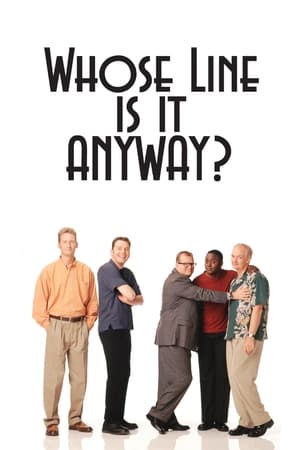
The show where everything's made up and the points don't matter. Not a talk show, not a sitcom, not a game show, Whose Line Is It Anyway? is a completely unique concept to network television. Four talented actors perform completely unrehearsed skits and games in front of a studio audience. Host Drew Carey sets the scene, with contributions from the audience, but the actors rely completely on their quick wit and improvisational skills. It's genuinely improvised, so anything can happen - and often does.
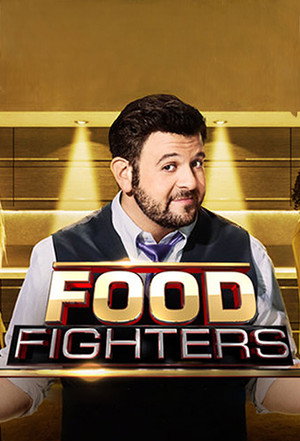
The table is set for the ultimate culinary clash in this one part cooking competition, one part game show. Host Adam Richman ("Man v. Food") will give homegrown amateur cooks the chance to test their skills against professional chefs. Every down-home cook has that one signature dish or secret family recipe that always gains favor with friends and family. Now, imagine going head-to-head in the kitchen against five professional chefs, who try to cook your specialty dish even better than you in the hopes of winning over a dinner party made up of the American public. With each savored victory, the cash prize gets bigger and bigger as the home cooks rise to every challenge and outcook the professional chefs. Think you've got what it takes to serve up the competition?
In each episode, four strangers join forces to give unanimous answers to general knowledge questions. The longer the team takes to respond, the lower the cash prize. At the end of each episode, the participants must also divide the accumulated money into three unequal shares, again unanimously. To pocket as much money as possible, players have to be as convincing as they are clever, because every second counts!
There is a group of mouthy children between the ages of six and nine who are asked questions. The four adult participants in the program must then guess what the little ones' answers to the questions were. Sounds easy, right? It's not that easy! As everyone knows, how a child thinks is not as predictable as one would like it to be.
A new twist on the classic game that follows contestants to the banker’s private island, where they must compete in tough challenges to find hidden briefcases worth over $200 million -- then try to beat the banker in “Deal or No Deal.”
Komiker utan gränser
Australian version of the reality singing competition where celebrities battle it out with one major twist: each singer is shrouded from head to toe in an elaborate costume, concealing their identity from the audience and the viewers at home.
Qui peut nous battre ?
Concentration is an American television game show based on the children's memory game of the same name. Matching cards represented prizes that contestants could win. As matching pairs of cards were gradually removed from the board, it would slowly reveal elements of a rebus puzzle that contestants had to solve to win a match. The show was broadcast on and off from 1958 to 1991, presented by various hosts, and has been made in several different versions. The original network daytime series, Concentration, appeared on NBC for 14 years, 7 months, and 3,770 telecasts, the longest run of any game show on that network. This series was hosted by Hugh Downs and later by Bob Clayton, but for a six-month period in 1969, Ed McMahon hosted the series. The series began at 11:30 AM Eastern, then moved to 11:00 and finally to 10:30. Nearly all episodes of the NBC daytime version were produced at 30 Rockefeller Plaza, New York City. A weekly nighttime version appeared in two separate broadcast runs: the first aired from October 30 to November 20, 1958 with Jack Barry as host, while the second ran from April 24 to September 18, 1961 with Downs as host.