Rakkaudesta villieläimiin
The RHS Chelsea Flower Show, formally known as the Great Spring Show, is a garden show held for five days in May by the Royal Horticultural Society (RHS) in the grounds of the Royal Hospital Chelsea in Chelsea, London. Held at Chelsea since 1912, it is the most famous flower and landscape gardens show in the United Kingdom, and perhaps in the world. The show is attended by members of the British Royal Family and attracts visitors from all continents. Highlights to the Chelsea Flower Show include the avant-garde show gardens designed by leading names with Floral Marquee at the centrepiece. The Show also features smaller gardens such as the Artisan and Urban Gardens.
From the first dinosaurs to the last, this epic documentary series examines their 165 million years on Earth and the forces that shaped their evolution.
Journalist and writer Graham Hancock travels the globe hunting for evidence of mysterious, lost civilizations dating back to the last Ice Age. He attempts to prove that a climatic event 12,000 years ago wiped out an entire civilization far more sophisticated than the simple hunter-gatherers some archaeologists believe lived at that time.
Featuring revealing interviews with survivors speaking publicly for the first time, alongside rare insight into the CIA and Soviet responses, this series exposes a web of secrecy, miscalculation, and human cost. Astonishing new footage from inside the nuclear exclusion zone reveals how this scarred landscape is once again under siege as war encroaches on one of the most dangerous places on Earth.
Follow Marc Fennell on a globe-trotting, emotional quest for the truth as he unravels the twisted mysteries behind six iconic and priceless objects taken by the British Empire and meets those who want them back.
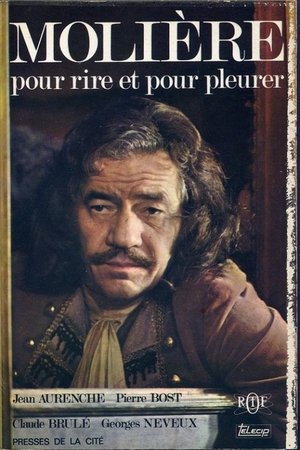
Molière pour rire et pour pleurer recounts the life of Jean‑Baptiste Poquelin, from his childhood in an artisan family to his rise as Molière, a central figure of French theatre. The series shows his difficult decision to abandon the family trade and join Madeleine Béjart to found L’Illustre Théâtre, marked by debts and repeated setbacks. While touring the provinces, he shapes his style and discovers the power of comedy. Back in Paris, he makes a name for himself with Les Précieuses ridicules, but his sharp satires provoke fierce opposition, especially during the Tartuffe scandal. Supported by Louis XIV, he continues despite attacks, literary rivalries, and tensions within his troupe, particularly with Armande Béjart. The miniseries also follows his growing exhaustion, his determination to perform at any cost, and his final breath after Le Malade imaginaire, the ultimate symbol of an artist who lived — and died — for the stage.
" Exploring Life - Chamil's Journal " is Chamil Pathirana's effort to visualize people from diverse ethnic and socioeconomic backgrounds in Sri Lanka, faced with the day-to-day hardships they go through.
From world record breaking photography at the bottom of the ocean to the top of the radio charts with an independent band, dive into the reality of what it takes to make it as an artist in the modern world
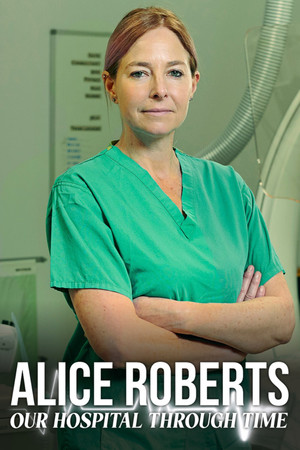
Unprecedented access to the renowned hospital's modern wards and private archive.
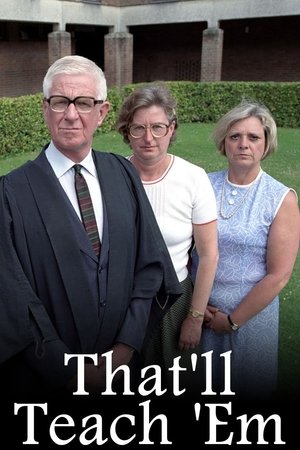
That'll Teach 'Em is a British reality television documentary series produced by Twenty Twenty Television for the Channel 4 network in the United Kingdom. Each series follows around 30 teenage students as they are taken back to a 1950s/1960s style British boarding school. The show sets out to analyse whether the standards that were integral to the school life of the time helped to produce better exam results, to the current GCSE results and to compare certain contemporary educational methods with modern ones. As part of the experience, the participants are expected to board at a traditional school house, abiding by strict discipline, adopting to 1950s diet and following a strict uniform dress code. After four weeks, the students then take their final exams, produced to the same standard as contemporary GCE O Levels. There were three series of the show, the first airing in 2003, the second in 2004 and the third and final series in 2006.
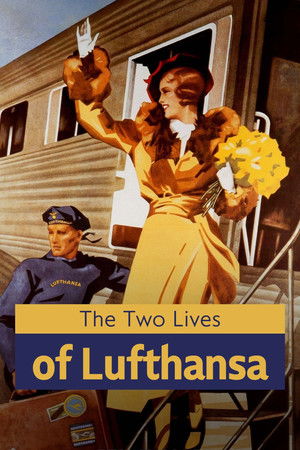
From the beginnings of passenger aviation, through militarization during the Second World War, to its development into one of the world’s leading aviation companies: this two-part documentary focuses on the history of Lufthansa and, using previously unpublished archival footage and eyewitness accounts, reveals unknown aspects of the German airline as well as its journey from its founding to the present day.
In beautifully crafted episodes, presenter Ben Fogle embarks on a once-in-a-lifetime journey to understand China - to see its most staggering sights, go beyond the stereotypes and discover its true identity. Ben delves into an epic 3000-year tale of how China has got to where it is today - how centuries of Imperial rule gave way to Communist revolution under Chairman Mao and the breakneck economic transformation as the state capitalist China of recent years has emerged. Mixing both the experiences from the people themselves, and a tour of this magnificent region Ben takes the temperature of a country now at the very centre of humanity in the 21st century. So why and how has contemporary China become so important to all our lives?
Objects of myth that inspire both fear and hope, clouds are as much cultural icons as they are subjects of scientific exploration. They shape ecosystems and ocean cycles, provide vital water, and have long been a source of human fascination and inspiration. Across four destinations and diverse ecosystems—from the Pacific coast of Chile to the cloud cap of Mount Fuji and the “tablecloth” of Africa’s Table Mountain—cloud hunters, meteorologists, scientists, enthusiasts, and indigenous communities help us decode these extraordinary giants. By supplying moisture to the environment, clouds sustain life and make it possible for unique animal and plant species to thrive, even in the driest regions, while creating some of the most spectacular natural scenes on Earth.
The Soviet Union was officially formed in 1922, a country, a political experiment, an ideal, a great scar across history. Officially known as the Union of Soviet Socialist Republics, the USSR was a one-party state, governed, controlled, and tormented by a single party rule. That of the Communist Party. Complicated, contradictory figureheads would come and go, men who held this impossible country it seemed by sheer will. Stalin the despot-hero whose cruelty knew few bounds who united a nation to defeat Hitler. Khrushchev the crafty libertarian, who preached reform yet allowed an arms race to escalate. Brezhnev, that unreadable member to the old guard, sending history backwards. And of course Gorbachev, who brought vast change, modernisation, and détente, yet saw the Soviet Union collapse under his rule – the untenable nation. The 20th century was shaped by its convulsions, its purges, its wars, and its leaders.
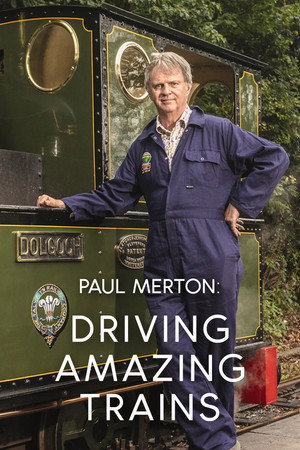
Paul’s fascination with trains stems from his childhood. His father was a driver on the London Underground and when, as a young boy, Paul witnessed his dad driving a train across Putney Bridge, it sparked a lifelong fascination of railways. Now, he is following in his father’s footsteps by joining the drivers upfront and in control of some of the world’s most amazing trains and experiencing the best views as he travels through breathtaking landscapes in the UK and Europe. From steep gradients and tight curves to pinpoint platform stops, Paul will learn what it takes to keep these mighty machines on track. Visiting Germany, France, Switzerland, Wales, Northern England and Isle of Wight, he’ll meet the people who keep the railways running - from engineers and conductors to passengers with fascinating stories of their own.
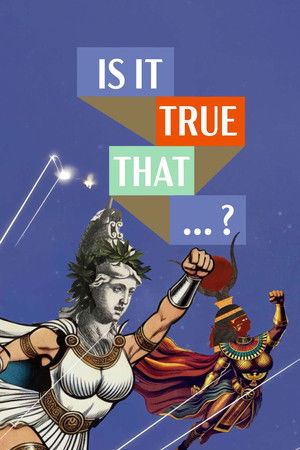
Did democracy actually originate in Greece? Was the plague the worst epidemic of all time? And did we really work harder in the past than we do today? Is it true that ...? questions what we think we know and takes another look at history.
Two-part documentary series following United Nations Goodwill Ambassador and ex-Spice Girl Geri Halliwell as she meets inspirational children during a world tour.
Blueprint for Disaster is a Canadian documentary television series that premiered in 2004 on Discovery Channel Canada. Produced by Temple Street Productions, the program investigates why and how various disasters have happened. Toronto-based Voice Artist Adrian Bell provided the narration for the first series.
Engineering an Empire is a program on The History Channel that explores the engineering and/or architectural feats that were characteristic of some of the greatest societies on this planet. It is hosted by Peter Weller, famous for his acting role as RoboCop but also a lecturer at Syracuse University, where he completed his Master's in Roman and Renaissance Art. The executive producer is Delores Gavin. The show started as a documentary about the engineering feats of Ancient Rome and later evolved into a series. It originally ran for one full season of weekly episodes.