Berlin 1933 – Diary Of A Metropolis tells the story of how Berlin, the vibrant hub of modernity, became Germany's staunch capital city in step with the Third Reich. Contemporary journals, letters and documents, photographs and film material, form a dense collage of the dynamics of this collectively organised disaster.
Where does the impulse that leads us to create come from and how does it transform us? At what point does the artist begin to be built by the object he creates? Six artisans from Buenos Aires today take us to know the depths of their trades, seeking to vindicate the importance of the circularity of their production, mutual aid, the transmission of knowledge and the value of the manual tradition that they carry on.
Unique arts series venturing behind the scenes at the world famous museum of art, design and performance, the V&A.
Die wilden Zwanziger
Le Siècle des icônes
Survivors of Soviet totalitarianism warn that “soft totalitarianism” is emerging in the U.S. Identity politics, censorship, surveillance, and secularism are encroaching on freedoms. Many American Christians fail to see the threat. Based on Rod Dreher’s book, Live Not by Lies explores these dangers and offers a wake-up call for thoughtful, faithful resistance against the erosion of liberties.
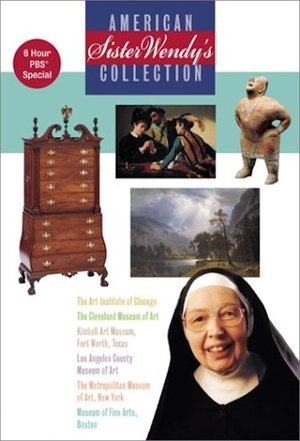
Sister Wendy Beckett, a cloistered nun and Oxford-educated art scholar, takes an art appreciation tour across America, visiting six major art museums in this 6-hours documentary series from PBS.
In this adaptation of the award-winning podcast, Slow Burn’s Leon Neyfakh excavates the strange subplots and forgotten characters of recent political history—and finds surprising parallels to the present.
The incredible metamorphosis, over eight centuries, of a feudal fortress into the largest museum in the world: the Louvre. A chaotic existence: construction and destruction, revolution and restoration. Feudal fortress, medieval castle, Renaissance palace, royal residence, seat of the academies, center of revolutionary power, first museum of France: the Louvre has been constantly transformed, enlarged, magnified.
Women write art history – but in turn are systematically ignored by it. LOST WOMEN ART tells the story of the suppressed female avant-garde and by doing so introduces a new art history.
Jonathan Roberge dives into the world of Montréal crime during the 1957-1977 period, when the city saw a prolonged war between the police and bank robbers.
Nearly 1,000 years ago, the Vikings left Scandinavia and settled across Europe - giving their name to Normandy along the way - before their Norman descendants seized the English throne at the Battle of Hastings in 1066. But what do we really know about them? By combining expert analysis with compelling drama, 'The Last Journey of the Vikings' (Swedish title: 'Vikingarnas sista resa') tells a new and often surprising story about this complex people.
Juger Pétain
Professor Alice Roberts travels across Greece and thousands of years back to our collective past, tracing how the Ancient Greeks developed philosophy, art, theatre and democracy.
Despite decades of research, many mysteries remain about the ancient Maya. Now, archaeologists are unearthing new clues that transform long held ideas about how these people came to dominate vast areas of Mexico and Central America. Through immense lost monuments, ancient inscriptions and new forensic evidence, this series tracks the Maya from their earliest origins all the way to the present day, unlocking the dark secrets of the rise and fall of the Maya.
Jesus of Nazareth, the founding figure of Christianity, is also an exceptional character in the Koran. Why? In what way? A deep investigation around the world exploring the rise of Islam during the time of prophet Muhammad.
A lecture series about the basic problems of flight, explained by visual presentation of flow experiments. As the material of the lectures should be understood by every interested listener, no mathematical or other theoretical knowledge is used for explanation. Every problem is demonstrated by a true-life experiment and purely scientific language is avoided. Each of the lectures deals with a basic problem of flight. The experiments are mostly shown as flow picture but at certain points scale models and flying models are used to ensure easier understanding.
First broadcast on October 2, 1989, these 18 original 30-minute episodes provide a panorama of 2000 years of architecture, painting and sculpture, and studies the art masterpieces as reflections of the Western culture that produced them.
Line of Fire
L’or : luxe, épopées et légendes