A follow-up to the 1990 Radio 4 series in which the late Douglas Adams and Mark Carwardine travelled around the world in search of endangered species. 20 years later Stephen Fry and Mark Carwardine go back to see what has become of the animals in two decades, and to discover what has affected their fortunes.
See It Now is an American newsmagazine and documentary series broadcast by CBS from 1951 to 1958. It was created by Edward R. Murrow and Fred W. Friendly, Murrow being the host of the show. From 1952 to 1957, See It Now won four Emmy Awards and was nominated three other times. It also won a 1952 Peabody Award, which cited its
Le Petit Peuple des rivages
La vie secrète des animaux
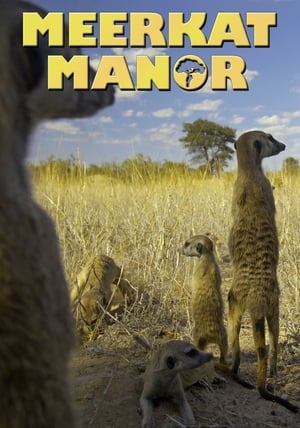
Takes viewers into the center of five animal families - lions, jackals, cheetahs, hyenas and meerkats - as they raise their young in the wilderness. Innovative camera techniques are used to follow the animals' tender, emotional and often stressful stories from the moment their babies are born through different stages in their maturity.
Exploring some of the world's most isolated and iconic tropical islands.
Explore six of the last untouched locations on earth. The documentary series presents life as nature intended, following the unique way wildlife has adapted to these environments and continues to rise to new challenges over the course of a year.
The remarkable and often perilous story of the journey through life. It is a story that unites each of us with every animal on the planet, because we all set out on this journey from the moment we are born. For animals there is just one goal in life – to continue their bloodline in the form of offspring. This series follows that journey through its six crucial stages: first steps, growing up, finding a home, gaining power, winning a mate and succeeding as a parent.
The seven episodes explore North America: where civilization collides with untamed wilderness. Just feet beyond our own backyards rages a spectacle we never see. Join us as we step into this hidden world teaming with life - across impossible mountains and endless deserts. Dive into unexplored forests and crash into rugged coasts. This vast continent offers boundless rewards for those brave enough to take on this land - and call her home.
The tropical islands that lie between Asia and Australia are among the biologically richest on earth, and home to a vast number of plants and animals. From tree kangaroos to tarsiers, manta rays to mudskippers, the region abounds with life. But why? The answer lies deep in time, due to the many millions of years these islands have existed - and the power of the earth, the sun and the moon.
Michael Palin undertakes an epic journey of 23,000 miles, traveling from the North to the South Pole across 17 countries with a minimum of air travel, all on a tight deadline.
David Attenborough celebrates the amazing variety of the natural world in this epic documentary series, filmed over four years across 64 different countries.
A journey through the Australian landscape and the unique stories of the land, deepening our connection with nature.
This documentary series about plants is the first immersive portrayal of an unseen, inter-connected world, full of remarkable new behaviour, emotional stories and surprising heroes in the plant world. Planet Earth from the perspective of plants.
Follow Kevin Costner as he traces the footsteps of the pivotal 1903 Yosemite expedition of 26th President Teddy Roosevelt and environmental advocate John Muir. Through spectacular visuals of the geology, flora, and fauna of Glacier Point to El Capitan, Yosemite Falls and more, Costner brings the fascinating journey and long battles to preserve the American frontier to life.
Coast Australia follows renowned Scottish archaeologist and historian Neil Oliver on his very first trip to Australia, as he and a diverse group of co-hosts gather stories about our spectacular coastline: the history, the people, the archaeology, the geography and the marine life, investigating interesting and little known facts along the way. Oliver’s co-hosts, all experts in their field, are journalist and Australian arts and culture specialist Miriam Corowa, environmentalist Professor Tim Flannery, marine scientist Dr Emma Johnston, anthropologist Dr Xanthe Mallett and television presenter and landscape architect Brendan Moar.
Three-part series that looks at a year in Alaska, revealing the stories of pioneering Alaskans, both animal and human, as they battle the elements and reap the benefits of nature's seasonal gold rush.
A fresh look at humankind’s relationship to the planet’s wildest places and most fascinating species. Using advanced filming techniques, this series will provide visuals as stunning as the best natural history programs. Distinguishing itself from nearly all other nature films, however, the series turns the cameras around, showing the world as it really is—with humans in the picture.
In each and every one of these action packed hours, Gordon Buchanan is on a personal and dangerous mission to really KNOW a MANEATER -an animal that has killed or even eaten a human. But as populations of the planet's apex predators decrease, the number of attacks on humans increases. Buchanan wants to go to the places where man still battles beast and put himself 'directly in the path' of a predator to find out.
Documentary following young animals as they take their first steps and face their earliest challenges.