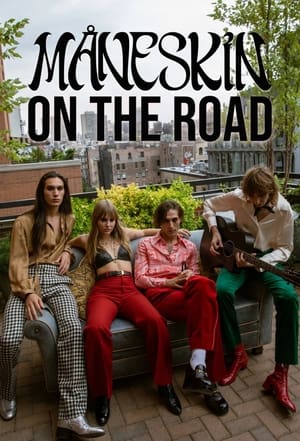
Four loud kids, the biggest festival stages in the world, thousands of screaming fans. Get on the road with us, rockin’ Europe, America, Asia and our home too, Italy. This is Måneskin.
Stefan Raab: Mein ESC – Chefsache Abor & Tynna
Eurosong 70: Naši ljudi, naše pjesme
In May 2017, "Amar Pelos Dois", in the voice of Salvador Sobral, gave Portugal its first victory at the Eurovision Song Contest. It was the opposite of the song "festivaleira" but, in the voice of a charismatic and different interpreter between the different ones, the composition of Luísa Sobral made history.
Marcus & Martinus: Resan till Eurovision
A Norwegian retrospective series produced by NRK to mark the 50th anniversary of Melodi Grand Prix and Eurovision. Each episode counts down a themed «Top 10», celebrating memorable Norwegian entries, international winners, unforgettable hits, and classic moments from the contest’s history, with archival clips and commentary.
Graham Norton hosts the annual search for a singer or group to represent the United Kingdom at the Eurovision Song Contest.
Music entertainment show used as the Armenian national selection for the Eurovision Song Contest.
The national final format developed by TVP to select its entry for the Eurovision Song Contest.
Song contest organized by Radio Television of Serbia (RTS) to select the Serbian entry for the Eurovision Song Contest.
Serbian music festival used as the national selection for Serbia's representative at the Eurovision Song Contest.
The Junior Eurovision Song Contest, often shortened to JESC, Junior Eurovision or Junior EuroSong, is a song competition which has been organised by the European Broadcasting Union (EBU) annually since 2003 and is open exclusively to broadcasters that are members of the EBU. It is held in a different European city each year, however the same city can host the contest more than once.
Sing for Greece is the national selection used by Greece to select its entry for the Eurovision Song Contest.
Spain, 1968, an ambitious television executive is tasked with winning the Eurovision Song Contest. Massiel's catchy "La La La" triumphs with an iconic performance. This is the story behind that unexpected victory.
Major real-life air disasters are depicted in this series. Each episode features a detailed dramatized reconstruction of the incident based on cockpit voice recorders and air traffic control transcripts, as well as eyewitnesses recounts and interviews with aviation experts.
Driven was a motoring television programme launched by Channel 4 in 1998 as a rival to the successful and long-running BBC series Top Gear. The style was similar to its rival, but with additional features such as the "Driven 100", a road test of three cars in the same class, where each car would be given marks for qualities such as practicality, desirability and cost of ownership. The car with the highest total score would be the winner. The programme launched with the concept that the presenters should interact with each other rather than present items on their own, as was then the case on Top Gear. The first series also featured a "headquarters", a racing team truck, set on a former air force base at which cars were put through their paces. These concepts resurfaced in the reborn Top Gear soon after.
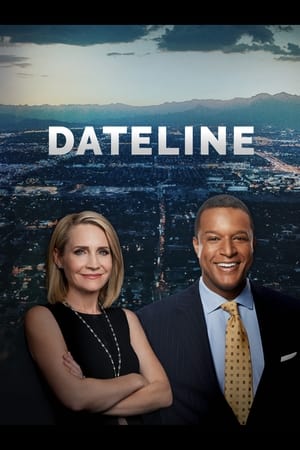
Dateline NBC, or simply Dateline, is a weekly American television newsmagazine series. It was previously the network's flagship newsmagazine, but now focuses mainly on true crime stories with only occasional editions that focus on other topics.
Popularis
Meet The Natives
In this radically unconventional television series, Godard and Miéville analyze the political economy of personal and mass media communications in relation to society, culture, family and the individual. Their inquiry focuses "on and beneath" communications in a provocative critique of the power of media images in contemporary culture and everyday life. Each of the six programs is constructed of two complementary segments: A discursive visual essay on one aspect of the production and consumption of images is paired with a related interview on labor and leisure with an individual — an amateur filmmaker, a dairy farmer, the mathematician René Thom, Godard himself. These extended interviews provide a subjective counterpoint to the theoretical essays on work, economics and mass cultural imagery.