טלוויזיה מהעתיד
French and Saunders is a British sketch comedy television series written by and starring comic duo Dawn French and Jennifer Saunders. It is also the name by which the performers are known on the occasions when they appear elsewhere as a double act.
A British comedy sketch television series featuring Mel Smith and Griff Rhys Jones that ran on BBC One and BBC Two from 31 January 1984 to 14 October 1998. From series 5 in 1989 the 'Alas' title was dropped and became simply Smith and Jones.
The Carol Burnett Show is an American variety/sketch comedy television show starring Carol Burnett, Harvey Korman, Vicki Lawrence, Lyle Waggoner, and Tim Conway. It originally ran on CBS from September 11, 1967, to March 29, 1978, for 278 episodes and originated from CBS Television City's Studio 33. The series won 25 prime time Emmy Awards, was ranked No. 16 on TV Guide's 50 Greatest TV Shows of All Time in 2002 and in 2007 was listed as one of Time magazine's "100 Best TV Shows of All Time."
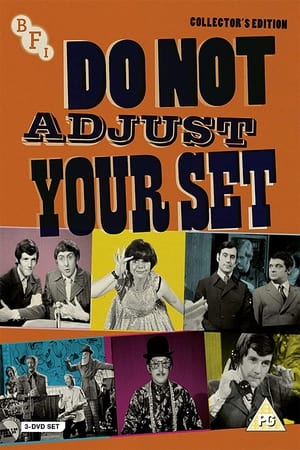
A British sketch comedy series with the shows being composed of surreality, risqué or innuendo-laden humour, sight gags and observational sketches without punchlines.
Sketch comedy show starring Kenny Everett.
Tim and Eric Awesome Show, Great Job! is an American sketch comedy television series, created by and starring Tim Heidecker and Eric Wareheim, which premiered February 11, 2007 on Cartoon Network's Adult Swim comedy block and ran until May 2010. The program features surrealistic and often satirical humor, public-access television–style musical acts, bizarre faux-commercials, and editing and special effects chosen to make the show appear camp. The program featured a wide range of actors, spanning from stars such as Will Ferrell, John C. Reilly, David Cross, Bob Odenkirk, Will Forte and Zach Galifianakis, to alternative comedians like Neil Hamburger, to television actors like Alan Thicke, celebrity look-alikes and impressionists. The creators of the show have described it as "the nightmare version of television."
Оба-на!
Harry Enfield's Television Programme was a British sketch show starring Harry Enfield and Paul Whitehouse. It was first broadcast on BBC Two in 1990 in the Thursday 9 pm slot, which became the traditional time for alternative comedy on television. Enfield was already an established name due to his 'Loadsamoney' character, but the series gave greater presence to his frequent collaborators Paul Whitehouse and Kathy Burke – so much so, that in 1994 the show was retitled Harry Enfield and Chums.
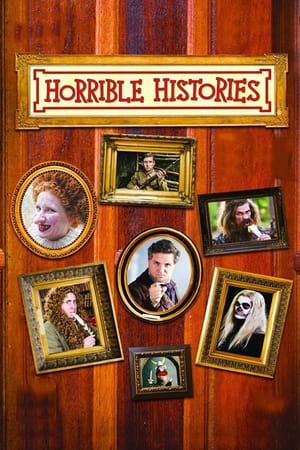
An improvisational show in which celebrities and stars are covered with a thick layer of makeup and launched into non-standard everyday situations from which they must extricate themselves by showing a sense of humor. It turns out pretty funny. After all, the most interesting thing is when a star gets into a mess! And this is in almost every program. Every game is judged by the referee and the funniest friend is handed a useless gift - a plastic door.
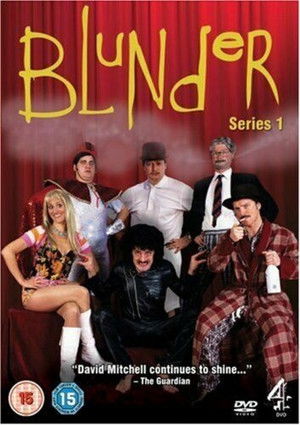
Quick-fire puns, gags and sketches showcase the comedic talents of five distinctive performers.
A short-lived sketch show from the 1990s, featuring Simon Pegg and Jessica Hynes in one of their first collaborations.
The Kids in the Hall is a Canadian sketch comedy group formed in 1984, consisting of comedians Dave Foley, Kevin McDonald, Bruce McCulloch, Mark McKinney, and Scott Thompson.
A topical comedy show, mixing stand-up with sketches and impressions, starring David Baddiel, Robert Newman, Hugh Dennis and Steve Punt.
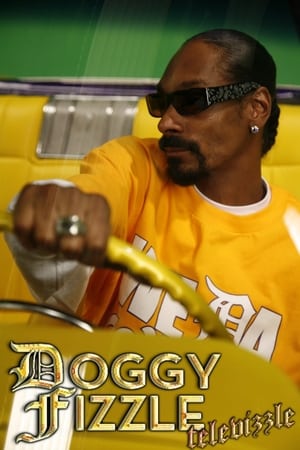
Sketch comedy show with black comedians.
Blue Collar TV is a television program that aired on The WB Television Network with lead actors Jeff Foxworthy, Bill Engvall and Larry the Cable Guy. The show's humor dealt principally with contemporary American society, and especially hillbilly, redneck, and Southern stereotypes. The show was greenlighted on the heels of the success of the Blue Collar Comedy Tour, which the series' three lead actors toured with in the early-mid-2000s. It was created by Fax Bahr and Adam Small, in addition to J.P. Williams and Jeff Foxworthy. Blue collar is a US phrase used to describe manual laborers, as opposed to white collar for office or professional workers. Fellow Blue Collar Comedy Tour costar Ron White declined to star on Blue Collar TV due to a fear of being typecast as "blue collar." However, he guest-starred on many episodes of the show. On his 2006 comedy album, You Can't Fix Stupid, White jokingly cited his own lack of work ethic as a reason for not participating more on the show. Unlike most sketch comedy programs, each episode of Blue Collar TV was generally centered around a theme, which Foxworthy revealed at the start of each episode. Themes included "Food", "Kids", and "Stupidity", among others, with Foxworthy generally performing a short comedic monologue based on the theme. Most sketches in each episode featured at least one of the three Blue Collar Comedy Tour veterans in an acting role, but the second season saw more sketches featuring the 6 other cast members exclusively.
A late-night live television sketch comedy and variety show created by Lorne Michaels. The show's comedy sketches, which parody contemporary culture and politics, are performed by a large and varying cast of repertory and newer cast members. Each episode is hosted by a celebrity guest, who usually delivers an opening monologue and performs in sketches with the cast, and features performances by a musical guest.
The Tracey Ullman Show is an American television variety show, hosted by British-born actress and onetime pop singer Tracey Ullman. It debuted on April 5, 1987 as the Fox network's second primetime series after Married... with Children (1987–1997), and ran until May 26, 1990. The show is produced by Gracie Films and 20th Century Fox Television. The show blended sketch comedy shorts with many musical numbers, featuring choreography by Paula Abdul. The show also produced The Simpsons shorts before it spun off into its own show, which was also produced by Gracie Films and 20th Century Fox Television.
Lol:-)
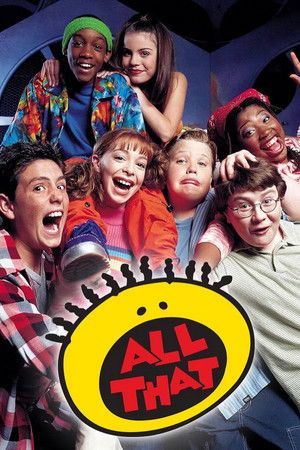
A short-lived weekly series for pre-teens(ages 9-12) using comedy sketches to explore friendship, family, communication, and other issues.