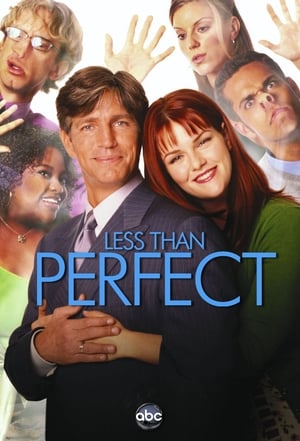
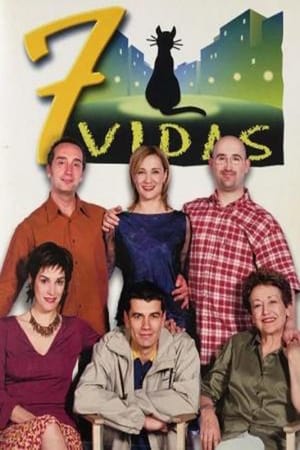
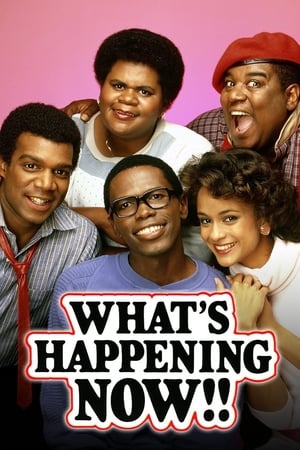
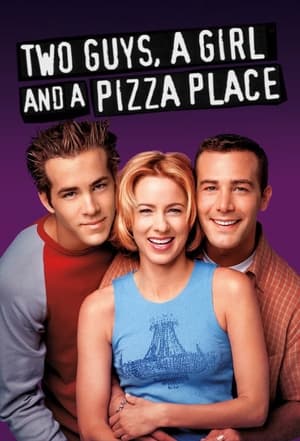
Follows a very special day in a young couple's life, their wedding day... but tells the stories you don't see on the wedding video.
The Many Loves of Dobie Gillis is an American sitcom that aired on CBS from 1959 to 1963. The series and several episode scripts were adapted from a 1951 collection of short stories of the same name, written by Max Shulman, who had also written a feature film adaptation of his short stories for MGM in 1953, The Affairs of Dobie Gillis. The series revolved around the life of teenager/young adult Dobie Gillis, who, along with his best friend, beatnik Maynard G. Krebs, struggles against the forces of his life - high school, the military, college, and his parents - as he aspires to attain both wealth and dates with girls. The Many Loves of Dobie Gillis was produced by Martin Manulis Productions in association with 20th Century Fox Television. Creator Shulman also wrote the theme song in collaboration with Lionel Newman.
The Mike O'Malley Show is an American sitcom on NBC that aired only two episodes. The series star, Mike O'Malley, created and executive produced the series with Les Firestein.
So Little Time is an American sitcom starring Mary-Kate and Ashley Olsen that aired on Fox Family. The first half of the series aired from June 2, 2001, to August 15, 2001. The series then went on a four-month hiatus owing to network management changes. By December 2001, Fox Family had become ABC Family, and the remaining episodes aired until May 4, 2002.
Clarissa Darling is a teen girl dealing with typical pre-adolescent concerns such as school, boys, pimples, wearing her first training bra and an annoying little brother Ferguson.
Chris is a teenager growing up as the eldest of three children in Brooklyn, New York during the early 1980s. Uprooted to a new neighborhood and bused to a predominantly white middle school two-hours away by his strict, hard-working parents, Chris struggles to find his place while keeping his siblings in line at home and surmounting the challenges of junior high.
A bunch of cool teenagers who are friends living in California form a rock band, The Dreams. Between gigs, they must deal with all kinds of big and small real-life issues such as school, family life, friends, romance, ambition, ego, jealousy, and big decisions.
Refusing to succumb to old age, Tom Ballard and Diana Trent are a pair of seasoned delinquents that cause many headaches. Their uneasy alliance is destined to make life difficult at the Bayview Retirement Village.
Believe Nothing is a British ITV sitcom starring Rik Mayall as Quadruple Professor Adonis Cnut, the cleverest man in Britain, and Oxford's leading moral philosopher. He is paid huge amounts of money for his views consulted by the government but he's bored and wants adventure so he joins the shadowy organization The Council which controls everything going on in the world. Starring alongside Mayall is Michael Maloney as Brian Albumen, Cnut's faithful servant, and Emily Bruni as Dr. Hannah Awkward who becomes professor of pedantics. The series was written by Maurice Gran and Laurence Marks, who give a twist to many of today's global issues. Although much hyped by ITV, who were hoping to repeat the success of Gran and Marks' previous project with Mayall, the successful The New Statesman, the series failed to catch on, and was dropped after one series.
When Marty DePolo dies after eating a six-month-old hamburger, he is chosen to be his best friend's guardian angel.
Sean's Show was a United Kingdom television situation comedy broadcast on Channel 4. Stand-up comedian Sean Hughes co-wrote and starred as a fictionalised version of himself, aware of the fact he was living in a sitcom. It received a nomination for the 1992 British Comedy Award for Best Channel 4 Sitcom.
Eugene Gurkin has dreamt of opening his own bar for years, but his dead-end job as a janitor won't even fund a bottle of booze. In a serendipitous moment, he catches an episode of "E! News" and his passion is ignited. Soon Eugene recruits a group of average joes into his gang, The Knights of Prosperity, for a heist to finance their dreams. The initial target: rock icon Mick Jagger's super-luxe Central Park West apartment.
Harvey Birdman, Attorney at Law features ex-superhero Harvey T. Birdman of Birdman and the Galaxy Trio as an attorney working for a law firm alongside other cartoon stars from 1960s and 1970s Hanna-Barbera cartoon series. Similarly, Harvey's clients are also primarily composed of characters taken from Hanna-Barbera cartoon series of the same era. Many of Birdman's nemeses featured in his former cartoon series also became attorneys, often representing the opposing side of a given case.
A group of 20-somethings who are inextricably bound together having shared the same third-grade class. Now face to face at an impromptu reunion to celebrate the 20th anniversary of the day they met, they wonder if they'll have anything in common besides vague memories of playground kisses and underwear sightings on the monkey bars. Turns out they do. After two decades apart for most of them, some are eager to show off, some want to rekindle old crushes and others just want to satisfy their curiosity.
Whatever Happened to the Likely Lads? is a British sitcom which was broadcast between 9 January 1973 and 9 April 1974 on BBC1. It was the colour sequel to the mid-1960s hit The Likely Lads. It was created and written, as was its predecessor, by Dick Clement and Ian La Frenais. There were 26 television episodes over two series; and a subsequent 45-minute Christmas special was aired on 24 December 1974. The cast were reunited in 1975 for a BBC radio adaptation of series 1, transmitted on Radio 4 from July to October that year. In 1976, a feature film spin-off was made. Around the time of its release, however, Rodney Bewes and James Bolam fell out over a misunderstanding involving the press and have not spoken since. This long-suspected situation was finally confirmed by Bewes while promoting his autobiography in 2005. Unlike Bewes, Bolam is consistently reluctant to talk about the show, and has vetoed any attempt to revive his character.
In 1945, during the final months of the Second World War, a group of soldiers perform for the Royal Artillery concert party, with comic acts and musical numbers for others prior to their departure for the frontlines. The party avoids partaking in combat duty; thus, the soldiers love being part of the outfit. Some even daydream of becoming world-famous actors when they leave the army.
Arnie is a television sitcom that ran for two seasons on the CBS network. It stars Herschel Bernardi, Sue Ane Langdon, and Roger Bowen. Bernardi played the title character, Arnie Nuvo, a longtime blue collar employee at the fictitious Continental Flange Company, who overnight was promoted to an executive position. The storylines mainly focused on this fish out of water situation, and on Arnie's sometimes-problematic relationship with his well-meaning but wealthy and eccentric boss, Hamilton Majors Jr.. Because he still held his union card, Arnie could negotiate tricky management/labor situations that no one else could. Arnie's surname was presumably a pun on nouveau riche, and possibly also on Art Nouveau. In addition to Bernardi, Bowen, and Langdon, cast members included Del Russel and Stephanie Steele as Arnie's son and daughter, Richard and Andrea; Elaine Shore as Arnie's secretary, Felicia; and Herb Voland as sour-tempered executive Neil Ogilvie. In its first season, despite being the lead-in to The Mary Tyler Moore Show on Saturday nights and winning an Emmy nomination as best comedy series, Arnie received only fair Nielsen ratings. For its second season, in order to increase its viewership, CBS made a major cast change in the show's format. Charles Nelson Reilly joined the cast as Randy Robinson, a TV chef who called himself "The Giddyap Gourmet," apparently a reference to The Galloping Gourmet.
Following the adventures of a bunch of nobodies who get up to a whole lot of nothing in the fictional prairie town of Dog River, Saskatchewan, Corner Gas focuses on the life (or lack thereof) of Brent LeRoy, proprietor of a gas station that is the only stop for miles around and a hub of action on the Prairies.
Evening Shade is an American sitcom television series that aired on CBS from 1990 to 1994. The series stars Burt Reynolds as Wood Newton, an ex-professional football player for the Pittsburgh Steelers, who returns to rural Evening Shade, Arkansas to coach a high school football team with a long losing streak. Reynolds personally requested to use the Steelers as his former team because he is a fan. The general theme of the show is the appeal of small town life. Episodes ended with a closing narration by Ossie Davis summing up the events of the episode, always closing with "... in a place called Evening Shade." The show's final episode saw the guest appearances of Willie Nelson and Buzz Aldrin as escaped convicts on the run from authorities, the final scene being a spectacular shoot-out reminiscent of the final scene of Butch Cassidy and the Sundance Kid. The opening segment included clips from around Arkansas, including the famous McClard's Bar-be-que, which is situated on Albert Pike Blvd. and South Patterson St. in Hot Springs National Park.
This sitcom soap opera tells the story of a simple mixed Betawi and Sundanese family, namely the Bajuri and Oneng families, who earn just barely because the husband is just a bajaj driver while the wife runs a small salon. They live at home with Eti, Oneng's mother, who is usually called Emak. Their simple lives and their surrounding environment are shown to illustrate the situation of the suburban communities in Jakarta.