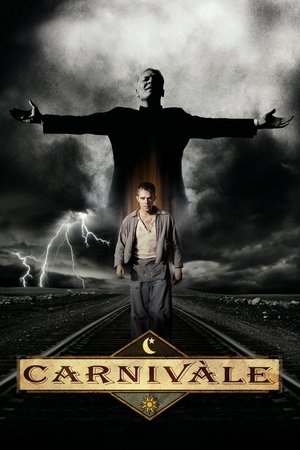
Carnivàle is an American television series set in the United States during the Great Depression and Dust Bowl. In tracing the lives of two disparate groups of people, its overarching story depicts the battle between good and evil and the struggle between free will and destiny; the storyline mixes Christian theology with gnosticism and Masonic lore, particularly that of the Knights Templar.
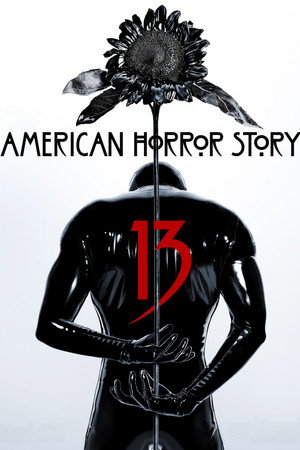
An anthology horror drama series centering on different characters and locations, including a house with a murderous past, an asylum, a witch coven, a freak show, a hotel, a farmhouse in Roanoke, a cult, the apocalypse and a summer camp.
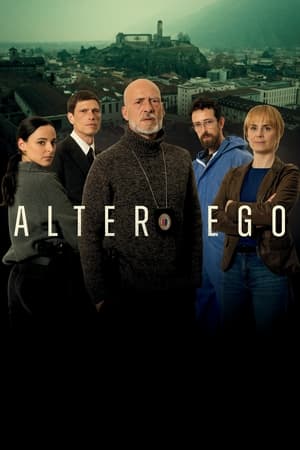
During the traditional carnival celebrations, the dead body of a young girl is found near the small town of Bellinzona, in Southern Switzerland. The officers engaged in the case find themselves investigating crimes rooted in a past full of shadows.
Enredos da Liberdade – O Grito do Samba Pela Democracia is a Brazilian documentary series available on Globoplay that delves into the pivotal role of samba schools during Brazil's transition from military dictatorship to democracy in the 1980s. Spanning five episodes, the series showcases how samba-enredo compositions became powerful tools of political resistance, addressing themes like censorship, economic hardship, and racial inequality. Through rare archival footage and interviews with prominent figures such as Martinho da Vila, Leci Brandão, and Rosa Magalhães, the documentary highlights the creative defiance of these cultural institutions. Each episode concludes with a reimagined performance of a significant samba, featuring artists like Teresa Cristina and Mart’nália, underscoring the enduring impact of these musical expressions in Brazil's democratic journey.
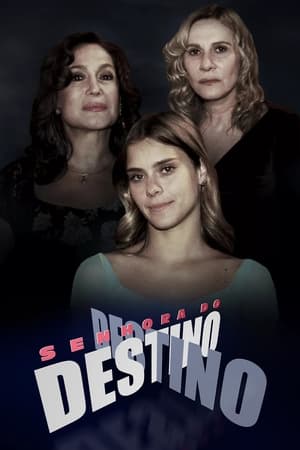
A story about people who succeed in life thanks to nothing but their own efforts. Maria do Carmo is the main character of the telenovela; a mother of five who struggle to be successful in life, but whose most important will be recovering the love of her daughter who was kidnapped when she was just months old.
Hardball with Chris Matthews is an American television talk show on MSNBC, broadcast weekdays at 7 PM ET hosted by Chris Matthews. It originally aired on now-defunct America's Talking and later CNBC. The current title was derived from a book Matthews wrote in 1988, Hardball: How Politics Is Played Told by One Who Knows the Game. Hardball is a talking-head style cable news show where the moderator advances opinions on a wide range of topics, focusing primarily on current political issues. These issues are discussed with a panel of guests that usually consists of political analysts and sometimes include politicians. It also runs in a "Best of" format Saturday mornings at 5 AM.
This Hour Has 22 Minutes is a weekly Canadian television comedy that airs on CBC Television. Launched in 1993 during Canada's 35th general election, the show focuses on Canadian politics, combining news parody, sketch comedy and satirical editorials. Originally featuring Cathy Jones, Rick Mercer, Greg Thomey and Mary Walsh, the series featured satirical sketches of the weekly news and Canadian political events. The show's format is a mock news program, intercut with comic sketches, parody commercials and humorous interviews of public figures. The on-location segments are frequently filmed with slanted camera angles.
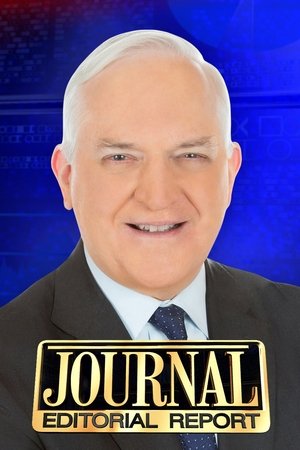
The Journal Editorial Report is a weekly American interview and panel discussion TV program on Fox News Channel, hosted by Paul Gigot, editorial page editor of The Wall Street Journal. Prior to moving to Fox News, the show aired on PBS for 15 months, ending on December 2, 2005.
La journée (est encore jeune)
Le Grand Échiquier is a French variety television program created and presented by Jacques Chancel. It aired at 8:30 pm on the first channel of the ORTF from January 12, 1972 to July 12, 1972, then on the second color channel of the ORTF from September 1972 to December 1974, and finally on Antenne 2 from January 1975 to December 21, 1989. The program returned to France 2 on December 20, 2018 and is hosted by Anne-Sophie Lapix.
Blauer Panther
heute journal
PaparaGilles
저널리즘 토크쇼 J
Lorraine Kelly first began presenting Top of the Morning in January 1993. In March when Fiona Armstrong walked out of the main GMTV show, Lorraine moved to the GMTV slot and Fern Britton and Amanda Redington took over hosting Top of the Morning. Top of the Morning was produced by an independent production company.
In January 2000, as GMTV rebranded to GMTV Today, and Lorraine's show changed its name to LK Today.
As part of the later rebrand that took place at the start of 2009, LK Today was rebranded as GMTV with Lorraine, to coincide with GMTV Today changing back to GMTV. Lorraine moved for the first time into the main GMTV studio, instead of having her own part of the studio to host from.
The Sunday Programme was GMTV's political programme. It launched on 16 October 1994 as a replacement for Sunday Best, which was GMTV's original Sunday morning magazine. The programme aired between 7:00 am and 8:00 am, just after The Sunday Review (a 60-minute signed review of the week's news). It was originally presented by Alastair Stewart, who left in 2001, and Steve Richards took over. From 1995 to 2001, the programme was called Alastair Stewart's Sunday Programme, but this was changed when Alastair left in 2001. In 2008, the programme was quietly axed and replaced with children's programming.
A replacement for the Channel 4 News at Noon in the 12.00 pm slot, it first aired on 21 December 2009, giving a five-minute summary of the news.
GMTV is the name of the national Channel 3 breakfast television contractor/licensee, broadcasting in the United Kingdom from 1 January 1993 to 3 September 2010. It became a wholly owned subsidiary of ITV plc in November 2009. Shortly after, ITV plc announced the programme would end. The final edition of GMTV was broadcast on 3 September 2010.