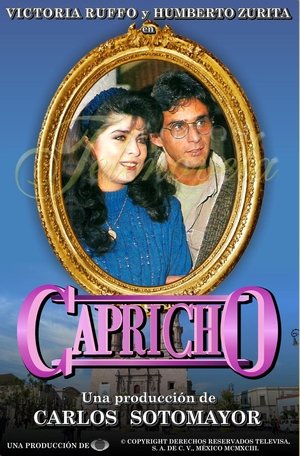
An Intelligence Agent is sent to El Principe, on the border with Morocco, to investigate a possible police collaboration with a terrorist cell but finds unexpected love in the least suitable person: a drug baron's sister.
Rebeca murders her sister Adriana to end up with the man she loved, and becomes the step mother of her niece Lucía. Nora, Lucía's half sister and daughter of Rebeca, resents Lucía for the same reasons Rebeca hated Adriana, as history repeats itself.
La Viuda Negra is a 2014 Spanish-language telenovela produced by RTI Producciones and Televisa for United States-based television network Univisión and for Colombia-based television network Caracol Television. It is an adaptation of the book La patrona de Pablo Escobar de José Guarnizo based on history from Griselda Blanco.
After her parents death, the little Cecilia is under the care of her aunts: Natalia and Evangelina. Evangelina is a cruel woman who doesn't love the child and she treats her bad. Unlike Evangelina, Natalia is good and will help Cecilia because she is her real mother. She was seduced and got pregnant by Padre Julio. Evangelina hates Padre Julio because in the past he preferred Natalia to her. Many years later, there is a problem, because Evangelina doesn't want to give Cecilia money to attend the University. But Cecilia wins a grant and she can study now. She is engaged and wants to marry Giovanni, but Evangelina is against. She will poison him with a drink. Then Cecilia meets and falls in love with Gerardo, who is engaged to Sofia. Sofia's parents are Marta and Armando. Armando returns home after abandoning his family for many years. Marta has a romance with Manuel, but Sofia and Armando are opposed. Ines and Renato, who are Gerardo's parents, also are opposed to his romance with Cecilia. She breaks up the romance and goes to sor Angelina's nunnery to become a nun. Sonia and Roberto try to separate Gerardo from Cecilia. Then Cecilia finds out the truth about her birth and meets padre Julio. Natalia discovers that Evangelina tries to appropriate the whole patrimony of Cecilia and Evangelina kills her.
Story about a woman that is unhappily married and with two daughters. She constantly reprimands Cristina and baby Raquel. What the people around her don't know is that Raquel is not her husband's daughter as everyone believes. Raquel is Eugenia and León's daughter. She has always loved him, not her husband. That is the reason she's always angry at Cristina.
Esmeralda, whom everyone knows as "The Stray Cat," is a girl who grows up in wretched conditions, yet possesses a special sweetness and charm. Her best friend is Pablo, a wealthy boy who defends her against the other children's teasing.
A gangster family epic set in 1919 Birmingham, England and centered on a gang who sew razor blades in the peaks of their caps, and their fierce boss Tommy Shelby, who means to move up in the world.
Chepe Fortuna and Niña Cabrales are from different social classes. Chepe is a poor fisherman and Niña is from a wealthy family. He wants to become mayor to stop her wealthy family from building a port to industrialize the town. Niña is an ecologist and dissident from her family. She wants to help the community. Their love is brought together by dreams and the past, though they do not know it.
Family duty sends a lawman to London to look for his mob-assassin brother as a yakuza war threatens to engulf Tokyo. Trust is even tougher to find.
The story of Piotr Leyer, a lawyer who, through a tragic twist of fate, becomes the head of a criminal gang.
Retrato de familia is a Mexican telenovela produced by Lucy Orozco for Televisa and originally broadcast on Canal de las Estrellas from October 23, 1995, to January 19, 1996. Created by Jesús Calzada, the telenovela stars Helena Rojo, Alfredo Adame, Diana Bracho, and Yolanda Andrade. The story is set in Guadalajara and centers on the Mariscal Preciado family. The story follows Cecilia Mariscal, a devoted mother whose troubled marriage to Agustín falls apart, leaving her to rebuild her life. When she falls in love with Dr. Esteban Acuña, she faces unexpected opposition from her own daughter, Elvira, who also becomes obsessed with him. As family rivalries, forbidden love, betrayal, and long-hidden secrets emerge, the Mariscal family's relationships are pushed to the breaking point.
El amor no tiene precio is an American telenovela. It aired in 2005 until the series finale in 2006.
Alisa Lenz and luck? Her boyfriend cheats on her, then leaves her with a mountain of debts... She ruins her job application by angering the company's CEO... She loses the cut-glass pendant that was the only keepsake from her biological parents - and that was her good-luck charm... Decidedly, luck does not seem to smile on Alisa. But if you think this is enough to keep her from pursuing her goal of happiness and fulfillment, you don't know Alisa!
Seok-cheol, the eldest son in a family of three generations of gangsters, navigates the tumultuous ups and downs of life with tears and laughter, all to protect his family, career, and love.
La última esperanza is a Mexican telenovela produced by Eugenio Cobo for Televisa and originally broadcast on Canal de las Estrellas from February 1 to May 14, 1993. It is a remake of the 1973 Mexican telenovela Muñeca, which was itself based on the 1971 Argentine telenovela Así en la villa como en el cielo, created by Abel Santa Cruz. The story follows Estelita Suárez, a kind-hearted young woman who lives in the impoverished neighborhood of La Última Esperanza while caring for her alcoholic father. Her life changes when she meets Daniel Burana, a wealthy young man who disguises himself as a poor resident to win her love. As their romance blossoms, they must confront family greed, corruption, and betrayal while fighting to protect their community from those determined to destroy it.
Over four decades, two brothers in Cali juggle family duties, multiple romances and illicit businesses, transforming from poor kids to cocaine kingpins.
It follows the lives of four housewives and the everyday problems and mysteries that surround their husbands, friends, and neighbors, which are sometimes more sinister than they appear.
Buscando el paraíso is a Mexican youth telenovela produced by Luis de Llano Macedo and Marco Flavio Cruz for Televisa and originally broadcast on Canal de las Estrellas from November 8, 1993, to April 1, 1994. Directed by Benjamín Cann, the telenovela stars Pedro Fernández and Yolanda Andrade, with Karla Álvarez and Alejandro Ibarra in antagonist roles. The story follows Dalia and Andrea Montero Machado, two sisters with very different personalities. While Andrea is confident and charismatic, Dalia is shy and insecure. Dalia secretly falls in love with Ángel, Andrea's former boyfriend, who begins a relationship with her only to hurt her. After being abandoned and discovering she is pregnant, Dalia finds support in Julio, a humble and hardworking young man. However, jealousy, betrayal, and unresolved feelings threaten their chance at happiness.
Clarisa is a Mexican telenovela produced by Juan Osorio for Televisa and originally broadcast on Canal de las Estrellas from March 15 to June 11, 1993. Created by Ramón Obón, Lupita Obón, Pilar Obón, and María Teresa García, with literary editing by Dinorah Issak, the telenovela stars Gabriela Roel and Manuel Landeta. Set in the 1930s, the story follows Clarisa González León, a kind-hearted young woman who becomes the target of her ambitious and resentful sister, Elide. After tragedy strikes her family, Clarisa loses her husband and is led to believe that her newborn daughter has died. Years later, determined to uncover the truth, she embarks on a journey marked by love, betrayal, family secrets, and the hope of reuniting with her child.
Sueño de amor