Dvojí život jedné strany
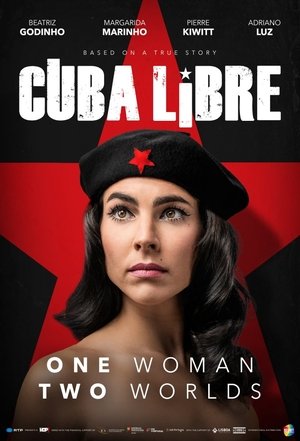
Cuba Libre tells the story of Annie Silva Pais, the daughter of the last PIDE director, Silva Pais. At the age of 30, Annie Silva Pais left her husband, family and country and left for Cuba, becoming involved in the Cuban revolution. In addition to other events, there is also a romance with Che Guevara.
Abeceda komunistických zločinů
Rodáci
A moving story about the residents of correctional facility, rejected by parents and environment. Going through a strict regimen of life in the home, they are constantly trying to reverse the fate in their favor. Although they were given a chance to change, their actions always return to the beginning. Constantly on the border between personal whims and once-in-a-lifetime opportunity to become humans, they remain as wolves who find hard to change their mood. What finally remains is a perpetual dilemma whether their fate is innate, or is it forced by the communities in which they grew up...
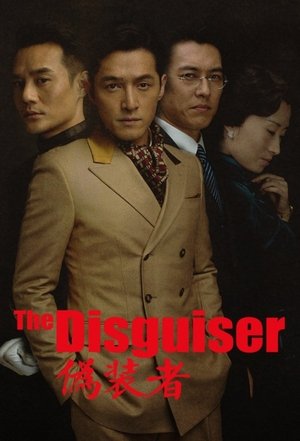
Set in the Japanese occupation era, the rich yet naive young master Ming Tai is trained to become an agent, and is later sent to become an underground spy for the Communists. Together with his brother and double agent Ming Lou, they try and bring down Wang Wei's Kuomintang Secret Service Headquarters.
A seemingly sheltered family living behind the Berlin Wall in East Germany begins to crumble, in a climate of fear, mistrust, and shocking secrets.9
What it felt like to live through the collapse of communism and democracy. A series of films by Adam Curtis.
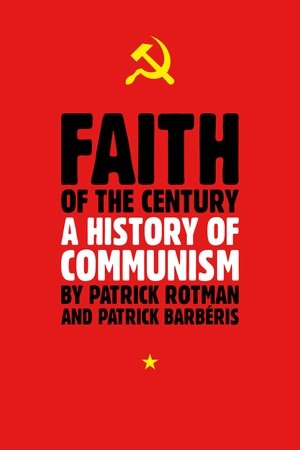
Communism spread to all of the continents of the word, lasting through four generations and over seven decades. Hundreds of millions of men and women were affected by this political system, one of the most unjust and bloodiest in history. Using newly discovered propaganda films and archival photos, these four episodes explore the mysteries of this totalitarian political machine that lured its share of important followers into the fold. Known as the red church, communism seduced its ardent followers like some earthly religion.
Recounts the tumultuous history of Cuba, a nation of foreign conquest, freedom fighters and Cold War political machinations.
The story of an empire: From its founding in 1922 to its dissolution in 1991, the Soviet Union was shaped by revolutionary idealism, but also by oppression and decay. The USSR evolved from Stalinist terror through the Thaw under Khrushchev to political processes such as glasnost and perestroika under Gorbachev. Finally, in 1991, it collapsed.
It started with Lenin and ended with Gorbachev. In this three-part documentary we highlight the people and events that played key roles in the rise of a revolutionary idea and the fall of an empire. How was it possible that this idea could fascinate so many people, including hundreds of intellectuals? How did so many thousands of people put up with suppression, indignity and economic hardship and still remain true to the fundamental concepts of communism?
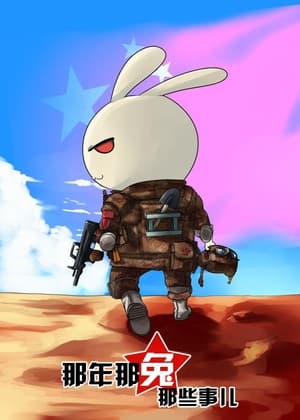
那年那兔那些事儿
In an alternate world, the Cold War has continued to persist for 140 years. As a result, the world was divided into two factions: the West Block, and the East Block. As the Cold War drags on, the tension between the two factions, as well as the amount of nuclear weapons they have, rise. Mylene Hoffman is a female cyborg who is a spy for the West Block. Together with three other agents, Mylene partakes in various missions issued by her superiors.
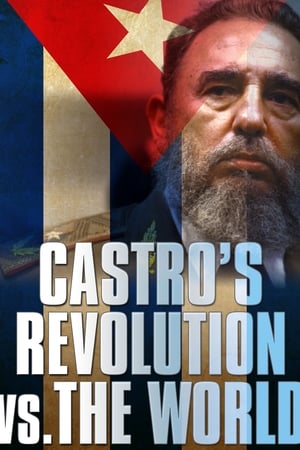
Cuba's revolutionary story is one of much fervor. Fidel Castro had one objective: the liberation of a Communist Cuba. Castro's ability to form key strategic alliances enabled him to stand at the precipice of realizing his dream for Cuba.
China: The Making of a Nation is the story of the painful transformation of the vast Qing Empire into the Chinese nation after the 1911 revolution. Spanning more than a century up to the Xi Jinping era, the story pits the two pivotal leaders of this transformation against each other: Chiang Kai-shek, leader of the Republic of China for 47 years, and Mao Zedong, who rose from ‘red bandit’ to master of the mainland in 1949. Sworn enemies, they fought a merciless battle: first military, then diplomatic, and finally, beyond their deaths, in the conflicting memories of the Taiwanese and the Chinese of the People's Republic. Beyond their fierce hatred, the two tyrants also had much in common: a certain vision of Chinese territory and the greatness of China, the desire to regain the country's sovereignty and the quest for a Chinese identity in a nation that also includes Tibetans, Uighurs, Mongols... and a certain ability to rewrite history.
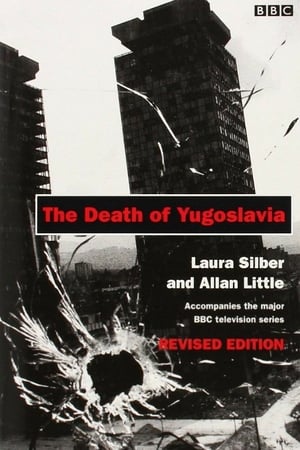
The Death of Yugoslavia is a BAFTA-award winning BBC documentary series first broadcast in 1995. It covers the collapse of the former Yugoslavia. It is notable in its combination of never-before-seen archive footage interspersed with interviews of most of the main players in the conflict, including Slobodan Milošević, the then President of Serbia. Norma Percy won the 1996 BAFTA TV Award for 'Best Factual Series' for the documentary. However, it has been argued that it presents a potentially slightly biased point-of-view; for instance during the trial of Milošević before the ICTY in The Hague, Judge Bonomy called the nature of much of the commentary "tendentious" (partisan).
Svět pod hlavou
After breaking off her engagement on her wedding day and going directly to a prostitution house, a young model becomes the city's most famous harlot, known as "Hilda Hurricane", in the 50's Brazil. She could do fine if it wasn't for Malthus, a young novice said to be a saint, for whom she falls in love. However, the boy is kept under the strict, severe doctrine of Father Nelson, a conservative priest intolerant even to every minor sin. Things start getting harder when Roberto, Malthus' old friend and a communist reporter (the actual author of the story), tries to interview Hilda and disclosure the real reasons behind her radical change of mind. In the meantime, the middle-classes are terrified by the "leftist threat" in Brazilian politics.
Juana Doña, a communist woman; Carmen Polo, dictator Franco's wife; and Eva Duarte, President Perón's wife, the first lady of Argentina, the idolized Evita, crisscross their lives during Evita's official visit to Spain, an autarchic country isolated from the world, in June 1947. Behind the pomp of reception there is a pharaonic preparation, hidden businesses, battles in the Caudillo's court and the possibility of saving a human life.