Adapted from Forrest Wilson's books, the children's programme revolves around a grandmother with super powers and her arch nemesis, The Scunner Campbell.
When the Nazis secure a heavy water plant to realize their plan to create an atomic bomb, the Norwegian Allies struggle to sabotage the operation.
Marika
The Canadian contribution to World War Two was extraordinary in scale and variety. More than one million people, out of nation of just eleven million, volunteered to serve. To transform a small, virtually unequipped military into a powerful army, navy and air force was a remarkable achievement. No Price Too High traces Canada's involvement from the prewar years through 1945, explaining the events of the war in the context of the political and military realities of the time. There is none of the second guessing that has characterized so much recent analysis of the war. No Price Too High draws on original sources - personal letters and diary entries, and powerful photographs - to evoke the mood of those momentous years. The thoughts, hopes, dreams, fears, and heartbreaks of the generation of Canadians who faced the war are captured. Produced by Norflicks, No Price Too High chronicles Canada's role in the major events of the war, including The Battle of Britain, Dieppe and D-Day.
On a charming island, Square, Triangle, and Circle seek adventure and connection while learning how to navigate each other's differences.
It depicted the children's relationship to the war 1940-1945. Rolf Riktor's father was arrested and sent to the prison camp Grini and his mother travel to Oslo to look for him and get the opportunity to visit him at Grini. The children however do not get an opportunity to visit the prisoners.
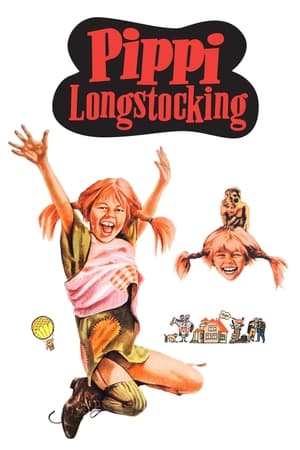
The adventures of Pippi Longstocking, an eccentric, super-strong, redheaded moppet and her best friends Tommy and Annika.
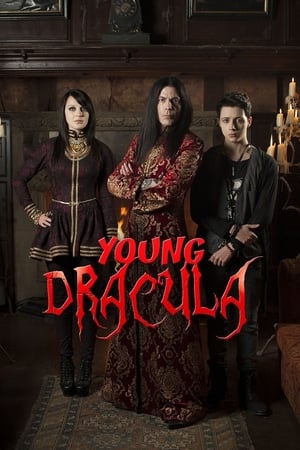
The misadventures of Vlad and Ingrid, who have moved to Britain from Transylvania with their father Count Dracula.
A limited series adaptation of Astrid Lindgren's beloved children's novel of the same name. After brothers Jonathan and Crusty pass away, they reunite in Nangijala, the land of eternal spring. Casting a long shadow over their world is the tyrant Tengil, ruler of the country Karmanjaka, where he’s building his new fortress up in the Ancient Mountains.
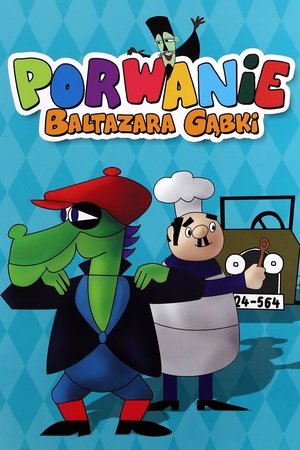
The Abduction of Balthazar Sponge (Polish: Porwanie Baltazara Gąbki) is a Polish-language fantasy animated series produced by Studio Filmów Rysunkowych from 1969 to 1970, that was based on 1965 children's book Porwanie Baltazara Gąbki by Stanisław Pagaczewski. The series had 1 season consisting of 13 episodes, each lasting from 6 to 7 minutes. The episodes were directed by Władysław Nehrebecki, Alfred Ledwig, Edward Wątor, Józef Byrdy, Bronisław Zeman, Wacław Wajser, and Stanisław Dülz, while the scrips were written by Zofia Olak and Leszek Mech. The series had a sequel ,Wyprawa profesora Gąbki, that was produced from 1978 to 1980.
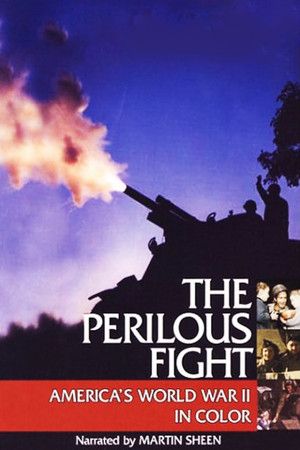
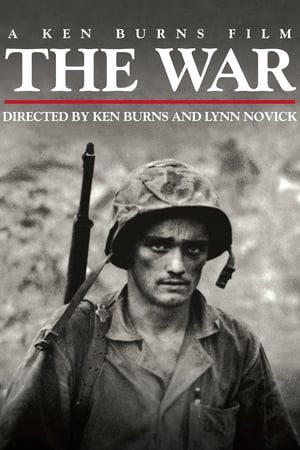
This four-hour series narrated by Martin Sheen captures America's wartime experience through original color film footage and compelling passages from diaries and letters. Rare color footage-much of it never before publicly screened-presents a vivid and intimate portrait of life on the battlefield and on the U.S. home front.
Garth Barnard has a lifelong passion and unshakeable resolve to investigate how thousands of young Airmen from the Second World War died in catastrophic air accidents and training crashes.
War and Remembrance is an American miniseries based on the novel of the same name by Herman Wouk. It is the sequel to highly successful The Winds of War.
Der Jahrhundertkrieg
Juger Pétain
World War II drama about covert organisation Lifeline helping allied airmen escape after being shot down in occupied Europe, working with the Resistance and hiding from the Gestapo.
Homefront is an American television drama series created and produced by Lynn Marie Latham and Bernard Lechowick in association with Warner Bros. Television for ABC. The show was set in the fictional city of River Run, Ohio in 1945, 1946, and 1947. The show's theme song, "Accentuate the Positive", was written by Johnny Mercer and performed by Jack Sheldon. Forty-two episodes were broadcast in the United States over two seasons from 1991 to 1993. TV Guide, Abigail Van Buren, and fans showed determination in getting ABC to continue the show for a third season before it was cancelled.
Based on real-life experiences, Tenko remains one of the most fondly remembered and acclaimed BBC dramas of the early 1980s. It follows a group of women, formerly comfortably well-off ex-pats living in Singapore, as they are captured by the Japanese during World War II.
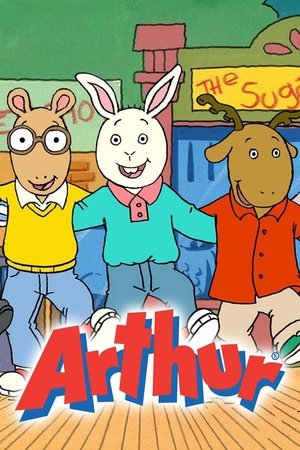
The show revolves around the lives of 8-year-old Arthur Read, an anthropomorphic aardvark, his friends and family, and their daily interactions with each other.
The misadventures of hapless cafe owner René Artois and his escapades with the Resistance in occupied France.