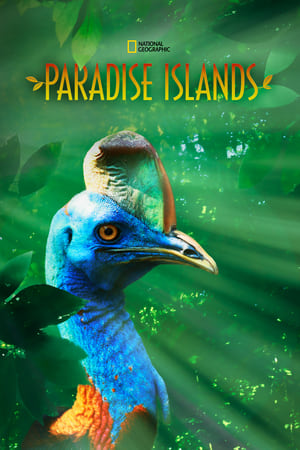
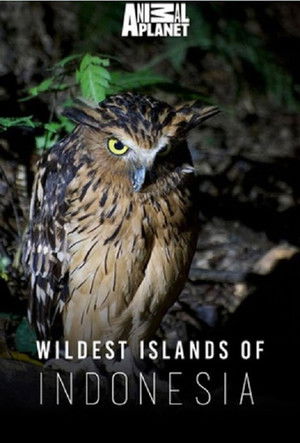
The tropical islands that lie between Asia and Australia are among the biologically richest on earth, and home to a vast number of plants and animals. From tree kangaroos to tarsiers, manta rays to mudskippers, the region abounds with life. But why? The answer lies deep in time, due to the many millions of years these islands have existed - and the power of the earth, the sun and the moon.
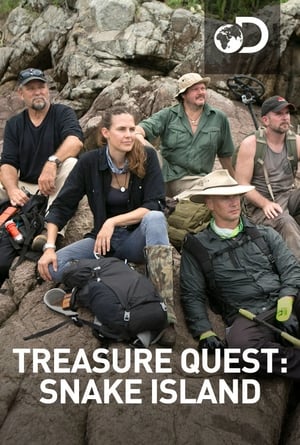
Hidden somewhere off the southeastern coast of Brazil could lie hundreds of millions of dollars-worth of lost Incan gold. One team of treasure hunters has a new theory on where the treasure lies - a remote spot home to 1,000s of deadly vipers.
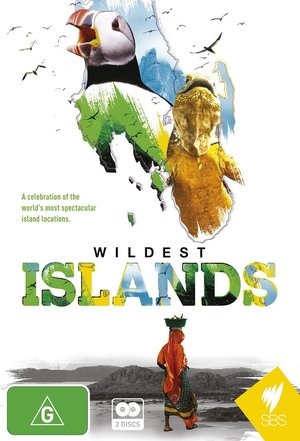
Islands can be home to the most extreme examples of life and the some of the most dramatic landscapes. Natural selection fuels evolution in the most extraordinary way. Isolated for hundreds of thousands of years, pockets of individuals survive, thrive and adapt to fill all available niches fuelling a rapid development of new species. Wildest Islands, a stunning five-part series featuring the world’s most spectacular island locations. Dive into the crystal clear waters of the Caribbean; journey through the lush forests of Zanzibar; discover the unspoilt environs of the Hebrides; and uncover the enduring wonders of the Galapagos Islands as Wildest Islands investigates the rich history of these pristine paradises.
Tells the fascinating history of an island people who have truly left their mark on the world. 6 million people live on the island of Ireland, but over 80 million people worldwide say they are Irish. What does that mean? How have we been shaped by our history? Our geography? Where did we come from? Where did we go? These questions are at the heart of this series.
David Attenborough presents a documentary series exploring how animals meet the challenges of surviving in the most iconic habitats on earth.
The islands of Indonesia remain a wild paradise. This series explores the incredible wildlife of this extraordinary environment and reveals the remarkable ways in which life has been created, adapted, and reborn over millions of years.
Young koala caretaker Izzy Bee and her family rescue cuddly creatures in need and help them head back into the wild on Australia’s Magnetic Island.
Ed Stafford undertakes an extreme survival challenge as he washes up naked and alone on a desert island, Olorua, south east of Fiji. He has only his brain, bare hands and a camera to keep him alive. He'll take no food, water, clothes, knife or tools, so from the moment he arrives he is on a race to stay alive. As man can only last three days without water and three weeks without food, Ed will attempt to survive on the island physically and mentally, for 60 days.
South Pacific is a British nature documentary series from the BBC Natural History Unit, which began airing on BBC Two on 10 May 2009. The six-part series surveys the natural history of the islands of the South Pacific region, including many of the coral atolls and New Zealand. It was filmed entirely in high-definition. South Pacific was co-produced by the Discovery Channel and the series producer was Huw Cordey. It is narrated by Benedict Cumberbatch. Filming took place over 18 months in a variety of remote locations around the Pacific including: Anuta, Banks Islands, French Frigate Shoals, Papua New Guinea, Palmyra, Kingman Reef, Tuvalu, Palau, Caroline Islands, Tuamotus and Tanna Island in Vanuatu. On 6 May 2009, BBC Worldwide released a short clip of big wave surfer Dylan Longbottom surfing in slow motion, high-definition footage as a preview of the series, attracting extremely positive reactions on the video sharing website YouTube. The series was released on DVD and Blu-ray Disc on 15 June 2009. At the end of each fifty-minute episode, a ten-minute featurette takes a behind-the-scenes look at the challenges of filming the series. The series was released by Discovery International in the USA under the title Wild Pacific, with narration provided by Mike Rowe.
Ostrovy Malajsie
Kiwiland
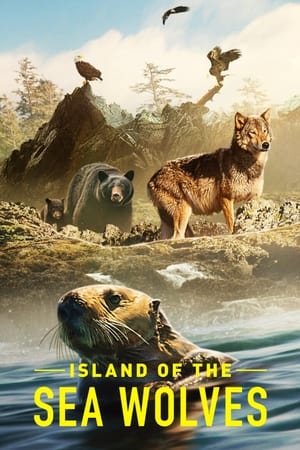
Explore wild, wondrous Vancouver Island, where the ocean nurtures all life, from bald eagles who go fishing to sea wolves who swim in frigid waters.
This nature documentary introduces viewers to the fauna and flora of Britain and Ireland across four main areas: woodlands, grasslands, freshwater and marine.
Les îles de l'Atlantique
Join host Sophie Fouron as she travels the globe to discover the unique lifestyles being lived out on islands.
Popular celebrities participate in this reality show that takes them to an island where their instincts of human survival are tested through demanding mental and physical challenges
In 1935, financially strapped widow Louisa Durrell, whose life has fallen apart, decides to move from England, with her four children (three sons, one daughter), to the island of Corfu, Greece. Once there, the family moves into a dilapidated old house that has no electricity and that is crumbling apart. But life on Corfu is cheap, it's an earthly paradise, and the Durrells proceed to forge their new existence, with all its challenges, adventures, and forming relationships.
H.R. Pufnstuf is a children's television series produced by Sid and Marty Krofft in the United States. It was the first Krofft live-action, life-size puppet program. The seventeen episodes were originally broadcast from September 6, 1969 to December 27, 1969. The broadcasts were successful enough that NBC kept it on the Saturday morning schedule until August 1972. The show was shot in Paramount Studios and its opening was shot in Big Bear Lake, California. Reruns of the show aired on ABC Saturday morning from September 2, 1972 to September 8, 1973 and on Sunday mornings in some markets from September 16, 1973 to September 8, 1974. It was syndicated by itself from 1974 to 1978 and in a package with six other Kroft series under the banner Kroft Superstars from 1978 to 1985. In 2004 and 2007, H.R. Pufnstuf was ranked #22 and #27 on TV Guide's Top Cult Shows Ever.
Castaway is an Australian children's television series premiered in Australia on the Seven Network on 12 February 2011. The series is a sequel to the 2008 series Trapped. It had been delayed from its initial premiere date in 2010 and as a result first aired on Swedish television, with the premiere on 1 November 2010 and ending on 6 December 2010.
Ten strangers, drawn away from their normal lives to an isolated rock off the Devon coast. But as the mismatched group waits for the arrival of the hosts -- the improbably named Mr. and Mrs. U.N. Owen -- the weather sours and they find themselves cut off from civilization. Very soon, the guests, each struggling with their conscience, will start to die -- one by one, according to the rules of the nursery rhyme 'Ten Little Soldier Boys' -- a rhyme that hangs in every room of the house and ends with the most terrifying words of all: '... and then there were none.