The next evolution in cooking competitions, as Gordon Ramsay has designed a one-of-a-kind culinary gauntlet, set on an iconic stage over three stories high, each floor contains a stunningly different kitchen. From the glistening top floor to the challenging bottom of the basement, the ingredients match the environment, because Ramsay believes the true test of great chefs is not only what they can do in the best of circumstances, but what kind of magic they can create in the worst!
Each year, hopeful singers from all over the country audition to be part of one of the biggest shows in American television history. Who will become the new American Idol?
Popular lawyer Anne-France Goldwater takes an honest look at real legal cases that are as unusual as they are hard to settle!
Caso Cerrado, formerly Sala de Parejas, is a Spanish-language court show broadcast by Telemundo in which Cuban-born lawyer Ana María Polo arbitrates cases for volunteer participants.
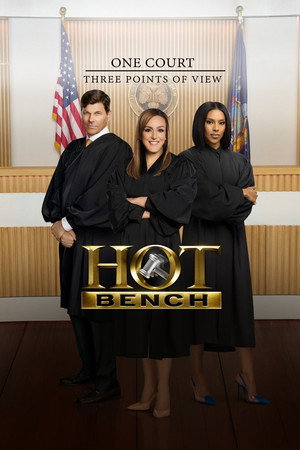
A panel of three judges hear court cases, argue the merits of the case amongst themselves, and render a verdict.
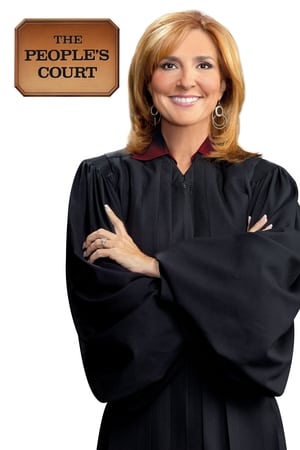
The People's Court is an American arbitration-based reality court show currently presided over by retired Florida State Circuit Court Judge Marilyn Milian. Milian, the show's longest-reigning arbiter, handles small claims disputes in a simulated courtroom set. The People's Court is the first court show to use binding arbitration, introducing the format into the genre in 1981. The system has been duplicated by most of the show's successors in the judicial genre. Moreover, The People's Court is the first popular, long-running reality in the judicial genre. It was preceded only by a few short-lived realities in the genre; these short-lived predecessors were only loosely related to judicial proceedings, except for one: Parole took footage from real-life courtrooms holding legal proceedings. Prior to The People's Court, the vast majority of TV courtroom shows used actors, and recreated or fictional cases. Among examples of these types of court shows include Famous Jury Trials and Your Witness. The People's Court has had two contrasting lives. The show's first life was presided over solely by former Los Angeles County Superior Court Judge Joseph Wapner. His tenure lasted from the show's debut on September 14, 1981, until May 21, 1993, when the show was cancelled due to low ratings. This left the show with a total of 2,484 ½-hour episodes and 12 seasons. The show was taped in Los Angeles during its first life. After being cancelled, reruns aired until September 9, 1994.
Crime & Punishment is a 2002 reality television, nontraditional court show spin-off of the Law & Order franchise. It premiered on NBC on Sunday, June 16, 2002, and ran through the summers of 2002, 2003, and 2004.
Forum
The Voice Kids
From coast to coast, thousands of hopefuls gather to get the chance to compete for the crown of the sexiest man or woman in America. Talent, personality and strategy were not required, just physical beauty and innate sexiness. They'll be judged by a celebrity panel and, at the end of each episode, viewers are invited to vote for their favorite male and female hotties until one breathtaking man and one stunning woman are crowned "The Sexiest People in America."
Talented young solo singers between the ages of 7 and 14 wow coaches and audiences alike in a bid to become the next big thing!
The Law Firm is an hour-long reality television, nontraditional court show series that premiered on NBC on July 28, 2005. In the series, twelve young up-and-coming trial lawyers competed for a grand prize of $250,000. At the end of each show, attorney Roy Black decided which two competitors were the weakest and needed to be dismissed, using the catchphrase "The verdict is in. You're out." The series was cancelled by NBC after two weeks on the air due to weak ratings.
We the People with Gloria Allred is an American nontraditional/dramatized court show that debuted in first-run syndication on September 12, 2011. The series is presented by famed celebrity lawyer/attorney Gloria Allred, who also serves as co-producer with series creator Byron Allen through his production company Entertainment Studios, LLC. John Cramer does the narration of the judge's final verdict.
Judge Lauren Lake hears cases involving not only questions of paternity, but also many types of stories involving DNA.
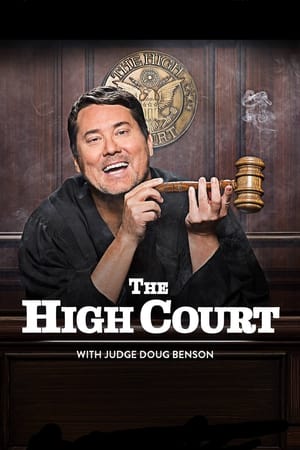
Join Doug Benson as he presides over actual courtroom arguments. The catch? Judge Doug makes all his rulings while extremely high. After hearing both sides, Doug smokes up with a guest bailiff and deliberates. (And yes, this is legal. Somehow.)
Judge Mills Lane is an American television series and arbitration-based reality court show that ran in first-run syndication from August 17, 1998 to September 7, 2001. Reruns later aired on The National Network. The show was produced by John Tomlin and Bob Young for Hurricane Entertainment Corporation, and distributed by Rysher Entertainment. The show's judge was Mills Lane. Mills Lane was previously a well-known professional boxing referee, as shown in the show's intro; "he's been a boxer, a lawyer, a prosecutor, and a referee." The intro also declared Lane to be "America's Judge." Lane uses his catchphrase "Let's get it on!" at the beginning of each case, and occasionally when someone states something that is either quite obvious or tried to deceive him, he usually states "I may have been born at night, but I wasn't born last night!"
Judge Judy Sheindlin puts the American justice system on trial in a true crime high-stakes courtroom drama, as she and her expert legal team recreate the trials from notorious cases where following the letter of the law did not necessarily feel "just."
The MVPs from past seasons of Project Runway compete for a second chance at runway gold.
All rise for the Honorable Judge Walsh, court is now in session. Watch Matt Walsh bring his iconic deadpan delivery of common sense solutions to real life litigants with actual petty grievances. Find humor in the judiciary process in this fresh take on the reality courtroom genre.
Das Strafgericht