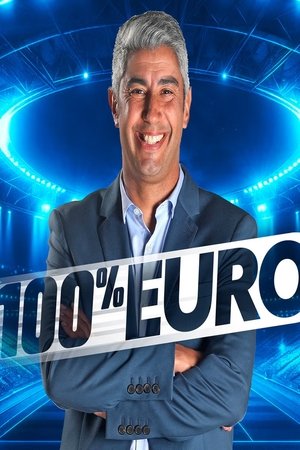
100% Euro
Teams make final preparations for the day's race. Plus, interviews, features, and Martin Brundle's popular "grid walk."
Sport 6
A professional wrestling television program produced by the World Wrestling Federation banner on NBC airing in place of Saturday Night Live. The series was made up entirely of star vs. star bouts in a time when weekly programming consisted primarily of established stars dominating enhancement talent.
The biggest WWE Superstars of the late 1980s and early '90s settle their differences in the ring on "Wrestling Challenge"; featuring exciting matches and memorable interviews, this weekly television series captures an important era of WWE history.
WWE Velocity was a professional wrestling television program produced by World Wrestling Entertainment. It replaced two syndicated WWE shows, Jakked/Metal. Once a weekly Saturday night show on Spike TV and on Sky Sports 2 in the UK on Sunday mornings, Velocity became a webcast from 2005 to 2006. The newest episode would be uploaded to WWE.com on Saturdays and be available for the next week. Older webcast episodes were also archived. It was the counterpart show to WWE SmackDown and WWE Raw and was recorded before the television taping of SmackDown. Get up to speed on the week's high-octane events from the SmackDown brand and see exclusive matches only on WWE Velocity.
WWE Chronicle takes you inside the lives of WWE Superstars. Find out what it's really like to be in the WWE spotlight through revealing interviews and candid moments filmed backstage at WWE events, on the road, and in the Superstars' homes. This is a side of the men and women of WWE you've never seen before.
WWE's flagship show of the early-90s featuring great in-ring action, news from the world of sports-entertainment, and more.
Mac Murphy takes charge as manager of a struggling fictional Third Division football club, Dunmore United. The series follows a group of young supporters of the club whose day-to-day troubles included attempts to set up a junior supporter's club and clubhouse within the stadium.
The greatest WWE Superstars of the 1975s & 1982s, including Andre the Giant, Bob Backlund, and Bruno Sammartino compete in exciting matches.
Discover rarely-seen matches from the 1970s, '80s, and '90s featuring countless WWE Hall of Famers such as Hulk Hogan and Ric Flair.
A series of episodic martial art documentaries that follow amateur fighters as they train for an upcoming match. Each episode culminates in a thrilling, and fully sanctioned fight. Viewers are treated to emotional, personal stories alongside plenty of combat sport action.
A revealing four-part documentary series that tackles one of the most urgent questions in global sport: how money is reshaping the game of football.
Kabo is a high school student with a stutter who struggles to express his feelings. He finds himself drawn to his classmate Wanda, who pursues dance without worrying about how others see her. Seeking a form of freestyle expression, Kabo takes on the unfamiliar world of dance.
In Our Blood
The Superstars of ECW show off their hardcore skills and in-ring technical wizardry in this one-hour television series.
Drama. Rivalry. Obsession. Welcome to the world of PERMAI, where a group of young dreamers discover that things may not be as "perfect" as they seem.
30 for 30 is the title for a series of documentary films airing on ESPN, its sister networks, and online highlighting interesting people and events in sports history. This currently includes four "volumes" of 30 episodes each, a 13-episode series under the ESPN Films Presents title in 2011–2012, and a series of 30 for 30 Shorts shown through the ESPN.com website. The series has also expanded to include Soccer Stories, which aired in advance of the 2014 FIFA World Cup, and audio podcasts. This entry refers to the main Volumes of the series presented by ESPN
Les Héros du gazon
The Other Sport (Swedish: Den andra sporten) is a three-part documentary series zooming in on the often harsh conditions of women's football/soccer in Sweden since the first clubs got structurally organized in the mid-1960's up until this very day.