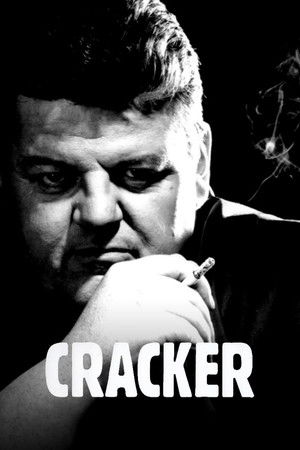
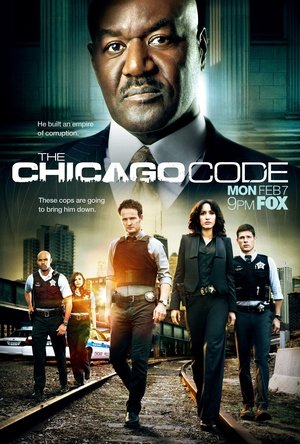
The wise-cracking Fitz is a brilliant but flawed criminal psychologist with a remarkable insight into the criminal mind.
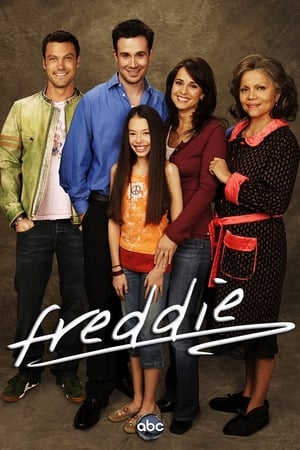
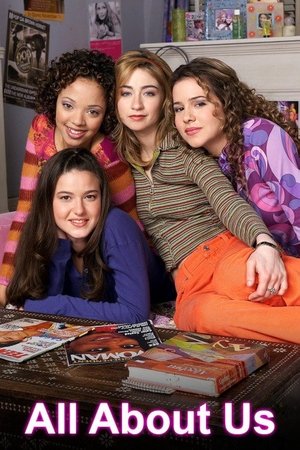
Freddie Moreno had finally escaped from the raucous house of women with whom he grew up. Having achieved some success as head chef at a trendy Chicago restaurant, he's ready for love and everything else that single life has to offer, including hanging out with his best friend and neighbor, Chris. Unfortunately, there's one slight hitch: After the death of his older brother and the collapse of his sister's marriage, goodhearted Freddie took in his impulsive sister-in-law, his pragmatic sister with her 13-year-old daughter and their irascible grandma, who refuses to speak English and only responds in Spanish – even though she understands every word. But while the members of this unconventional brood may test Freddie's patience endlessly, they also support and take care of one another, just as they always have. Now all Freddie has to do is figure out how to maintain his thriving bachelor lifestyle in a house overflowing with estrogen.
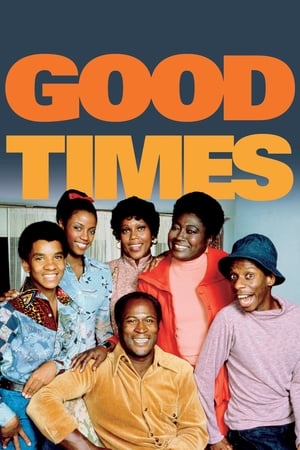
Good Times is an American sitcom that originally aired from February 8, 1974, until August 1, 1979, on the CBS television network. It was created by Eric Monte and Mike Evans, and developed by Norman Lear, the series' primary executive producer. Good Times is a spin-off of Maude, which is itself a spin-off of All in the Family along with The Jeffersons. The series is set in Chicago. The first two seasons were taped at CBS Television City in Hollywood. In the fall of 1975, the show moved to Metromedia Square, where Norman Lear's own production company was housed.
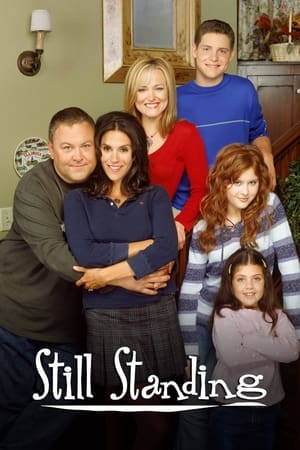
After 18 years of marriage, high school sweethearts Bill and Judy Miller still make each other laugh and try to keep their marriage intact, even when their family pulls them in different directions. Since Bill has a far more immature approach to marriage and raising their three children than Judy does, they work at striking a balance and remembering why they love each other, quirks and all.
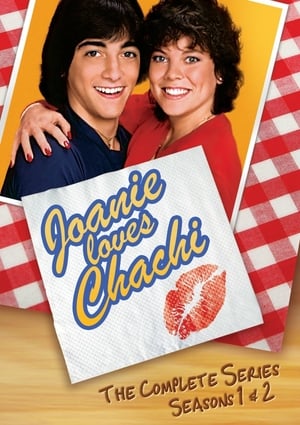
Joanie Loves Chachi is an American television spin-off of the American sitcom Happy Days that was originally broadcast on ABC from March 23, 1982 to May 24, 1983. It stars Erin Moran and Scott Baio as the titular Joanie Cunningham and Chachi Arcola, respectively.
The Building is an American CBS television comedy that lasted only five episodes in 1993. Bonnie Hunt played Bonnie Kennedy, a commercial actress who was jilted by her fiance shortly before the show started and moved back to Chicago to pick up the pieces of her life in an apartment across from Wrigley Field. The series focused on Kennedy's struggles and the characters who lived in her apartment building. Making heavy use of Second City alum, the show was also filmed live; mistakes, accidents, and forgotten lines were often left in the aired episode.
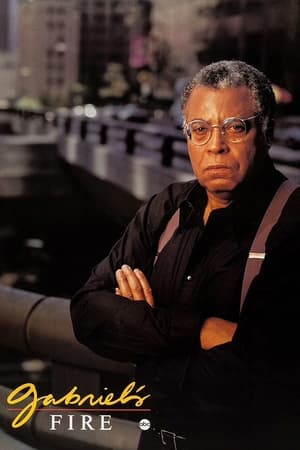
Gabriel's Fire is an American television series that ran on ABC in the USA in 1990–1991. A revamped version of the series, entitled Pros and Cons, aired briefly the following season.
Skeptical forensic psychologist Kristen Bouchard joins priest-in-training David Acosta and technology expert Ben Shakir as they investigate supposed miracles, demonic possessions, and other extraordinary occurrences to assess for a scientific explanation or if something truly supernatural is at work.
Father Dowling is a sleuthing parish priest from Chicago who investigates baffling crimes
Fanciful series about an aspiring writer who imagines alternative life scenarios while working for a big company.
The Human Factor is a short-lived medical drama that aired in 1992. It stars Eriq La Salle and John Mahoney.
Happy Hour is a sitcom that debuted on Fox in the United States and on CTV in Canada on September 7, 2006. The show starred John Sloan as Henry Beckman, a young man rebuilding his life after losing his girlfriend, his job, and his apartment. The series was produced by married duo Jackie and Jeff Filgo of That '70s Show. Fox put the show on hiatus in September 2006, and officially canceled it the following May. Thirteen episodes of Happy Hour were made, of which four have aired and nine remain unaired.
Gary Hobson thinks he may even be losing his mind when tomorrow's newspaper mysteriously arrives today giving him a disconcerting look into the future. What will he do with tomorrow's news?
The chronicles of the rocky coexistence of midwestern American Larry Appleton and his distant cousin from eastern Mediterranean Europe, Balki Bartokomous.
The Bob Newhart Show is an American situation comedy produced by MTM Enterprises, which aired 142 original episodes on CBS from September 16, 1972, to April 1, 1978. Comedian Bob Newhart portrays a psychologist having to deal with his patients and fellow office workers. The show was filmed before a live audience.
The host of the local morning talk show Morning Chicago creatively balances family commitment—to her husband John, a hard-working family practice doctor, and their three young children— and career obligations.
Jason Dessen is abducted into an alternate version of his life. To get back to his true family, he embarks on a harrowing journey to save them from the most terrifying foe imaginable: himself.
The Loop is an American sitcom that ran from March 15, 2006 to July 1, 2007 on Fox. The show starred Bret Harrison as Sam Sullivan, a young professional trying to balance the needs of his social life with the pressures of working at the corporate headquarters of TransAlliance Airways, a major U.S. airline. Set in the city of Chicago, whose downtown loop area acted as the setting for most of the show. The show's theme song is "Hockey Monkey" by James Kochalka Superstar and the Zambonis.
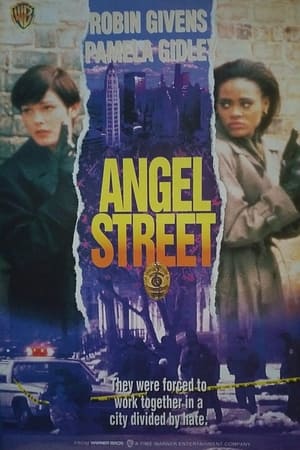
Angel Street is an American crime drama series broadcast on CBS from September 15—October 3, 1992. Starring Robin Givens and Pamela Gidley as two Chicago homicide detectives, the series was canceled after four episodes aired, leaving four unaired.
Travis 'Trav' Porter endeavors to follow in the footsteps of his grandfather, a legendary barber at the iconic "Calvin's" barbershop in Chicago. And while the barbers are new, the shop remains just as lively, the customers just as argumentative, and the fades are still the dopest in the city — because at Calvin’s, the community comes together for way more than just a haircut.