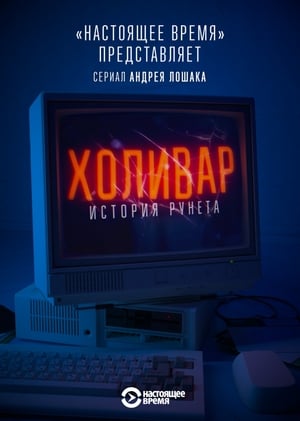
Dashing authors, the first porn sites and the last bastards. How the Russian Internet appeared and how it changed: from complete freedom to the appearance of censorship and the law on isolation.
A family of six and their home are stripped of all their modern technology to live a life of decades past. In each episode, the family lives through a given decade at a rate of a year per day. They have their own Technical Support Team to source and supply them with the vintage technology that would have been available to British households during the decade.
Chris Packham uses groundbreaking science and brand-new behaviour to delve deep beneath the skin and discover the unique features that have made certain animal groups successful.
In 2022, many countries will step into the metaverse world, and "Open Mind" will introduce the audience to the high-tech business opportunities that are expected in the market! Each episode discusses the cognition of emerging investment tools, what are the development potentials and investment opportunities? In recent years, the hot virtual currency and the NFT that has set off a wave of the whole city, are they worth investing in? The new era in the Metaverse is worth blogging business opportunities, and the program deconstructs you one by one!
What would we be without mucus? Can we live on water? How much does life weigh? Finding out the answers is the aim of ARTE's new science show. In a nod to Douglas Adams's "Hitchhiker's Guide to the Galaxy", where the figure 42 is the ultimate answer to all questions, 42 tries to provide the answers.
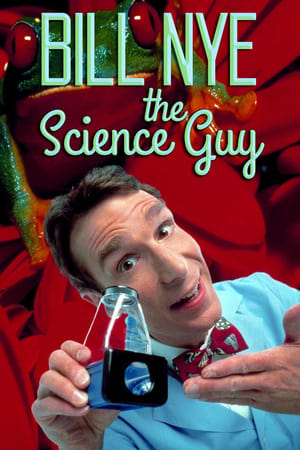
It's "Mr. Wizard" for a different decade. Bill Nye is the Science Guy, a host who's hooked on experimenting and explaining. Picking one topic per show (like the human heart or electricity), Nye gets creative with teaching kids and adults alike the nuances of science.
A public service magazine with a mission to give digital citizens the tools they need to develop conscientious, efficient and responsible technology habits.
Professor Brian Cox asks the biggest questions we can ask. Are we alone? Why are we here? What is our future? Join him in a stunning celebration of human life as he explores our origins, our place and our destiny in the universe.
Data Science vs Fake
Lifestyle related diseases, physical pain, and mental health. This program focuses on medical and health issues of interest, exploring effective countermeasures as well as methods of prevention.
Twenty years on from the invention of the World Wide Web, Dr Aleks Krotoski looks at how it is reshaping almost every aspect of our lives. Joined by some of the web's biggest names - including the founders of Facebook, Twitter, Amazon, Apple and Microsoft, and the web's inventor - she explores how far the web has lived up to its early promise.
Battle Stations is a documentary series of 1 hour episodes, which uses archive footage, re-enactments and first-hand accounts from the crews, to follow the machines and technology implemented from the Second World War to the Gulf War in the land, air and sea.
The Mexico City Metropolitan Train has many stories to tell: from archaeological findings during its construction, its underground museums and hospitals, and even its patents and special maintenance services. These are some of their stories.
Explore the future with a series of programmes and interactive digital content. Hosted by Brian Cox.
From the planets to the stars and out to the edge of the unknown, history and science collide in a wondrous yet deadly adventure through space and time.
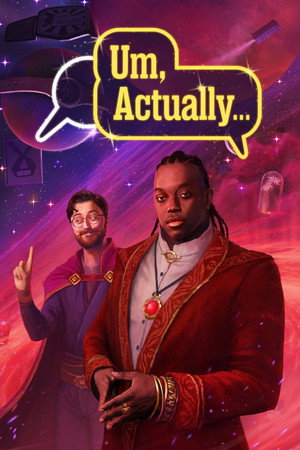
Introducing a game show of fandom minutiae one-upmanship, where nerds do what nerds do best: flaunt encyclopedic nerd knowledge at Millennium Falcon nerd-speed.
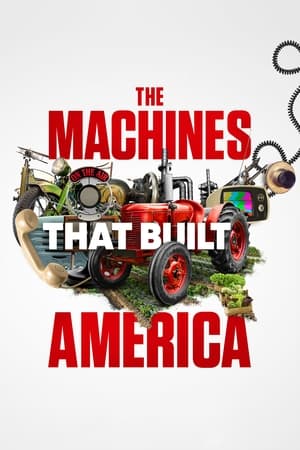
The stories behind innovations such as TV, radio, phones, airplanes, motorcycles and power tools as well as the inventors including Nikola Tesla, William Harley, Alexander Graham Bell, Duncan Black and Alonzo Decker.
A high-end documentary series that takes a deep and thought-provoking dive into a variety of topics - such as the future of human life extension, breakthroughs in interspecies communication, the rise of “cyborgism”, existing in virtual reality, and more.
All In Earth's 4 billion year history, nature has solved all of lifes problems, from the highest mountain to the deepest ocean. Evolution is the ultimate inventor and many of mans most clever engineering solutions have exact counterparts in nature. In three amazing episodes, NatureTech views our world with fresh eyes, where nature and technology stand hand in hand.
Newton's Apple is an American educational television program produced and developed by KTCA, and distributed to PBS stations in the United States that ran from 1983 to 1999. The show's title is based on the rumor of Isaac Newton sitting under a tree and an apple falling near him—or, more popularly, on his head—prompting him to ponder what makes things fall, leading to the development of his theory of gravitation. The show was produced by Twin Cities Public Television. For most of the run, the show's theme song was Ruckzuck by Kraftwerk, later remixed by Absolute Music. Later episodes of the show featured an original song. An occasional short feature appeared called "Science of the Rich and Famous" in which celebrities appeared to explain a science principle.