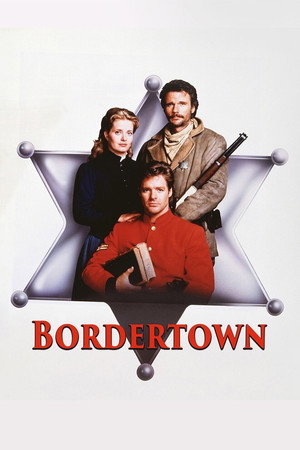
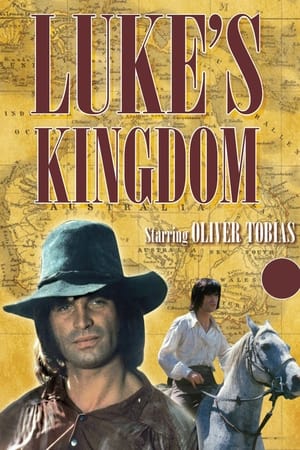
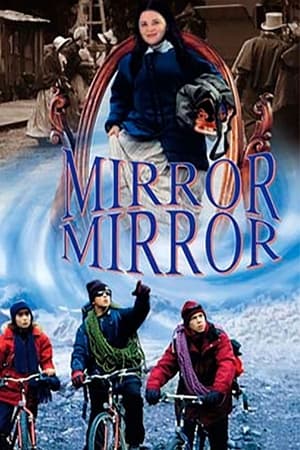
A good-hearted frontiersman poses as a priest to start an orphanage for a group of kids whose homes have been destroyed by an evil mining manager.
The equally important and heartbreaking story of eight strangers whose lives and fates intertwine after a tragic terrorist attack shocks Copenhagen.
Hezekiah and Alec, two friends from Jamaica, finds themselves thrust into the criminal underbelly of London's East End. Here they meet Mary Carr, Queen of an all-female criminal gang known as the Forty Elephants, and run afoul of Sugar Goodson, criminal kingpin and notorious boxer.
The year is 1872. After being to drunk the stooge Gustaf Karlsson hits his master. To avoid sentence he enlists to the army and get the name Rask. He meet his future wife and we then get to follow his life together with his wife and their children in the 19th century Småland (Sweden). Their subsistence features happiness, but also by horrible tragedies.
It's the late 19th century, and the mysterious Dracula has arrived in London, posing as an American entrepreneur who wants to bring modern science to Victorian society. He's especially interested in the new technology of electricity, which promises to brighten the night - useful for someone who avoids the sun. But he has another reason for his travels: he hopes to take revenge on those who cursed him with immortality centuries earlier. Everything seems to be going according to plan... until he becomes infatuated with a woman who appears to be a reincarnation of his dead wife.
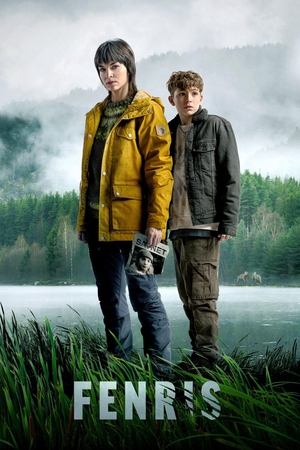
Oslo detectives Max Sørensen and Sander Holm are called in to investigate after four young immigrant boys are found dead in an empty swimming pool. Bizarre twists in the case brings the detectives face to face with both their own demons and a dark sequence of increasingly inexplicable events.
The Man from Snowy River is an Australian television series based on Banjo Paterson's poem "The Man from Snowy River". Released in Australia as Banjo Paterson's The Man from Snowy River, the series was subsequently released in both the United States and the United Kingdom as Snowy River: The McGregor Saga. The television series has no relationship to the 1982 film The Man from Snowy River or the 1988 sequel The Man from Snowy River II. Instead, the series follows the adventures of Matt McGregor, a successful squatter, and his family. Matt is the hero immortalized in Banjo Paterson's poem "The Man from Snowy River", and the series is set 25 years after his famous ride.
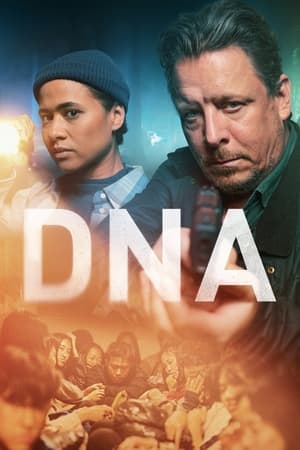
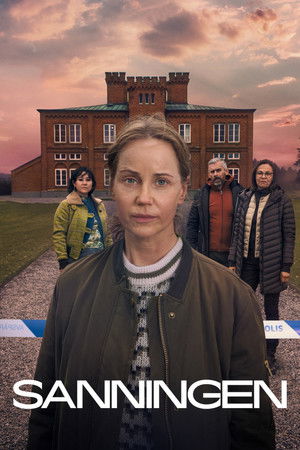
Five years after his daughter disappeared, a mistake in the National Police's DNA register makes it possible for the officer Rolf to finally find out what happened to her.
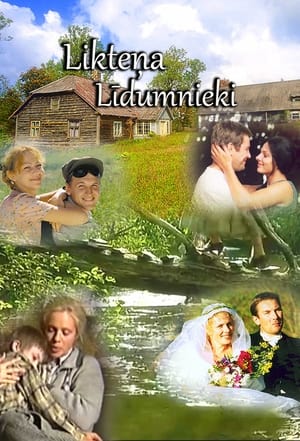
Based on the novels by Vladimirs Kaijaks, the series tell the history of a Latvian family - the Nārbuļi family - from 1885 throughout all the events of the 20th century in the history of Latvia, up to 1995.
In the summer of 1891, Oscar Wilde first met Lord Alfred Douglas — an encounter that will dramatically and tragically change both of their lives.
After the defeat of Napoleon, in whom the Poles had placed so much hope for the restoration of their country, a dark night of slavery descended. Poland was wiped off the map of Europe, but it lived on in the hearts and minds of the Polish people. The struggle for Poland continued in various ways and by various means, depending on which partition the former territories of the country found themselves under. In literature, drama, and later in film, the struggle of Polish patriots with weapons in their hands, e.g., in the November and January uprisings against the tsarist regime, found greater reflection and resonance. Relatively little is known and little was known to the general public about the struggle for the liberation of the people of Greater Poland, which was under Prussian rule. And yet it was the "longest war in modern Europe."
The 19th-century tale of love, murder and revenge as men and women travel across the world to make their fortunes on the wild West Coast of New Zealand's South Island.
The love story of young Countess Natasha Rostova and Count Pierre Bezukhov is interwoven with the Great Patriotic War of 1812 against Napoleon's invading army.
Follow the Dutch royal family in the 19th century.
Les Belles Histoires des pays d'en haut is a Canadian television drama series, which aired on Radio-Canada from 1956 to 1970. One of the longest-running programs in the history of Canadian television, the series produced 81 episodes during its 14-year run and was one of the first influential téléromans. Written by Claude-Henri Grignon as an adaptation of his 1933 novel Un Homme et son péché and initially set in the 1880s, the series starred Jean-Pierre Masson as Séraphin Poudrier, the wealthy but miserly mayor of the village of Sainte-Adèle, Quebec, and Andrée Champagne as Donalda Laloge-Poudrier, the young daughter of a village resident who is given in marriage to Séraphin as payment for a family debt even though she remains in love with her suitor Alexis Labranche.
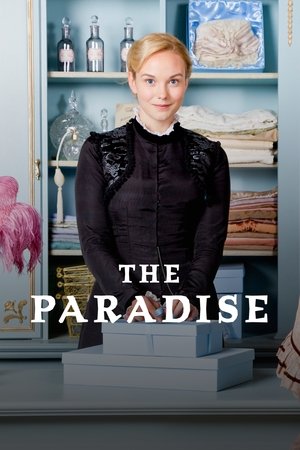
An intoxicating love story set in England's first department store in the 1870s. The Paradise revolves around the lives of the people who live and work in the store, each bound in their own way by the power of the world they live in, and the pasts that follow them there. A love story, mystery, and social comedy all in one.
Journalist calls down the wrath of her readers by trying to uncover the connection between the murder of a local football hero and a cryptocurrency. Searching for the truth she risks not only her reputation, but her life.
The two part miniseries chronicles the lives and loves of the four March sisters – Jo, Meg, Amy and Beth – growing up during the American Civil War. While their father leaves for battle, the sisters must rely on each other for strength in the face of tragedies both large and small.
In 19th-century France, doctor's wife Emma Bovary seeks to escape her dull provincial life through various extramarital affairs and extravagant spending, leading to tragic consequences.
The Eagle: A Crime Odyssey is a Danish police procedural television series produced by Danmarks Radio, created and written by Peter Thorsboe and Mai Brostrøm. The series debuted on 10 October 2004 in Denmark. It won an International Emmy Award from the International Academy of Television Arts & Sciences for best non-American television drama series in 2005. There were three seasons; the second season premiered in Denmark on 9 October 2005 and the third on 8 October 2006. The last episode originally aired in Denmark on 26 November 2006. The series was filmed on location in various parts of northern Europe, from Berlin and Copenhagen to Oslo and other locations including Iceland. The series has enjoyed particular success in Australia, where it airs on SBS and is available on DVD with English subtitles.